
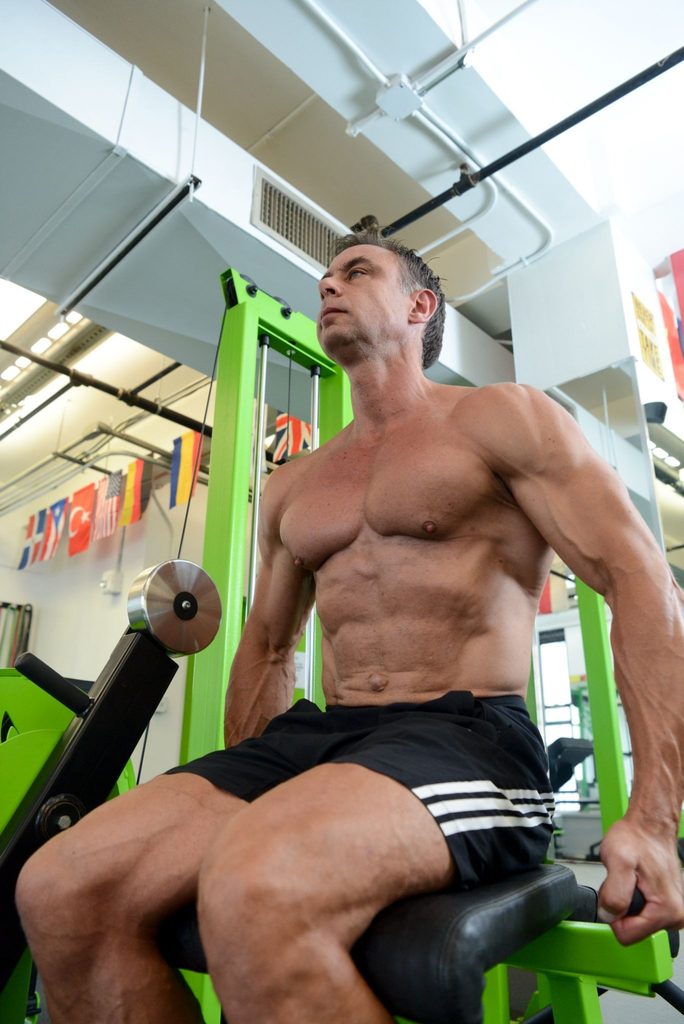
If you’ve ever said you want to “turn fat into muscle,” I know what you mean. You want your waist to come down while your shoulders, arms, or legs fill out, and if the scale barely moves in the process, even better. From the outside, it can look as if one tissue simply replaced the other.
Biologically, that isn’t what happens. Fat and muscle are separate tissues, so the body has to lose one while building the other. When those two processes overlap, that’s body recomposition.
The part that matters is whether recomp is actually a good strategy for you. If you’re new to lifting, coming back after a layoff, or carrying more body fat, you can often make both happen at a useful rate because you have plenty of room to improve ( for a while, at least). If you’re already lean and well trained, however,you will be wasting your time. Pick a cutting or bulking phase and move from there.
So the useful question isn’t “Can fat turn into muscle?” It can’t just like lead does not become gold. The useful question is whether you can get leaner and more muscular at the same time, and for the right lifter, the answer is yes.
If you want a recomposition plan built around where you actually are now, see our coaching options.
Can Body Fat Be Turned Into Muscle Directly?
No. Adipose tissue and skeletal muscle are biologically different tissues with different functions and different signals controlling them.
Body fat stores energy, so in an energy deficit, stored fat can be mobilized to help meet the body’s energy needs. Muscle, in contrast, grows when resistance training provides a sufficient stimulus and nutrition provides the amino acids and energy needed to recover and adapt.
Those processes can overlap, but they still remain separate.
| Tissue | Main Job | What Makes It Change | Practical Lever |
| Body fat | Stores energy | Long-term energy balance | Calorie intake and activity |
| Skeletal muscle | Produces force and movement | Resistance training, protein, recovery | Productive training and nutrition |
The reverse myth is wrong for the same reason: muscle doesn’t turn into fat when you stop training. Instead, muscle can shrink from disuse while body fat increases if calorie intake remains too high, and because those changes happen at the same time, the “conversion” story can look believable even though no tissue is changing into the other.
Body Recomposition for Overweight Beginners
Overweight beginners are the group where I’m most comfortable setting a recomposition goal.
A beginner has two advantages at once. On one hand, resistance training is still a new stimulus, so relatively modest training can produce meaningful gains. On the other hand, if you’re carrying more body fat, you also have more stored energy available while dieting.
That doesn’t mean body fat literally “fuels muscle” in a simple one-step conversion. Rather, it means the body can draw on stored energy while resistance training and adequate protein support the separate process of building or preserving muscle.
The training still has to be good.
A beginner who diets hard, does five cardio sessions, and never learns how to create tension in a muscle isn’t taking advantage of this position. A beginner who strength trains three days a week, gets enough protein, and uses a controlled deficit usually has a much better chance of changing both sides of body composition at once.
Is Body Recomposition Realistic for Beginners?
Yes. Beginners are one of the groups most likely to see meaningful fat loss and muscle gain overlap.
Expect the scale to move more slowly than it would on an aggressive diet, which is fine when the waist is shrinking and strength is improving. A 10-pound scale loss with a large amount of muscle loss can look worse than a 8-pound scale loss with muscle gained or preserved. The scale only tells you total mass. It doesn’t tell you what happened to the physique.
If you’re new to lifting, this is one reason I prefer to build the training system before chasing the fastest possible rate of weight loss. You can learn more about how we coach beginners here.
Your Workout and Diet Plan to Lose Fat and Gain Muscle
The plan should reflect training age.
| Experience Level | Most Realistic Recomp Goal | Training Structure | What to Watch |
| Beginner with more body fat | Strong chance of simultaneous fat loss and muscle gain | Full body 3x/week | Technique, strength trend, waist |
| Detrained returner | Rapid regain of lost muscle while fat drops | 3 to 4 sessions/week | Avoid doing old volume too soon |
| Intermediate | Cut or bulk | 3 to 5 focused sessions/week | Recovery and calorie precision |
| Advanced and lean | Cut or Bulk, | Highly individualized | Consider separate phases |
Set protein first, then set calories according to overall activity and starting body fat. A beginner carrying more fat may do well in a moderate deficit, whereas a leaner lifter who still wants to add muscle may need maintenance calories or a very small deficit.
Then leave the plan alone long enough to collect data.
One of the worst habits in body recomposition is changing calories every four days because the scale didn’t behave. Water, glycogen, sodium, and digestion all move body weight faster than fat or muscle do.
The Best Training Split for Fat Loss and Muscle Gain
For most beginners, three full-body sessions are enough.
For intermediates with four days available, upper/lower works well. However, the split itself isn’t the magic because frequency, exercise quality, enough hard sets, and progression are what matter.
I don’t insist on barbells. Machines and cables can be excellent for recomposition because they reduce stability demands and make it easier to keep tension on the intended muscle.
The rule is the same regardless of equipment: progress the muscle, not the ego.
The High Protein Approach to Recomposition
Protein matters more during a calorie deficit because you’re asking the body to maintain or build lean tissue while total energy is lower.
Research on energy restriction shows that resistance exercise and sufficient protein help protect muscle protein synthesis, while larger deficits make the anabolic environment less favorable. A review of negative energy balance found that resistance training and protein distribution can help preserve muscle protein synthesis during dieting.
For most people I coach, 0.7 to 1 gram of protein per lean pound of body weight is a practical target.
Build meals around foods you can repeat:
- Lean meat or poultry
- Fish
- Eggs and egg whites
- Greek yogurt or cottage cheese
- Tofu, tempeh, beans, and other plant proteins
- Protein powder when convenience matters
The exact food matters less than whether you consistently hit the total, so choose protein sources you can actually repeat week after week.
Supplements That Actually Support Recomposition
Supplements are the last step, not the first.
Creatine monohydrate is useful because it can improve high-intensity training performance and support training adaptations. The ISSN position stand summarizes the evidence behind creatine monohydrate for training performance.
Protein powder is simply a convenient food tool, whereas everything else should have to justify its place.
If you want to see the short list of supplements and programs we actually recommend, it’s intentionally much smaller than the average supplement-store wall.
How Long Does Body Recomposition Take?
Longer than you’d probably like, but usually faster than it feels once the plan is actually consistent.
Beginners may see strength improvements within weeks and visible changes over the first couple of months..
I wouldn’t judge a recomp plan for a beginner from two weeks of scale data.
Give it enough time to see whether:
- waist measurements are moving;
- photos look different;
- training performance is holding or improving;
- body-weight averages are behaving in a way that matches the goal.
If those markers are moving, the plan is working even if the scale isn’t giving you a dramatic story.
Expert Viewpoint: What Recomposition Really Takes
The fat-to-muscle myth is wrong, but the goal behind it is completely reasonable. When you ask whether fat can turn into muscle, you’re usually asking whether you can look leaner while becoming more muscular. You can; the two tissues just change through separate processes.
You can reduce body fat while adding or preserving muscle. The mistake is assuming that because it’s possible, it’s equally easy for everyone.
When I look at a beginner with extra body fat, recomp is often the obvious play because we have a new training stimulus, stored energy available, and a lot of room to improve technique and strength. In contrast, when I look at a lean advanced lifter, I’m much less romantic about it. That person may spend months trying to do two opposing jobs at once when a focused muscle-gain phase followed by a controlled cut would produce more visible progress.
Which option makes sense depends on training age, body fat, recovery, and the goal you care about most. Physiology gives you several possible outcomes; programming decides which one is worth pursuing.
So stop asking whether recomposition is “real,” because it is. Instead, ask whether it’s the best strategy for you right now.
If you want that decision made from your actual starting point rather than a generic calculator, contact our team.
Frequently Asked Questions
Does Muscle Turn Into Fat if You Stop Working Out?
No. Muscle and fat are different tissues, so one can’t directly convert into the other. If you stop training, muscle can shrink because the stimulus disappears, while body fat can increase if calorie intake stays higher than your new energy needs. Because both changes can happen at the same time, it can look like one tissue became the other even though no conversion took place.
How Much Protein Do I Need for Body Recomposition?
A practical target is roughly 0.7 to 1 gram of protein per pound of body weight per day because higher protein supports muscle repair and helps preserve lean mass when calories are controlled. The exact target can vary with body size, leanness, and total calorie intake, so treat the range as a useful starting point rather than a magic number.
Can You Lose Fat and Gain Muscle at the Same Time?
Yes, especially if you’re a beginner, returning after a layoff, or carrying more body fat, because those situations give you both a strong training response and more available energy. However, recomposition becomes slower and less predictable as you get leaner and more advanced, so experienced lifters usually shouldn’t assume that one phase can maximize both goals at once.
How Long Does Body Recomposition Take?
Body recomposition usually takes several weeks to a few months before the change is obvious, because you’re trying to improve two tissues at once rather than simply make the scale fall. Beginners may change faster, whereas experienced lifters need more patience and tighter control. Track waist, photos, and strength alongside body weight so a slow-moving scale doesn’t hide real progress.
Is Cardio Bad for Building Muscle?
No. Moderate cardio can support cardiovascular health, work capacity, and total energy expenditure, so it can fit alongside a muscle-building plan. Problems start when the cardio volume compromises leg recovery, training performance, food intake, or sleep. Keep it when it supports the lifting; reduce it when it starts competing with the work that is supposed to preserve or build muscle.
Do I Need Supplements to Recomp?
No. Recomposition is driven by resistance training, calorie control, adequate protein, and recovery, so supplements sit well below those priorities. Creatine monohydrate can help support strength and training capacity, while protein powder can make your daily intake easier to manage, but neither one changes the basic requirement to train progressively and eat appropriately.
Why Is the Scale Not Moving During Recomposition?
The scale can stay flat because fat loss and muscle gain can partially offset each other, while changes in glycogen and water add even more noise. That’s why scale weight alone is a poor judge of recomposition. If your waist is shrinking, your photos are improving, and your lifts are holding or increasing, the body can be changing even when total mass barely moves.
Can Overweight Beginners Build Muscle and Lose Fat at Once?
Yes, overweight beginners are one of the groups most likely to achieve meaningful recomposition because they combine a strong beginner training response with substantial stored energy. A controlled calorie deficit, adequate protein, and consistent resistance training can therefore support fat loss while muscle is built or preserved. Keep the deficit moderate rather than turning the process into a crash diet, because aggressive restriction makes training quality and muscle retention harder to protect.
Maik Wiedenbach is a New York City-based personal trainer, fitness author, and founder of Maik Wiedenbach Fitness. He helps clients improve body composition with progressive resistance training, high-protein nutrition, and realistic expectations about what their training age allows.

Maik Wiedenbach is a Hall of Fame swimmer turned bodybuilding champion and fitness model featured in Muscle & Fitness and Men’s Journal. An NYU adjunct professor and award-winning coach, he founded New York’s most sought-after personal training gym.