
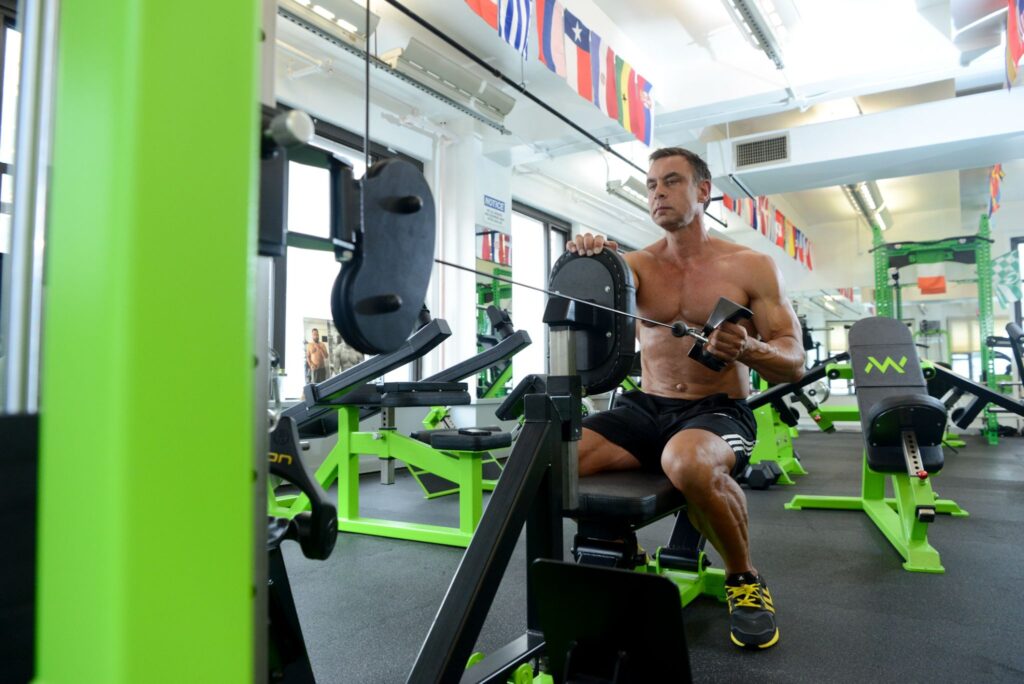
I can spot the drop set from across the gym. A guy finishes his last set, drops the dumbbells, grabs a lighter pair like the building’s on fire, and grinds until his arms quit. He racks it, shakes out the pump, and his face says it all: that was productive.
Maybe. Drop sets can build muscle in considerably less time than traditional straight sets, although they also produce more acute fatigue. Used with a clear purpose, they’re efficient; bolted onto every exercise because exhaustion feels productive, they become expensive filler.
I also make a distinction between standard drop sets and mechanical drop sets. A standard drop reduces the weight, while a mechanical drop keeps the load and moves you into a stronger position as the target muscle fatigues. Both can work, but they solve slightly different programming problems.
By the end of this article, you’ll know which version to use, where it belongs, and how to tell whether it’s building muscle or merely extending the suffering.
What Are Drop Sets, Really? (No Fluff)
A standard drop set starts with a hard set taken close to failure. You then reduce the load, usually by roughly 20 to 30 percent, and continue with little more rest than it takes to change the weight.
Reaching failure with one load doesn’t mean the muscle can no longer produce force; it means it can’t produce enough force to complete another repetition with that load. Reduce the resistance, and the set can continue.
A mechanical drop set uses the same principle without necessarily changing the weight. Instead, you move from a difficult exercise or position into one with better leverage or more help from assisting muscles. A chest sequence might move from a fly to a push-fly and then a press, while a biceps sequence might move from incline curls to standing curls and then hammer curls.
Both methods extend the set, but neither works simply because the set lasts longer or produces a bigger pump. The additional repetitions still need to load the intended muscle through a controlled range; once momentum and unrelated muscles take over, you’re extending fatigue rather than useful work.
Are Drop Sets Effective for Building Muscle?
Yes. Drop sets build muscle, although they don’t appear to build more than traditional sets when the programs are compared over time.
The benefit is efficiency. A drop set lets you accumulate challenging repetitions without taking a full rest interval, so you can complete a useful amount of hypertrophy work quickly. A 2023 systematic review and meta-analysis found similar muscle growth with drop sets and traditional training, while some drop-set protocols took only half to one-third as long.
However, the additional repetitions aren’t automatically “effective” because they happen after failure. They still need a controlled range, sufficient resistance, and tension in the target muscle. If your quadriceps control the leg extension after the load drops, those repetitions contribute useful work; if your hips lift and momentum throws the pad, the technique has lost its purpose.
The recovery cost also needs to be acknowledged. A 2026 meta-analysis found comparable long-term gains in hypertrophy, strength, and muscular endurance, but drop sets produced higher perceived exertion, blood lactate, and neuromuscular fatigue than traditional training.
So I use drop sets when the saved time or extended stimulus justifies that fatigue. They’re especially easy to control on machines, cables, and stable isolation exercises, although a well-designed mechanical drop set can also work by changing leverage rather than stripping weight.
Do Drop Sets Build More Muscle Than Straight Sets?
Drop sets and straight sets produce similar muscle growth overall. The clearest advantage of drop sets is that they can produce that growth in less training time, not that they unlock a superior hypertrophy mechanism.
Research found comparable long-term adaptations with drop-set and traditional training, while earlier evidence showed similar hypertrophy in less time. However, drop sets also create more acute fatigue, which explains the trade: you save time, but each extended set costs more.
Drop Sets vs Straight Sets
| Factor | Drop sets | Straight sets |
| Muscle growth | Comparable overall | Comparable overall |
| Training time | Shorter | Longer because of full rest periods |
| Acute fatigue | Higher | Usually lower per set |
| Perceived effort | Higher | Easier to distribute across the session |
| Progress tracking | More complicated across several drops | Simple load-and-repetition comparison |
| Strength practice | Less specific once the load drops | Better for practicing heavier loads |
| Best use | Time-efficient hypertrophy and set extension | Main progressive work |
| Best exercises | Stable exercises or planned mechanical sequences | Compounds, machines, cables, and isolation work |
| Main drawback | Easy to overextend and lose execution | Requires more time |
If you have forty-five minutes to train, drop sets can help you finish the session without removing an entire muscle group. If time isn’t the problem, straight sets remain easier to track, progress, and recover from.
If you want a coach to slot intensity techniques into your split the right way, our team can help.
Are Drop Sets Just Junk Volume?
A drop set becomes junk volume when the extra fatigue is no longer justified by the work the target muscle receives.
Placement matters because a technically sound drop set performed after a few productive straight sets may add useful volume quickly. The same technique becomes wasteful when the muscle is already exhausted, the range keeps shrinking, or the next workout suffers because you refused to end the set.
Take a lateral raise. If you reduce the load and continue with the lateral delts controlling the movement, the drop still has a purpose. But if the traps shrug first, the hips start swinging, and each repetition follows a different path, you’re no longer extending the lateral-raise set; you’ve changed the movement so you can remain tired for longer.
I judge the drop by four questions:
- Is the target muscle still controlling the repetition?
- Is the intended range still consistent?
- Does the technique fit the exercise safely?
- Can you recover without compromising the next session?
A drop set that passes those tests can be productive. One that fails them is simply a long ending to a set that should already have stopped.
When Should You Use Drop Sets in a Workout?
Most drop sets belong on the final working set of an exercise because that placement protects the straight sets you still need to perform and progress.
Standard load-reduction drops are easiest to manage on machines, cables, and isolation exercises. The setup is stable, the weight can be changed quickly, and ending the set doesn’t require rescuing a barbell from a poor position.
Mechanical drop sets are slightly different. They can move from a difficult position into a stronger one while keeping the same load, such as:
- Incline curls to standing curls to hammer curls
- Dumbbell flyes to push-flyes to presses
- Stiff-arm pulldowns to overhand pulldowns to underhand pulldowns
- A strict isolation movement followed by a compound variation using the same target muscle
Because the exercise becomes mechanically easier as fatigue increases, the target muscle can continue working while assistance is introduced gradually. I’ve used this approach for lagging muscles and time-efficient accessory work; the sequence still needs to be planned before the set begins.
Where Drop Sets Fit
| Situation | Use them? | Reason |
| Final set of a curl, extension, raise, or machine exercise | Yes | Easy to control and stop |
| Short workout with limited training time | Yes | Replaces part of the rest-heavy volume |
| Mechanical sequence planned around one muscle | Yes | Extends the set through better leverage |
| First set before several important straight sets | Usually no | Fatigue may reduce the work that follows |
| Heavy free-weight lift without safeties | No | Ending the set safely becomes harder |
| Compound exercise with a controlled mechanical progression | Situational | Requires sound execution and a safe setup |
| Strength-peaking session | Low priority | Heavy-load practice matters more |
| Every exercise in the session | No | Acute fatigue accumulates quickly |
The question isn’t whether an exercise is technically compound or isolation; it’s whether the drop can be performed, progressed, and ended without the technique falling apart.
Do Drop Sets Work for Natural Lifters?
Yes. Drop sets work for natural lifters because the method doesn’t depend on a separate physiological mechanism; it simply extends hard resistance training after the original load becomes too heavy to continue.
There also isn’t an evidence-based “natural lifter dose” that applies to everyone. Recovery depends on the total program, exercise selection, training age, sleep, nutrition, stress, and how aggressively you perform each drop.
I’ve seen lifters add drop sets to half the workout and then blame food, motivation, or genetics when their straight-set performance begins sliding. The problem wasn’t that drop sets suddenly stopped working; they added a high-fatigue method without removing or adjusting anything else.
Start with one drop on the final set of one suitable exercise, then watch what happens over the following weeks. If your main lifts keep progressing and the target muscle is recovering, the technique has earned its place. If performance begins falling, remove the drop before adding another recovery strategy to compensate for it.
How to Do Drop Sets Correctly (Step by Step)
Standard Drop Set
- Choose the loads before you begin. Have the next pin position or lighter dumbbells ready.
- Perform the working set close to failure. Keep the target muscle in control and preserve the intended range.
- Reduce the load by roughly 20 to 30 percent. Take only enough time to make the adjustment safely.
- Continue with the same execution standard. Don’t change the range simply because the muscle is tired.
- Stop when the target muscle loses control. One well-performed drop is enough for most lifters.
Mechanical Drop Set
- Start with the most mechanically demanding variation.
- Move immediately into a stronger position or exercise using the same target muscle.
- Introduce assistance gradually rather than abandoning the target muscle.
- End the sequence once momentum, range loss, or unrelated muscles dominate the movement.
The load reduction doesn’t need to be exact, and the transition doesn’t need to happen in under a particular number of seconds. It needs to be quick enough that the set remains continuous, but controlled enough that you don’t turn the weight change into a race.
Record each stage separately. “Ten curls plus eight reps after a 25-percent drop” tells you far more than writing “one brutal drop set” and hoping the pump progresses itself.
Drop Set Variations Worth Knowing
Once you understand the standard drop set, a few variations give you different tools for different exercises. They all share the same logic of extending a set, but they change how you reduce the difficulty.
| Variation | How it works | Best use | Main caution |
| Standard drop set | Reduce the load once and continue | Machines, cables, and isolation exercises | Don’t let the lighter weight turn into careless repetitions |
| Double drop set | Reduce the load twice | Occasional high-fatigue finisher | Recovery cost increases quickly |
| Mechanical drop set | Move into a stronger position without reducing the load | Extending work through improved leverage | The target muscle still needs to remain involved |
| Running the rack | Move through progressively lighter dumbbells | Curls, raises, and other simple dumbbell work | Easy to add more drops than the program needs |
| Strip set | Plates are removed quickly between stages | Stable plate-loaded or safely racked exercises | Requires a prepared partner and controlled setup |
| Rest-pause set | Rest briefly, then continue with the same load | Extending a set without changing equipment | This is a related intensity method, not technically a drop set |
I prefer mechanical drops when the exercise sequence lets the target muscle keep working while assistance increases in a logical order. Incline curls can become standing curls and then hammer curls; flyes can become push-flyes and then presses.
You don’t need every version. One standard or mechanical drop set performed well gives you enough information to decide whether the technique belongs in the program.
Benefits and Trade-Offs of Drop Sets
Drop sets exchange longer rest periods for greater acute effort, so they make the most sense when time efficiency matters.
Benefits
- Less training time: Drop-set protocols have produced similar hypertrophy in half to one-third of the time used by some traditional protocols.
- Easy set extension: You can continue training after the original load becomes too heavy.
- Useful for lagging muscles: A planned drop can add focused work without adding another exercise.
- Flexible equipment options: Standard drops suit machines and cables, while mechanical drops can work with dumbbells and bodyweight movements.
Trade-Offs
- Higher acute fatigue: Drop sets increase perceived effort and neuromuscular fatigue compared with traditional sets.
- Harder progression tracking: Several loads or exercise positions need to be recorded separately.
- Execution can deteriorate quickly: Fatigue makes shortened ranges and compensation more likely.
- Easy to overuse: Adding drop sets without adjusting the rest of the program can turn useful work into excess volume.
The Springer 2026 meta-analysis captures the trade clearly: similar long-term adaptations, less time, and more acute fatigue.
Expert Viewpoint: My Honest Verdict on Drop Sets
Drop sets work, but their best advantage is efficiency rather than superior growth. They can produce results comparable to straight sets in less time; however, they also create more acute fatigue, so the technique has to earn its place in the program.
I use standard drops on stable exercises when I want to extend the final set quickly. I use mechanical drops when a stronger position allows the target muscle to keep working, such as moving from incline curls to standing curls and then hammer curls. The sequence is planned before the set starts; it isn’t a collection of desperate movements after the original exercise falls apart.
Start with one drop on one exercise and track what happens afterward. If the target muscle is progressing and your important straight sets remain stable, keep it. If the drop makes the workout memorable but the next week’s numbers begin sliding, remove it; the technique is costing more than it returns.
Exhaustion isn’t the scoreboard. Use drop sets to save time or add focused work, but keep the straight sets that give you a clean measure of progression and don’t let a bigger pump distract you from a stagnant logbook.
Simple. Not easy. Absolutely achievable.
If you want help programming them the smart way, reach out and our team will walk you through it.
Frequently Asked Questions About Drop Sets
How Many Drop Sets Should You Do per Exercise?
Start with one load reduction on the final work set. A second drop may suit an experienced lifter who can maintain the range and recover from it, but more stages aren’t automatically more productive; the available research doesn’t establish an optimal number of drops.
How Much Weight Should You Drop in a Drop Set?
Reduce the load by about 20 to 30 percent per drop. That’s enough to let you keep repping with good form until you approach failure again, without dropping so light that the set turns easy.
Are Drop Sets Good for Beginners?
Beginners can perform drop sets, but they usually don’t need them yet. First learn to control the exercise, estimate proximity to failure, and progress straight sets consistently; once those skills are in place, an occasional single drop is reasonable.
Do Drop Sets Build Strength or Just Size?
Drop sets can contribute to both muscle growth and strength, and research found comparable strength gains with drop-set and traditional training. However, maximal strength is specific to practicing heavier loads, so perform your heavy straight sets first and use drop sets only for accessory work.
Are Drop Sets Better on Machines or Free Weights?
Machines and cables make standard drop sets convenient because the load changes quickly and the setup remains stable. Free weights can work too, especially for planned mechanical drop sets, although the exercise needs a safe ending and enough control to prevent fatigue from changing the movement.
How Often Should You Use Drop Sets in a Week?
Start with one drop set on the final set of one exercise, then track performance and recovery before adding another. There’s no universal weekly limit; the useful dose is the amount that adds productive work without reducing the quality of your straight sets or the next session.
Maik Wiedenbach is a New York City-based personal trainer, fitness author, and founder of Maik Wiedenbach Fitness. He has spent over 20 years helping clients use intensity techniques like drop sets with purpose, as finishing tools rather than the foundation of a program.

Maik Wiedenbach is a Hall of Fame swimmer turned bodybuilding champion and fitness model featured in Muscle & Fitness and Men’s Journal. An NYU adjunct professor and award-winning coach, he founded New York’s most sought-after personal training gym.