
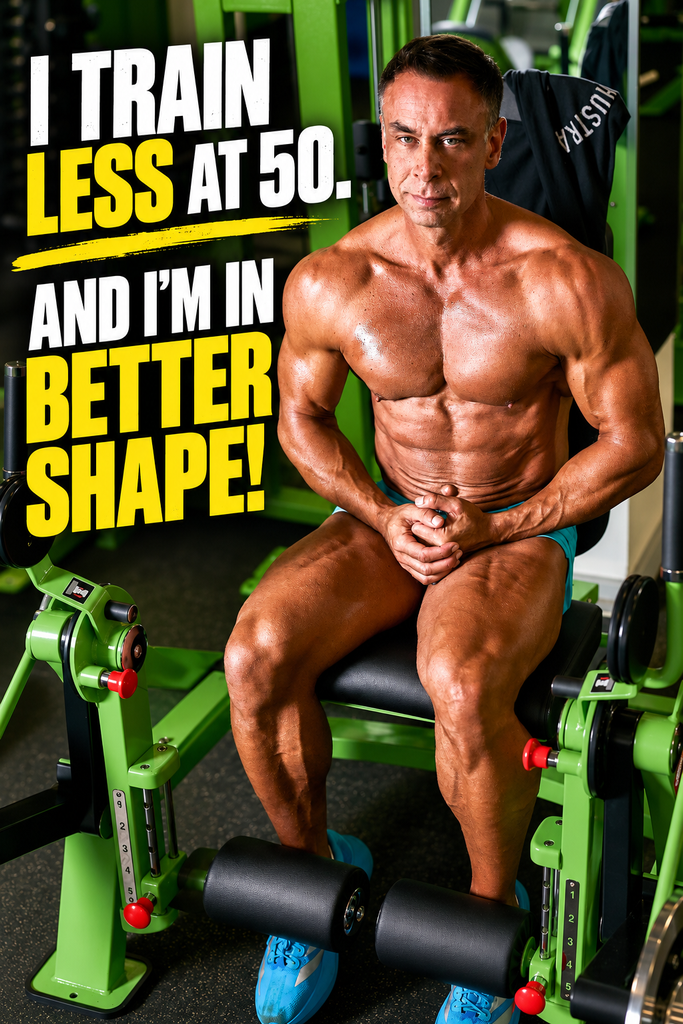
Training after 50 looks different, and that’s a good thing. Here’s how I went from six or seven workouts a week to taking two or three days off, and ended up in better shape.
For most of my life, I trained six, sometimes even seven, days a week.
Push, pull, legs. Repeat.
Monday was vertical push day. Tuesday, horizontal pull. Wednesday, legs with a quad focus. Thursday, horizontal push. Friday, vertical pull. Saturday, legs with a hamstring focus.
Then start all over again.
No matter if I was tired, stressed, or had spent the entire day training clients, I was proud of the grind.
Missing a workout? Unacceptable. It simply didn’t happen.
After all, I had been a competitive athlete at the highest level, a bodybuilder, and eventually a professional trainer. If anyone should be able to handle six workouts a week, surely it was me.
Well, I’m 50 now, and things have changed.
These days, I need at least two or three days off from the gym every week.
Not because I’ve become lazy, stopped caring about my physique, or reached some magical age where everything suddenly falls apart.
OK, I did get old. But not lazy!
I’ve simply become much better at understanding the difference between training hard and training intelligently.
Finally, one might add.
Your body doesn’t care about your training schedule
Let’s say I’ve spent the day training six clients.
That’s six hours on my feet, demonstrating exercises, loading machines, moving weights, and being mentally engaged with people.
By the time I’m finished, I have a leg workout scheduled.
Twenty years ago, I would have forced myself through it.
But at what cost, and to what end?
A mediocre workout, creating more fatigue than stimulus?
Today, I might do a few sets of curls, some triceps work, get a nice arm pump, call it a day, and train legs tomorrow.
And yet, the world keeps turning.
My muscles don’t suddenly disappear because I missed a workout.
Here’s an important distinction.
When I train, I still train hard.
I use challenging weights, controlled execution, and enough effort to stimulate muscle growth.
But what I no longer do is blindly add more volume in pursuit of better results.
Muscle growth is a response to a training stimulus, not simply the amount of time you spend in the gym.
At some point, additional training produces diminishing returns, especially when sleep, work stress, and overall fatigue enter the picture.
And recovery is certainly a thing!
If I have a relatively quiet day, sleep well, and feel great, I’ll probably have an excellent training session.
If I’ve been on my feet for eight hours, slept poorly, and have a dozen things on my mind, the same workout might be a terrible idea.
I’ve learned to adjust my training to my life rather than forcing my life to accommodate my training. Big brain thinking indeed.
The biggest change was psychological
For years, missing a workout came with guilt.
I felt as though I had failed some imaginary test of dedication and my alpha status was being challenged.
The funny thing is that once I stopped treating every workout like an obligation, I started enjoying training more.
I no longer walk into the gym thinking about what I have to do, but what I can productively accomplish that day.
Sometimes that’s a demanding workout. Sometimes it’s a light pump session. Sometimes it’s a day off.
I’m in better shape training less than I used to, and I no longer feel guilty about taking a day off.
Maik Wiedenbach
Of course, there’s another important piece to this equation.
And I may have made this point 100 times already, but here we go again.
You can’t out-train a bad diet
Training less doesn’t mean nutrition becomes less important.
If anything, consistent nutrition is one of the reasons I can maintain my physique without spending six days a week lifting weights.
I still hit my macros. Religiously.
You can have the world’s most sophisticated training program and the best coach (me), but if you’re constantly overeating, undereating protein, or sleeping four hours a night, your results will suffer.
And no amount of extra curls is going to fix that.
What I would tell my younger self
The gym is a gift, not a chore. Enjoy it!
Maik Wiedenbach
No BS. No fluff. Just results.
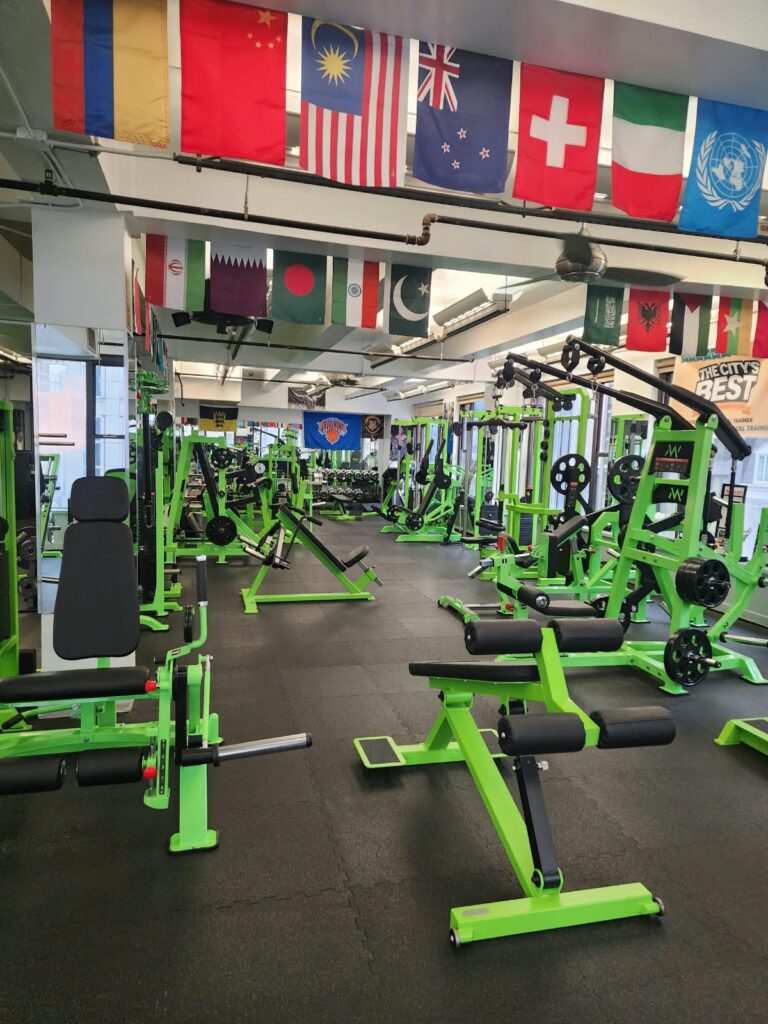
Want a smarter plan for training after 50?
More volume isn’t the answer. The right stimulus, real recovery and consistent nutrition are. If you’re in New York, come in and we’ll build a plan around your life, not the other way around. (And if you’re wondering what else is worth your money as you get older, read what the longevity industry won’t tell you.)

Maik Wiedenbach is a Hall of Fame swimmer turned bodybuilding champion and fitness model featured in Muscle & Fitness and Men’s Journal. An NYU adjunct professor and award-winning coach, he founded New York’s most sought-after personal training gym.