
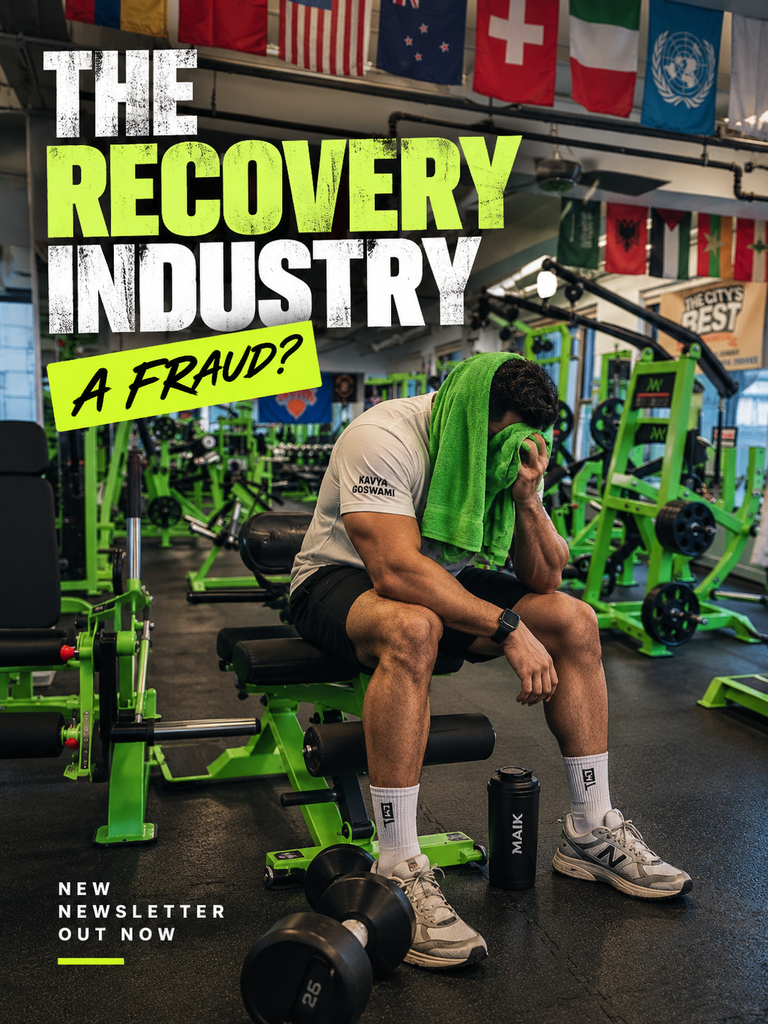
The recovery industry has a problem.
Mainly, because it’s a fraud.
Somewhere along the way, fitness culture decided a workout isn’t finished until you’ve paid for a second one.
Train for an hour, then sit in a cold plunge. Step into a cryotherapy chamber. Zip yourself into compression boots. Go after your quads with a massage gun. Wire yourself up for some electrical stimulation.
Each one comes with a price tag and a promise that you’ll bounce back faster.
Does any of this actually work?
A systematic review and network meta-analysis published in Frontiers in Sports and Active Living set out to answer that. It pulled together 16 randomized controlled trials involving 273 competitive and elite endurance athletes.
The interventions were compared against passive recovery. In plain English: sitting down and doing nothing.
Across the outcomes examined, none of them showed a convincing advantage over doing nothing.
My favorite detail: one comparison involved immersion in neutral-temperature water. Not ice. Not heat. Just a tub of water. That doesn’t prove every recovery benefit is placebo, but it should make you wonder how much of the effect comes from the ritual.
Feeling recovered and actually recovering faster are not necessarily the same thing.
Maik Wiedenbach
Feeling better is not the same as getting better
A cold plunge can make you feel great. So can a massage. I’m not arguing with that.
But feeling recovered is a sensation. Recovering faster is a physiological change, and performing better is something that shows up in your next session. The review didn’t find convincing evidence that these tools deliver either of those.
If you train regularly, that matters. Feeling fresh can talk you into pushing hard again before your body has caught up.
To be fair to the gadgets: this is a small body of research, and much of the evidence was rated low or very low certainty. These were also endurance athletes. If your main goal is building muscle, the findings don’t automatically apply to you.
What the evidence doesn’t give you is a good reason to spend serious money on recovery before the basics are in place.
Before you buy another gadget
- Are you sleeping enough?
- Are you eating enough, with adequate energy and protein, and drinking enough water?
- Is your training program intelligently designed?
- Is there enough time between your demanding sessions?
- Are you actually resting between workouts?
For most people I coach, three well-designed sessions a week is plenty. That’s my view from years on the gym floor, not a rule for everyone. But it leaves room for the part most people skip.
Training creates the stimulus. Rest is when your body adapts to it. Skip the second half, and no gadget will make up for it.
My take
Enjoy your massage. Enjoy your cold plunge if you like it. Just don’t assume that enjoying it means it’s improving your training.
Fitness trends work like a washing machine. The same ideas go round and round, come out looking clean, and get sold to you again.
If you want to recover better, start with the unglamorous stuff: train appropriately, eat enough, stay hydrated, sleep, and give yourself enough time between hard sessions.
Get those right first. Then, if you still want the boots, buy the boots.
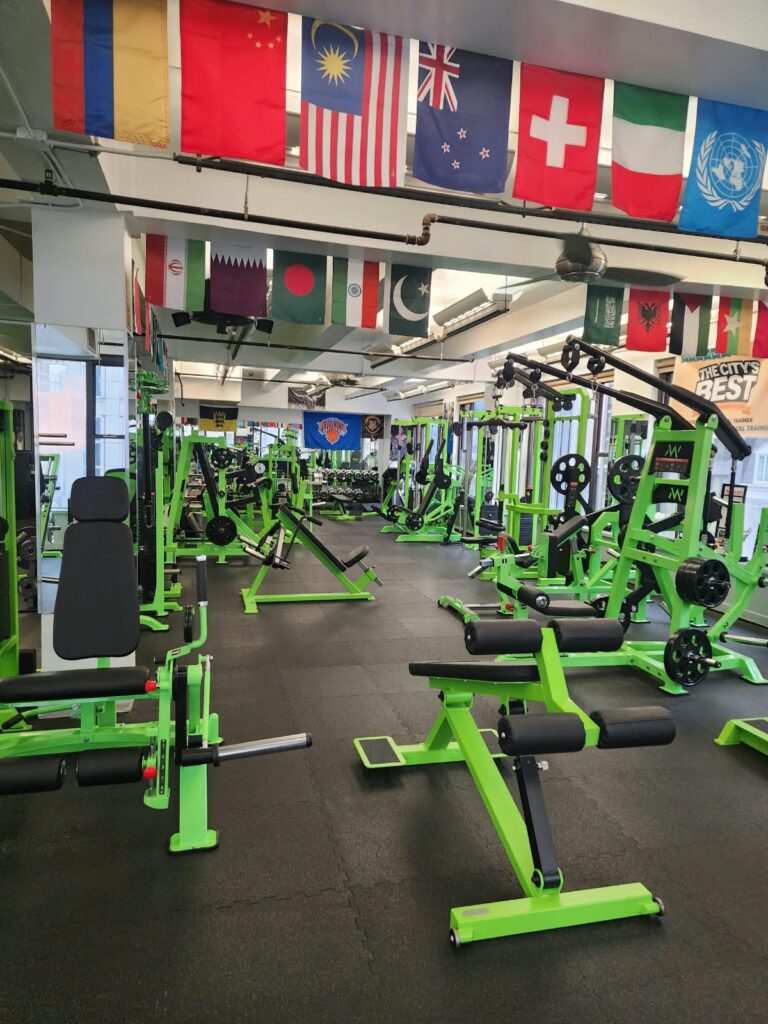
Better results start with how you train
No recovery tool can fix a program that’s working against you. Coaching here starts with the training itself: what you do, how often you do it, and how much rest it takes to get better from it.

Maik Wiedenbach is a Hall of Fame swimmer turned bodybuilding champion and fitness model featured in Muscle & Fitness and Men’s Journal. An NYU adjunct professor and award-winning coach, he founded New York’s most sought-after personal training gym.