
A hard workout is easy to sell. Anyone can put together enough exercises to leave you exhausted. But let’s not confuse activity with productivity or as I call it entertrainment with training. Whether that workout actually solves the problem you came in with is a different question.
When you hire a personal fitness coach, you’re paying for decisions and expertise. Specifically, which exercises fit your body, how much training you can recover from, what to measure, and when to change course.
If the only answer to a plateau is another round of burpees, you could have saved yourself the fee.
After more than twenty years coaching in New York, I don’t think everybody needs permanent supervision. When training stops producing results, though, a good coach should find out why and explain the next step.
Here’s what that looks like, from the first meeting to deciding whether the investment is worthwhile.
What’s the Difference Between a Personal Fitness Coach and a Personal Trainer?
A personal fitness coach and a personal trainer often provide the same services. Both may evaluate your goals, teach exercise technique, design programs, and monitor progress. Coach sometimes suggests ongoing guidance outside sessions, but neither title guarantees a particular level of service.
The US Bureau of Labor Statistics includes assessment, program design, and progress monitoring among a personal trainer’s responsibilities. So I wouldn’t pay a premium because someone calls themselves a transformation coach rather than a personal trainer.
Ask what the person actually does. Is there a program for days you train alone? Who reviews your logs? Can they explain why an exercise is in your plan? What happens when the first approach doesn’t work?
The answers matter more than the title. Beginners may need supervision; experienced lifters may only need a program review.
What Happens During Your First Fitness Assessment?
A useful fitness assessment establishes your goal, health and training history, current exercise ability, and practical constraints. The coach chooses baseline measures that are relevant to you, then explains what those findings mean for the program. It isn’t an endurance test you have to pass before you’re allowed to train.
A beginner and a lifter whose presses have stalled for a decade ( sad) won’t benefit from identical assessments.
| Assessment area | What it tells the coach | What could change in your plan |
| Goals and training history | What success means and what you’ve already tried | Exercises, priorities, realistic starting targets |
| Work schedule and gym access | When and where training can reliably happen | Session frequency, duration, equipment choices |
| Health history and readiness | Relevant symptoms, known conditions, and exercise limitations | Starting intensity or referral for medical input where appropriate |
| Movement and technique | How you currently perform selected exercises | Coaching cues, range of motion, exercise variations |
| Strength or fitness baseline | What you can currently do on appropriate tests | Starting loads and progression |
| Body-composition measures, when useful | A baseline estimate rather than a perfect reading | Which changes to track beyond scale weight |
A readiness questionnaire can flag when medical input is appropriate. Movement assessment informs exercise selection; it doesn’t diagnose injuries or reliably predict them.
What Happens at Maik Wiedenbach’s First Consultation?
My published consultation explanation describes a roughly 45-minute assessment that includes checking your body for potential injuries, weaknesses and listening to your goals. We then discuss your schedule, previous training, injuries, and the proposed plan for the next four weeks. The idea is to get you to the promised land sooner than later.
How Does a Coach Turn an Assessment Into a Training Program?
Personalized programming means selecting the right training stimulus for the person who has to perform it. The assessment informs the exercises, weekly frequency, workload, and progression. What happens in the gym then determines whether those choices should stay the same.
This is the part of coaching that gets lost when everyone talks about motivation. My site’s coaching method begins with assessment and identifying the limiting factor. That’s more useful than assuming the client simply needs to work harder.
Take someone who wants bigger legs and has two reliable training windows a week. A five-day split isn’t going to work for that person. It’s an expensive way of creating three missed sessions. Two productive workouts that they can repeat give us something to progress.
Now consider someone training five times weekly who still hasn’t improved their legs. More sessions may be the last thing they need. I’d want to see the exercises, execution, range of motion, effort, and recovery before adding anything.
How Exercise Selection Changes the Result
A squat, split squat, and leg press all train the legs, but they create different demands. Some people can load a leg press productively while their barbell squat is limited by balance, torso position, or confidence under the bar. For others like me with very short legs, a squat variation is entirely appropriate.
The question is whether the intended muscles receive a challenging, repeatable stimulus.
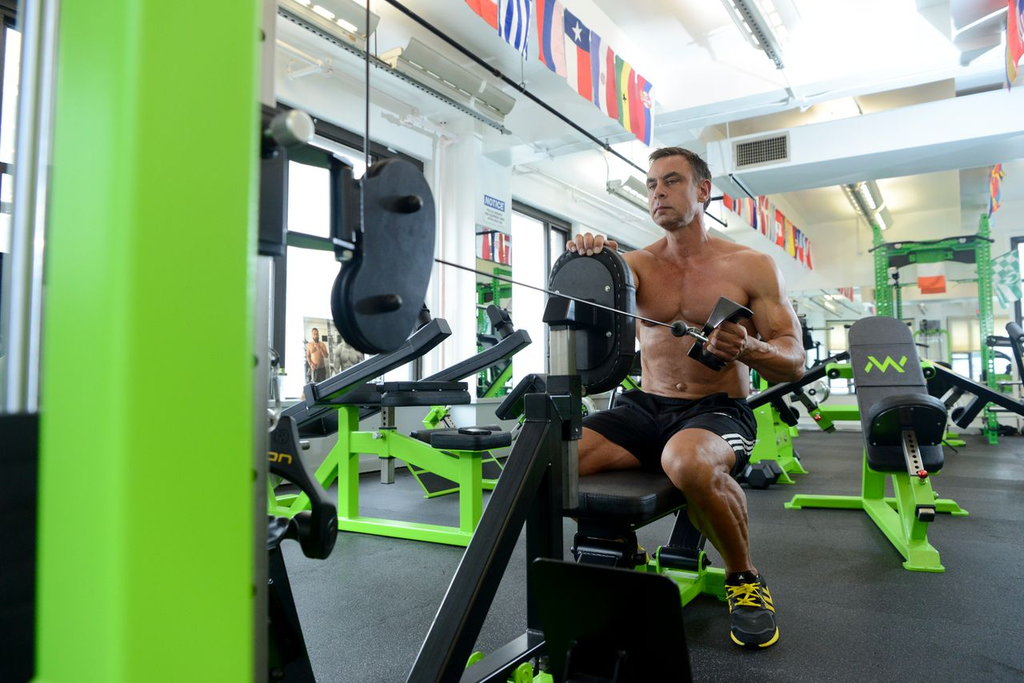
We use purpose-built equipment at our Midtown Manhattan facility partly for this reason. Different machines can change body position, stability, and how tension is experienced through a movement. Equipment alone doesn’t build muscle, but thoughtful exercise selection can make a program easier to execute and progress. Thereby stimulating more hypertrophy .
Suppose the jump between available dumbbells is too large for a client’s next press progression. Instead of sacrificing technique, we might add repetitions at the current weight or use a more suitable machine. That’s programming, not just encouragement.
What Progressive Overload Really Looks Like
Progressive overload means increasing an appropriate training demand as someone adapts. Sometimes that’s more load. Sometimes it’s more controlled repetitions or even partials. It doesn’t mean every session must produce a personal record.
If someone reaches the planned repetition target with consistent technique and the effort is appropriate, progression may be warranted. If form falls apart or recovery is deteriorating, loading more weight is not automatically progress.
A coach must distinguish too little stimulus from too much fatigue. They require opposite responses.
Where Does Nutrition Coaching Fit?
Food intake influences body composition and the ability to recover, so nutrition belongs in the conversation. But nutrition support is not the same thing as unlimited authority to prescribe diets.
My website advertises individualized nutrition and meal-planning support. Ask who develops that plan, what qualifications they hold, and whether medical conditions require a registered dietitian or other qualified clinician. General nutrition education and habit coaching are within the work of many fitness professionals; medical nutrition therapy requires appropriate professional qualifications and compliance with applicable rules. ACE’s scope-of-practice guidance explains why that distinction matters.
A meal plan someone can’t follow around client dinners solves little, the coach needs to create an understanding of macros so the client becomes self sufficient. .
How Does Coaching Change for Fat Loss Versus Muscle Gain?
Fat-loss and muscle-building clients may perform many of the same exercises, but the nutrition strategy and definition of progress differ. The person losing weight may be doing well by maintaining strength. Someone training primarily for muscle growth needs an appropriate stimulus and, over time, evidence that they’re adapting to it.
I don’t judge a fat-loss program by how badly the person feels after each workout. In fact, that is a horrible way to create a workout. The client will never come back! The main driver of weight loss is energy balance. Resistance training serves a different purpose: it helps maintain strength and muscular capability while weight comes down.
If someone’s body weight drops and their main lifts remain reasonably stable, that’s potentially good news. A lighter scale reading accompanied by sharp declines in performance deserves a closer look. It may reflect too aggressive a deficit, poor recovery, or other factors that need evaluation.
For muscle gain, the question is whether training is sufficiently challenging and progressing over time. More exercises and soreness aren’t proof of a better hypertrophy program. A client might need more productive sets; another might improve after we reduce unnecessary volume and make the remaining work harder to execute well.
A returning beginner may build muscle without deliberate weight gain; an experienced lifter faces different constraints.
This is why I prefer to start with the limiting factor rather than hand everyone the same bulk-or-cut prescription.
What Does Ongoing Coaching Look Like After the First Month?
Ongoing coaching means comparing your actual training with the original plan and making changes for a reason, not for the sake of change. You should know what progress is being monitored, how often the coach reviews it, and what would trigger an adjustment. Accountability without useful feedback becomes expensive attendance-taking.
Suppose your pressing numbers stop improving. The coach checks your training log and notices you consistently complete the first weekly session, but the second one disappears whenever work gets busy. We may not need a new chest exercise. We may need to put the most important work into the session you actually attend.
In another case, every planned session is completed, but repetitions are falling and the client reports accumulating fatigue. Adding volume would be a poor response. The workload or recovery demands may need changing.
The plateau looks similar. The right adjustment depends on its cause.
How Should Progress Be Reviewed?
Use measures that match the goal. overall performance, execution, body weight trends, circumference measurements, and how the person is managing training are all potentially useful. Not all are necessary for every client.
A stable scale weight alongside stronger lifts and a smaller waist may be progress. Heavier lifting with a shrinking range of motion are not
The first months establish baselines and reveal trends, not guaranteed transformations. Experienced lifters may progress slowly even with good programming as they near their genetic maximum..
I also think the coach should teach you to understand these decisions. Someone who can eventually manage their training with occasional reviews has gained a useful skill and I am proud of that. It means I did my job really well, I don’t consider it a failure when a client no longer needs to pay for constant supervision.
Can a Personal Fitness Coach Work Around a Busy NYC Schedule?
Yes, if the plan is built around the week you actually have rather than an imaginary perfect schedule. For someone balancing a Midtown commute, early meetings, and work travel, the best program may be the one with fewer sessions that reliably get done.
Say you’ve trained three times weekly for a month and then have a week of travel. There’s no reason to treat that interruption as if every adaptation has vanished. If a hotel gym has only adjustable dumbbells, the plan can preserve useful movement patterns and effort with the equipment available. When you return, resume sensible progression based on how you perform, not a punishment workout for missing sessions.
A short session can still be productive when exercise selection and workload are clear. And when a week without travel opens up, you may have room to do more, provided recovery and the wider program support it.
For general health, the CDC recommends at least 150 minutes of moderate aerobic activity weekly, or an equivalent alternative, plus muscle-strengthening activity on two or more days. Those are population-level health recommendations, not a requirement to purchase that many coached sessions.
The practical objective is to fit training into real life without making every calendar disruption a reason to stop altogether.
Is In-Person, Online, or Hybrid Coaching Better?
In-person coaching gives you immediate observation and technique feedback. Online coaching can be effective for someone who trains independently but needs programming and regular review. Hybrid coaching combines both. Choose based on what kind of feedback you need and how consistently you can use it.
| What you’re choosing | In-person coaching | Human online coaching | Hybrid coaching |
| Form feedback | In the moment, during exercises | Video review or scheduled remote feedback, depending on service | In person for selected sessions, remote otherwise |
| Scheduling | Requires a shared location and appointment | Independent training around your calendar | Mix of appointments and independent sessions |
| Programming | Can be adjusted while observing the session | Adjusted from logs, videos, and communication | Uses information from both |
| Equipment | Based on the training facility | Must match the gym or equipment you have | Can account for multiple locations |
| Often useful for | Learning technique, closer supervision | Confident exercisers or frequent travelers | People who want periodic hands-on reviews |
A 2025 randomized trial compared ten weeks of supervised, app-guided, and PDF-based resistance training in adults with prior lifting experience. 112 people entered the trial, but 79 were included in the final analysis. The supervised group achieved larger average squat-strength gains than the comparison groups.
There are qualifications. The groups were unequal in size, the supervised participants were younger on average, and the final analysis excluded people who didn’t meet the required session-completion threshold. The study’s reported adherence percentages described how many people reached that threshold, not the average share of workouts attended.
Most importantly, app-guided training in this experiment was not the same service as working with a human online coach who reviews your individual program. The study supports the potential benefit of supervision for the people and tasks tested. It doesn’t settle which format every client should purchase.
With an online personal trainer, ask who reviews video and training logs and when feedback arrives. An app interface doesn’t guarantee individualized human coaching, and an AI fitness coach isn’t the same thing as a person reviewing your progress.
How Much Does a Personal Fitness Coach Cost?
The cost depends on the format, level of supervision, coach, and what is included. A quoted session rate and a monthly online-coaching fee are not directly comparable until you know how much feedback, programming, and support each provides.
Maik Wiedenbach’s website lists online coaching at $999 per month as of November 2026. In-person training at the NYC facility is custom-quoted based on goals and frequency, rather than offered at one published universal price.
Before committing, ask whether the quote includes workouts for days you train alone, progress reviews, technique feedback, and communication between appointments. Confirm any minimum commitment, pause policy, cancellation terms, and what happens if you travel for two weeks. The published price alone doesn’t establish those package details.
There is no point comparing two coaches only by the amount charged per session if one teaches you a system you can eventually use independently and the other simply repeats the appointment indefinitely.
Experienced lifters may need occasional reviews; beginners may need more supervision. Their packages needn’t be identical.
How Do You Choose a Personal Fitness Coach Worth Hiring?
Look for relevant qualifications, an assessment process that matches your needs, and a coach who can explain how your program will be evaluated. The most revealing question may be what they do when a client follows the plan but doesn’t improve.
A search for personal trainer near me or fitness coach near me helps you find options. Proximity matters in Manhattan, but doesn’t establish quality.
Our private gym is at 139 E 57th Street, 6th Floor, New York, NY 10022. If you’re considering in-person training, check whether that trip fits your ordinary workweek rather than only the day of a consultation.
What Credentials Should You Check?
Look for a relevant, current credential, CPR/AED preparation, and experience with the goal you’re bringing in. The National Commission for Certifying Agencies (NCCA) accredits specific certification programs, not every course offered by NASM, ACE, ACSM, or NSCA.
Verify credentials in the US Registry of Exercise Professionals or with the issuer. Certification alone doesn’t guarantee judgment.
Questions Worth Asking Before You Pay
- How will you assess me, and which findings will change the program? A credible coach should explain why the chosen tests are relevant.
- What happens if I complete the sessions but stop progressing? Listen for a discussion of training records, exercise selection, and recovery, not just a promise to push you harder.
- Which workouts will I do alone, and how will those be reviewed? Establish what actual support comes with the fee.
- What happens when I travel or miss appointments? A workable policy matters as much as the ideal weekly schedule.
- When would you recommend I need less coaching? Someone who wants to teach you to train well should be able to answer that question.
You can meet the trainers at our NYC facility before arranging a consultation. Ask us the same questions you would ask anyone else.
When Is Paying for Personal Coaching Worth It?
Personal coaching is worth paying for when it solves a training problem you cannot reliably solve yourself. That may mean learning technique, getting a program suited to your circumstances, or having someone interpret progress and make changes you wouldn’t know how to make. It can also mean creating accountability.
It doesn’t follow that everybody needs a trainer forever. Someone who already trains well and continues to improve might need no ongoing coaching. A capable lifter with one stubborn plateau may only need a periodic review. A nervous beginner may benefit from supervised sessions until the basic movements become familiar.
That’s how I think personal training should work. You’re paying for the decisions behind the workouts and for the ability to use what you’ve learned.
If you’d like to see how we approach that in practice, book your complimentary first hour at our Midtown Manhattan gym. The booking page says no payment card is required and the plan is yours to keep. You’ll have an opportunity to understand the proposed approach before deciding whether continued coaching makes sense.
Frequently Asked Questions About Personal Fitness Coaching
Do I Need to Be Fit Before Working With a Personal Fitness Coach?
No, you don’t need to be fit before working with a personal fitness coach. A good coach assesses your current abilities and builds a program around them. You don’t need to know how to lift weights or reach a certain fitness level before your first session.
How Often Should I See a Personal Fitness Coach?
How often you see a personal fitness coach depends on your experience and how much guidance you need. Beginners may benefit from several supervised sessions per week to learn proper technique. Experienced lifters may only need occasional check-ins to review their progress and adjust their programs.
How Soon Can I Expect Results From Personal Fitness Coaching?
You may notice improvements in exercise technique and confidence before seeing visible changes in your body. Strength and physique changes generally take longer, and progress varies between individuals. A good personal fitness coach will establish your starting point, track relevant measurements, and adjust your training based on actual results rather than promise a fixed timeline.
Can a Personal Fitness Coach Work With an Injury or Medical Condition?
Yes, a qualified personal fitness coach can often adapt exercises around an injury or medical condition, provided the training stays within their professional scope and follows relevant medical guidance. However, personal trainers don’t diagnose injuries or replace physical therapists. Unexplained or worsening symptoms should be assessed by an appropriate healthcare professional.
What Should I Bring to My First Personal Training Session?
Bring comfortable workout clothes, suitable athletic shoes, and any relevant exercise instructions from your healthcare provider. Be prepared to discuss your goals, previous training experience, and weekly availability. You don’t need to arrive with a workout plan. Your coach should help determine what training is appropriate for you.
Can I Book a Consultation Before Paying for a Training Package?
Yes. Maik Wiedenbach offers a complimentary first hour through his online booking page. The page states that no payment card is required and that you can keep the plan you receive. Confirm the appointment details and ask about ongoing training costs before committing to a package.

Maik Wiedenbach is a Hall of Fame swimmer turned bodybuilding champion and fitness model featured in Muscle & Fitness and Men’s Journal. An NYU adjunct professor and award-winning coach, he founded New York’s most sought-after personal training gym.