
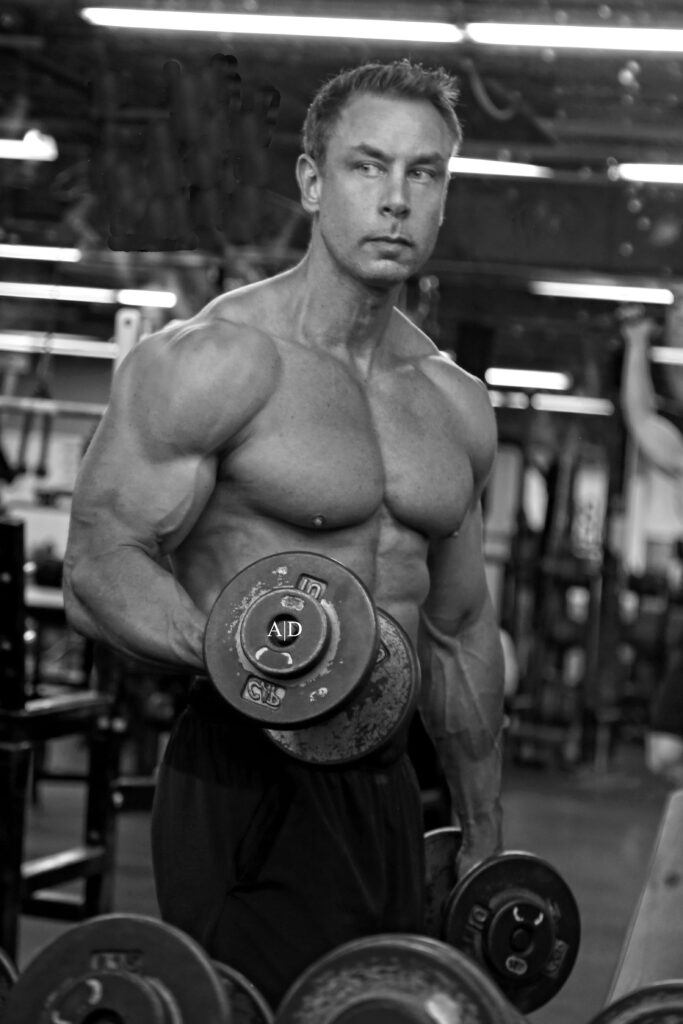
Walk into any commercial gym and look at where the people trying to lose fat are. They’re on the treadmills. The ellipticals. The stair climbers. Row after row of cardio equipment, packed with people who genuinely believe that sweating on a machine for 45 minutes is the fastest path to a leaner body.
Then look at the weight room. Half empty. And the people in there? Most of them are training for muscle gain, not fat loss. Almost nobody in the free weight section frames what they’re doing as a fat loss strategy.
This is the great disconnect of modern fitness. The most powerful fat loss tool in the gym is the barbell, the dumbbell, and the cable machine. Not the treadmill. And yet most people chasing fat loss treat resistance training as optional or skip it entirely.
I’ve been training clients in New York City for over 20 years. The clients who get the leanest, every single time, are the ones who prioritize lifting. Not because they burn more calories during the session (they often don’t). But because weight lifting changes what your body does with calories for the other 23 hours of the day. It preserves muscle and prevents you from becoming skinny fat. It elevates your resting metabolism. It determines whether the weight you lose is fat or a combination of fat and the muscle you need to keep.
This article makes the case for weight lifting as the foundation of any serious fat loss program. The science. The programming. The specific routines. And the honest comparison with cardio that the fitness industry keeps getting wrong.
Ready to make weight lifting your fat loss foundation? Start with a free consultation.
Does Weight Lifting Help With Fat Loss Effectively?
Yes. And the mechanism is more powerful than most people understand.
Weight lifting does not just burn calories during a workout. It fundamentally changes your metabolic environment in ways that support fat loss 24 hours a day, 7 days a week.
The Three Metabolic Advantages of Weight Lifting for Fat Loss
1. Muscle preservation during a caloric deficit. Fat loss requires eating fewer calories than you burn. In that deficit, your body doesn’t just burn fat. It also breaks down muscle for energy. Resistance training sends a direct signal to your body: this muscle tissue is needed. Preserve it. Without that signal, a significant portion of your weight loss comes from lean mass, which lowers your metabolic rate and makes future fat loss harder.
A study from the American College of Sports Medicine showed that dieters who combined caloric restriction with resistance training lost 97 percent fat and only 3 percent lean mass. Dieters who used caloric restriction alone lost 75 percent fat and 25 percent lean mass. Same total weight loss. Dramatically different body composition.
2. Elevated resting metabolic rate. Each pound of muscle burns approximately 6 to 7 calories per day at rest. Fat burns about 2. Over months of training, adding 5 to 8 pounds of muscle increases your resting calorie burn by 30 to 56 calories daily. That’s modest per day. Over a year, it adds up to 11,000 to 20,000 additional calories burned doing absolutely nothing.
3. EPOC (Excess Post-Exercise Oxygen Consumption). Heavy resistance training elevates your metabolic rate for 24 to 48 hours after the session. Your body requires additional energy to repair muscle tissue, replenish glycogen, and restore homeostasis. Research suggests this “afterburn” can account for an additional 100 to 200 calories per day after an intense lifting session. Cardio produces minimal EPOC by comparison.
The National Institute on Aging emphasizes resistance training as essential for maintaining muscle mass, metabolic health, and functional capacity.
Key Takeaway: Weight lifting supports fat loss through three mechanisms: preserving muscle during a deficit (keeping metabolic rate high), increasing resting calorie burn through added muscle, and generating significant post-exercise calorie expenditure for 24 to 48 hours after each session.
Is Lifting Better Than Cardio for Long-Term Fat Loss?
For long-term body composition, yes. And the data is overwhelmingly clear.
The Cardio Problem
Cardio burns more calories per minute during the session. A 45-minute run might burn 400 to 500 calories. A 45-minute lifting session might burn 200 to 350 calories. On paper, cardio wins the in-session calorie battle.
But cardio does nothing to build or preserve muscle, in fact it speeds up muscle loss. SImply look at long distance endurance athletes. . Over weeks and months of cardio-only fat loss, you lose both fat and muscle. Your metabolic rate drops. You need fewer calories to maintain your new weight. And the body you reveal after the fat loss is soft and undefined because there’s no muscle underneath.
Cardio also produces minimal EPOC. Your metabolism returns to baseline within an hour or two of finishing a run. With heavy lifting, elevated metabolism can last two full days.
The Lifting Advantage
Weight lifting produces less in-session calorie burn but creates a metabolic environment that burns more calories across the entire week. It preserves and builds the lean tissue that keeps your metabolism running. And it produces the defined, athletic body composition that most people actually want when they say they want to “lose weight.”
Weight Lifting vs Cardio for Fat Loss: Full Comparison
| Factor | Weight Lifting | Cardio (Moderate Intensity) |
| Calories burned during session | 200-350 per 45 min | 350-500 per 45 min |
| EPOC (afterburn) | 100-200 cal over 24-48 hrs | 20-50 cal over 1-2 hrs |
| Muscle preservation | High | Low |
| Muscle building potential | High | None |
| Resting metabolic rate effect | Increased | No change or decreased |
| Body composition improvement | Significant | Minimal |
| Injury risk (long-term) | Low (with proper form) | Moderate (repetitive stress) |
| Sustainability | High | Moderate (burnout risk) |
| Fat-to-muscle loss ratio in deficit | 90-97% fat | 70-80% fat |
The bottom row is the most important metric in that table. How much of the weight you lose is actually fat? Lifting wins by a wide margin.
What Weight Training Routine Is Best for Fat Loss?
The best routine prioritizes compound movements, progressive overload, and manageable volume. Here’s the exact framework I use with fat loss clients.
Programming Principles for Fat Loss Lifting
Compound movements first. Exercises that train multiple muscle groups simultaneously create the most metabolic demand per set. Squats, hip hinges , dumbbells bench presses, rows, overhead presses, and pull downs should form 70 to 80 percent of your program.
Progressive overload always. Add weight, reps, or sets over time. This is the stimulus that tells your body to preserve and build muscle. Without progressive overload, resistance training becomes maintenance at best.
Moderate volume. 10 to 16 working sets per muscle group per week is sufficient for most people in a fat loss phase. Going higher creates recovery demands that a caloric deficit cannot support.
Adequate rest between sets. 2 to 3 minutes between compound lifts. This allows full recovery of the nervous system and maintains quality output across sets.
Full Body Weight Lifting Program Focused on Fat Loss
Day 1: Full Body A
| Exercise | Sets x Reps | RIR | Rest |
| Leg Press | 4 x 6-8 | 2 | 2-3 min |
| Dumbbell Bench Press | 3 x 8-10 | 2 | 2 min |
| One arm Row | 3 x 8-10 | 2 | 2 min |
| Cable Deadlift | 3 x 10-12 | 2 | 2 min |
| Dumbbell Overhead Press | 3 x 10-12 | 2 | 90 sec |
Day 2: Rest or Walking
Day 3: Full Body B
| Exercise | Sets x Reps | RIR | Rest |
| Leg curl | 4 x 5-7 | 2 | 3 min |
| Incline Dumbbell Press | 3 x 8-10 | 2 | 2 min |
| Pull-ups or Lat Pulldown | 3 x 8-10 | 2 | 2 min |
| Lunge | 3 x 10-12 each leg | 2 | 2 min |
| Cable Face Pull | 3 x 12-15 | 2 | 90 sec |
Day 4: Rest or Walking
Day 5: Full Body C
| Exercise | Sets x Reps | RIR | Rest |
| Hack Squat | 3 x 8-10 | 2 | 2 min |
| Dumbbell Row | 3 x 10-12 | 2 | 90 sec |
| Incline Machine Bench Press | 3 x 6-8 | 2 | 2-3 min |
| Leg Press | 3 x 12-15 | 2 | 2 min |
| Cable Lateral Raise | 3 x 12-15 | 1 | 60 sec |
Days 6-7: Rest, walking, mobility
Total weekly working sets per major muscle group: 12 to 16. Three training days with full recovery between sessions. Progressive overload applied week over week.
Want this program customized for your body and goals? Talk to our coaching team.
Should I Lift Heavy or Light Weights to Lose Body Fat Faster?
The short answer: lift heavy enough to challenge your muscles within a moderate rep range. Neither extremely heavy (1 to 3 rep maxes) nor extremely light (20+ rep sets) is optimal for fat loss.
The Evidence
Research consistently shows that comparable muscle growth occurs across a wide rep range (6 to 30 reps) when sets are taken close to failure. However, for fat loss specifically, moderate loads in the 6 to 12 rep range offer the best balance of:
- Mechanical tension (the primary driver of muscle preservation)
- Total work volume (caloric expenditure per session)
- Recovery compatibility (sustainable in a caloric deficit)
- Joint safety (manageable load with good form)
Very heavy training (1 to 5 reps) creates high nervous system fatigue that a caloric deficit makes harder to recover from. Very light training (15 to 30 reps) produces more cardiovascular fatigue than muscle stimulus and can feel discouraging when energy is limited.
The sweet spot for most fat loss programs: 6 to 12 reps for compound movements, 8-10 reps for isolation work, with all sets taken to within 2 to 3 reps of failure.
Highlight: The Right Weight for Fat Loss
Use a weight that allows you to perform 6 to 12 quality reps on compound lifts and 10 to 15 reps on isolation exercises, stopping 2 to 3 reps from failure. This range preserves muscle, creates meaningful metabolic demand, and is recoverable in a caloric deficit. Avoid maximal loads and excessively light weights during fat loss phases.
Best Compound Exercises for Fat Loss and Muscle Retention
Compound exercises train multiple joints and large muscle groups simultaneously. They produce the most metabolic demand per set and provide the strongest muscle-preservation signal during a deficit.
The Essential Five
1. Some Form of Squat. Trains quads, glutes, core, and upper back. The highest total muscle recruitment of any single exercise. Could be free weights, leg press you name it.
2. A horizontal press. Trains chest, shoulders, and triceps. The primary upper body push pattern.
3. A horizontal pull such as a row Trains the entire back, rear delts, and biceps. Essential for posture and upper body balance.
4. Any form of vertical press, machine or free weights. Trains shoulders, upper chest, and triceps. Builds functional pressing strength.
5. Vertical pull such as the pull down . Trains lats, biceps, and mid-back. The primary vertical pull pattern.
Build your fat loss program around these movements. Fill remaining volume with 2 to 3 isolation exercises per session for lagging areas.
The Centers for Disease Control and Prevention recommends muscle-strengthening activities that work all major muscle groups at least two days per week for adult health.
How Many Days a Week Should I Lift Weights to Lose Fat?
For most people, 3 to 4 days per week produces optimal fat loss results. Here’s why.
The Recovery Equation
Fat loss requires a caloric deficit. A caloric deficit reduces your body’s recovery capacity. More frequent training in a deficit creates accumulated fatigue that can impair performance, increase injury risk, and elevate cortisol.
Three well-structured sessions per week provide sufficient muscle stimulus while allowing full recovery between sessions. Four sessions work for individuals with good sleep, adequate protein intake, and moderate deficit sizes.
Five or more sessions per week in a caloric deficit is sustainable for advanced lifters with excellent recovery management but is counterproductive for most people.
How to Structure Your Week
3-day option (recommended for most): Full body sessions on Monday, Wednesday, Friday. Each session trains all major muscle groups. Rest or walk on off days.
4-day option (intermediate to advanced): Upper/Lower split. Monday: Upper. Tuesday: Lower. Wednesday: Rest. Thursday: Upper. Friday: Lower. Weekends: Rest and walking.
Both options accumulate 12 to 16 sets per muscle group per week, which is the evidence-based volume range for hypertrophy and muscle preservation during fat loss.
The American College of Sports Medicine recommends resistance training 2 to 4 days per week with at least 48 hours between sessions targeting the same muscle groups for optimal adaptation.
Can You Build Muscle and Lose Fat at the Same Time With Weight Lifting?
Yes. Body recomposition is real, achievable, and the ideal outcome for anyone lifting for fat loss.
Who Gets the Best Recomposition Results
Beginners. New lifters respond dramatically to resistance training. The neuromuscular adaptation and “newbie gains” phase allows simultaneous muscle growth and fat loss for 6 to 12 months, even in a moderate deficit.
Returning trainees. People who trained previously and took time off have muscle memory (myonuclear domain persistence). Muscle regrows faster than it was originally built, and this accelerated growth can occur alongside fat loss.
Higher body fat individuals. People with more stored body fat have greater energy reserves available. The body can mobilize stored fat for fuel while directing dietary protein and training stimulus toward muscle growth.
The Recomposition Requirements
Moderate caloric deficit: 200 to 400 calories below maintenance. Not aggressive. The smaller deficit allows more energy for muscle protein synthesis.
High protein: 0.8 to 1 gram per pound of bodyweight. This provides the amino acids needed for muscle building even in a deficit.
Progressive overload: Weights or reps must increase over time. If you’re not getting stronger, you’re not building muscle.
Adequate sleep: 7 to 9 hours. Muscle growth and fat mobilization both occur during sleep.
Body recomposition is slower than pure weight loss or pure muscle gain. The scale may not move dramatically. But the mirror, measurements, and strength numbers tell the real story.
Key Takeaway: Body recomposition (simultaneous fat loss and muscle gain) is achievable with weight lifting, a moderate caloric deficit, high protein intake, and progressive overload. It works best for beginners, returning trainees, and those with higher body fat percentages.
Explore our training programs designed for body recomposition.
Do I Still Need Cardio if I Am Lifting Weights for Fat Loss?
Cardio is not required for fat loss. But it can be a useful supplement to a lifting-based program.
When Cardio Helps
When your caloric deficit needs to be larger without eating less. If you’re already at a reasonable calorie intake and need a bigger deficit, adding 20 to 30 minutes of moderate cardio or increasing daily steps is preferable to cutting more food.
For cardiovascular health. Heart health matters independent of body composition. Two to three sessions of moderate cardio per week supports cardiovascular function. This is a health benefit, not a fat loss requirement.
For active recovery. Light cardio on rest days (walking, easy cycling) promotes blood flow and recovery without creating additional training stress.
When Cardio Hurts
When it replaces lifting sessions. If you skip a resistance training day to do cardio instead, you’ve made a net negative trade for fat loss. The muscle-preserving stimulus of lifting is irreplaceable.
When it’s excessive. Daily intense cardio in a caloric deficit accelerates muscle loss, increases cortisol, and creates recovery debt that undermines training quality.
When it suppresses appetite. Some people find that intense cardio reduces appetite, which can make it harder to hit protein targets on an already restricted intake.
The Optimal Cardio-Lifting Balance for Fat Loss
Priority 1: 3 to 4 resistance training sessions per week (non-negotiable)
Priority 2:4,000 to 7,000 daily steps (walking, the most underrated fat loss tool)
Priority 3 (optional): 2 to 3 sessions of 20 to 30 minutes moderate cardio per week
This hierarchy ensures that the most impactful interventions are protected while allowing cardio to contribute where it’s genuinely useful.
Does Weight Lifting Burn Belly Fat?
Weight lifting does not burn belly fat specifically. No exercise does. Fat loss is systemic. Your body decides where fat comes off based on genetics and hormonal profile, not which muscles you train.
However, weight lifting is the most effective exercise for reducing total body fat percentage, which is what ultimately reveals a leaner midsection. As total body fat drops through a caloric deficit combined with resistance training, belly fat decreases as part of the overall reduction.
Abdominal exercises (crunches, planks, leg raises) strengthen your core muscles. They do not remove the fat covering those muscles. The path to visible abs is a low enough body fat percentage, achieved through sustained caloric deficit and muscle-preserving resistance training.
The National Institute of Diabetes and Digestive and Kidney Diseases confirms that healthy weight management requires sustained energy balance strategies rather than targeted exercise approaches.
How Long Does It Take to See Fat Loss Results From Weight Lifting?
Honest timelines prevent frustration and premature quitting.
Weeks 1 to 2: No visible fat loss. Neuromuscular adaptation. You feel stronger and more coordinated. Possible scale fluctuation from water and glycogen changes.
Weeks 3 to 4: Strength improvements become noticeable. Clothes may begin to fit slightly differently. Scale weight may decrease 2 to 4 pounds if nutrition is on point.
Weeks 6 to 8: Visible changes in the mirror for most people. Muscle definition begins to emerge in arms and shoulders. Waist measurement decreases. Scale may underrepresent progress due to muscle gain offsetting fat loss.
Weeks 12 to 16: Meaningful body composition transformation. Clear visual difference in progress photos. Strength significantly improved. Clothes fit noticeably different.
Months 6 to 12: Full body recomposition results become apparent. This is where the investment in lifting pays its biggest dividends. The body you’ve built through resistance training looks fundamentally different from what cardio-only fat loss produces.
Highlight: Patience With Lifting for Fat Loss
Weight lifting produces slower scale changes than cardio because muscle gain can offset fat loss on the scale. But the body composition changes are dramatically superior. Trust the mirror, measurements, and strength log over the scale during the first 8 to 12 weeks. The visual results follow the performance results.
Meet our trainers who specialize in lifting-based fat loss programs.
Progressive Overload Lifting Schedule to Maximize Fat Loss
Progressive overload is the principle that drives continued adaptation. Without it, your body stops responding to training. Here’s how to apply it specifically during a fat loss phase.
Progression Methods (In Order of Priority)
1. Add weight. The simplest form. Add 2.5 to 5 pounds to barbell lifts and 2.5 pounds to dumbbell lifts when you can complete all prescribed sets and reps at the current weight.
2. Add reps. If you can’t add weight, add one rep per set. When you reach the top of your rep range on all sets (e.g., 4 x 10 instead of 4 x 8), increase the weight and drop back to the bottom of the range.
3. Add a set. If weight and reps are both stalled (common deep into a caloric deficit), add one set to the exercise. Increased volume can drive continued adaptation when load increases become difficult.
4. Improve technique. Better form means more tension on the target muscle. A deeper squat, a longer pause at the bottom of a bench press, or a more controlled eccentric phase all increase effective stimulus without changing the external load.
During a fat loss phase, strength gains slow significantly. This is normal. The goal shifts from building strength to maintaining it. If your lifts stay the same or increase slightly over a 12-week cut, you’ve done an excellent job.
Expert Viewpoint: The Weight Room Is Your Best Fat Loss Tool
Twenty years of training clients in New York City. Thousands of body composition transformations. And the pattern could not be clearer.
The leanest clients I’ve ever trained are lifters. Not runners. Not cyclists. Not group fitness enthusiasts. Lifters. People who show up 3 to 4 times per week, lift compound movements with progressive overload, eat adequate protein, and maintain a moderate caloric deficit for months.
The misconception that cardio is the fat loss tool and weights are the muscle-building tool has cost millions of people years of wasted effort. Cardio burns calories in the moment. Lifting changes your body’s metabolic machinery permanently. It builds the muscle that burns calories at rest. It signals your body to keep lean tissue and shed fat tissue when you eat less. It produces the defined, athletic appearance that no amount of treadmill time can create.
If you take one thing away from this article, let it be this: make lifting the foundation. Add cardio if you want. Walk every day. Manage your nutrition. Sleep well. But the non-negotiable, the one thing you cannot skip if you want to get lean and stay lean, is picking up heavy things on a regular schedule and putting them back down.
That’s the real fat loss secret. It’s been in the weight room the whole time.
Ready to start lifting for fat loss? Learn more about our approach.
Frequently Asked Questions
Is Weight Lifting More Effective Than Cardio for Fat Loss?
Yes, weight lifting preserves muscle, elevates resting metabolism, and produces superior body composition outcomes compared to cardio, which often results in both fat and muscle loss.
How Does Lifting Weights Help You Burn Fat Even After Your Workout?
Heavy resistance training creates EPOC (excess post-exercise oxygen consumption), which elevates metabolic rate for 24 to 48 hours as the body repairs muscle tissue and restores glycogen.
How Many Days a Week Should I Lift Weights to Lose Fat?
Three to four resistance training sessions per week provides optimal muscle stimulus while allowing sufficient recovery in a caloric deficit.
Should I Lift Heavy or Light Weights to Lose Body Fat Faster?
Moderate loads in the 6 to 12 rep range on compound lifts and 10 to 15 reps on isolation exercises provide the best balance of muscle preservation and caloric expenditure during fat loss.
Does Weight Lifting Burn Belly Fat or Does It Only Build Muscle?
Weight lifting reduces total body fat percentage through metabolic improvement and muscle preservation, which decreases belly fat as part of systemic fat loss rather than through spot reduction.
What Are the Best Compound Exercises for Fat Loss and Muscle Retention?
Squats, deadlifts, bench presses, rows, overhead presses, pull-ups, lunges, and dips provide the highest metabolic demand and strongest muscle-preservation signal during a caloric deficit.
Can Beginners Use Weight Lifting for Fast Fat Loss?
Yes, beginners experience rapid neuromuscular adaptation and can build muscle while losing fat simultaneously during their first 6 to 12 months of structured resistance training.
Do I Still Need Cardio if I Am Lifting Weights for Fat Loss?
Cardio is not required for fat loss when lifting and nutrition are properly managed, but 2 to 3 optional moderate sessions per week and daily walking can supplement caloric expenditure.
Can You Build Muscle and Lose Fat at the Same Time With Weight Lifting?
Yes, body recomposition is achievable with a moderate caloric deficit, high protein intake, progressive resistance training, and adequate sleep, especially for beginners and returning trainees.
How Long Does It Take to See Fat Loss Results From Weight Lifting?
Visible body composition changes typically appear after 6 to 8 weeks, with meaningful transformation becoming apparent at 12 to 16 weeks of consistent training and nutrition management.
Maik Wiedenbach is a New York City-based personal trainer, fitness author, and founder of Maik Wiedenbach Fitness. He has spent over 15 years helping clients achieve lasting fat loss and body recomposition through evidence-based resistance training and nutrition programming.

Maik Wiedenbach is a Hall of Fame swimmer turned bodybuilding champion and fitness model featured in Muscle & Fitness and Men’s Journal. An NYU adjunct professor and award-winning coach, he founded New York’s most sought-after personal training gym.