
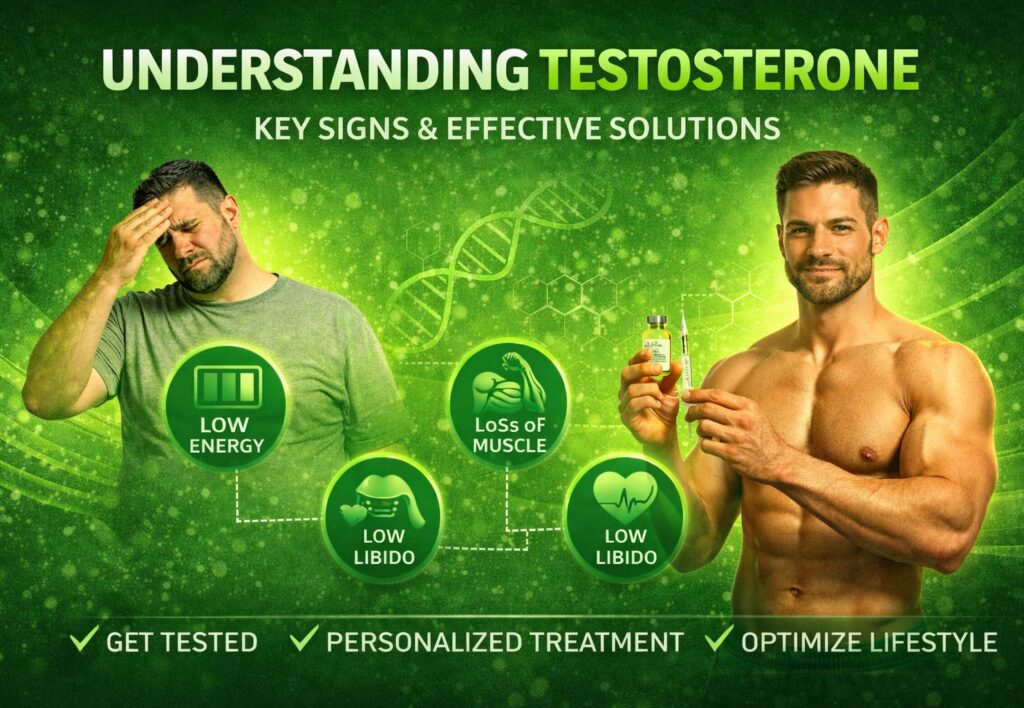
The energy you used to have isn’t there anymore. Workouts that felt manageable now feel like a grind. The weight around your midsection won’t budge despite doing everything right. Your motivation—for training, for work, for life—has quietly faded.
The moment you start searching for answers, you enter a marketplace designed to exploit that concern. Supplement companies selling “testosterone boosters” that don’t work. Clinics promising to “optimize your hormones” before they’ve even looked at your bloodwork. Influencers pushing protocols they don’t actually follow. Everyone has something to sell you.
Most of it is noise. Some of it is dangerous.
And here’s what the supplement ads won’t tell you: most men with low testosterone symptoms can improve their levels significantly through lifestyle changes alone. Sleep. Stress management. Body composition. Training structure. Nutrition. These aren’t consolation prizes—they’re the primary intervention.
What follows is the evidence-based guide to testosterone I wish existed when clients first started asking me about it. No miracle supplements. No scare tactics. No oversimplified “solutions” that ignore the complexity of how your body actually works.
Just the science, the practical strategies, and the honest assessment of when you might need medical support—and when you probably don’t.
Ready for personalized guidance on training and lifestyle factors that affect hormonal health? Connect with coaches who understand the full picture.
Understanding Testosterone: The Foundation of Male Physiology
Testosterone isn’t merely a hormone associated with aggression and muscle—it’s the primary androgen responsible for male development and ongoing physiological function. Produced primarily in the Leydig cells of the testes (with small amounts from the adrenal glands), testosterone influences virtually every system in the male body.
According to the Endocrine Society, normal testosterone levels in adult males range from approximately 300 to 1,000 ng/dL, with significant individual variation based on age, time of day, and overall health status. The National Institutes of Health reports that testosterone levels naturally decline approximately 1-2% annually after age 30, though this decline varies considerably between individuals.
What makes testosterone particularly relevant for fitness enthusiasts is its dual role: as an anabolic hormone promoting muscle protein synthesis and as a metabolic regulator influencing fat storage and energy utilization. Understanding this hormone isn’t optional for anyone serious about body composition—it’s essential.
What Are the Main Signs of Low Testosterone and When Should I Consider Getting Tested?
Recognizing low testosterone requires looking beyond the obvious. While decreased libido and erectile dysfunction receive the most attention, the symptom profile is considerably broader and often more subtle.
Physical Indicators
The physical manifestations of low testosterone often develop gradually, making them easy to attribute to aging or lifestyle factors:
- Reduced muscle mass and strength despite consistent training
- Increased abdominal fat that resists diet and exercise
- Decreased bone density (often undetected until injury occurs)
- Fatigue and reduced stamina that sleep doesn’t resolve
- Hot flashes or night sweats (less common but significant)
- Gynecomastia (breast tissue development)
Psychological and Cognitive Signs
The mental effects of low testosterone frequently precede or accompany physical changes:
- Persistent low mood or depression without clear cause
- Difficulty concentrating and memory problems
- Decreased motivation for work, training, and activities previously enjoyed
- Irritability and mood swings
- Reduced confidence and sense of well-being
When Testing Makes Sense
Consider testosterone testing when:
- Multiple symptoms from the lists above persist for more than 4-6 weeks
- You’re over 40 with unexplained changes in body composition despite consistent training
- Sexual function has declined noticeably
- You have conditions associated with low testosterone (obesity, type 2 diabetes, sleep apnea, chronic opioid use)
- Previous blood work showed borderline levels
Important: A single low reading doesn’t confirm hypogonadism. Testing should occur in the morning (when levels peak), and at least two separate low readings are typically required for diagnosis. Total testosterone, free testosterone, and SHBG (sex hormone-binding globulin) provide the most complete picture.
If you’re experiencing these symptoms and want personalized guidance on whether testing is appropriate, schedule a consultation with a qualified fitness professional who can assess your training, nutrition, and lifestyle factors.
What Role Does Testosterone Play in Muscle Gain, Fat Loss, and Energy for Men?
Understanding testosterone’s mechanisms explains why it matters so much for body composition and performance.
Muscle Protein Synthesis
Testosterone directly stimulates muscle protein synthesis through androgen receptors in muscle tissue. When testosterone binds to these receptors, it triggers a cascade of genetic expression that promotes:
- Increased nitrogen retention in muscle tissue
- Enhanced satellite cell activation for muscle repair and growth
- Greater IGF-1 (insulin-like growth factor) production locally in muscles
- Improved neuromuscular efficiency
Research published by the American Physiological Society demonstrates that testosterone’s anabolic effects are dose-dependent—higher levels (within physiological ranges) correlate with greater muscle protein synthesis rates.
Fat Metabolism and Distribution
Testosterone influences where and how the body stores fat:
- Inhibits lipoprotein lipase activity in abdominal fat cells, reducing fat storage
- Promotes lipolysis (fat breakdown) for energy utilization
- Influences adipocyte (fat cell) development and size
- Affects insulin sensitivity, improving glucose utilization over fat storage
Men with low testosterone consistently show increased visceral fat accumulation—the metabolically dangerous fat surrounding organs—independent of total caloric intake.
Energy Production and Utilization
The fatigue associated with low testosterone stems from multiple mechanisms:
- Reduced red blood cell production (testosterone stimulates erythropoiesis)
- Decreased mitochondrial function in cells
- Altered glucose metabolism
- Disrupted sleep architecture
Testosterone’s Impact: Comparison Table
| Function | Normal Testosterone | Low Testosterone |
| Muscle protein synthesis | Optimized; supports training adaptations | Reduced; harder to build/maintain muscle |
| Fat storage pattern | Favors peripheral distribution | Increased visceral (abdominal) fat |
| Energy levels | Stable throughout day | Persistent fatigue, afternoon crashes |
| Recovery from training | Efficient; 48-72 hours for most workouts | Prolonged; increased overtraining risk |
| Libido and sexual function | Normal functioning | Reduced interest and performance |
| Mood and motivation | Generally positive and stable | Tendency toward depression, low drive |
How Can I Naturally Increase Testosterone Levels Through Training, Diet, and Lifestyle Changes?
Before considering any intervention, exhaust the considerable potential of lifestyle optimization. For many men, these changes alone restore testosterone to healthy levels.
Training Protocols That Support Testosterone
Not all exercise affects testosterone equally. The research consistently identifies specific training characteristics that promote testosterone production:
Compound Resistance Training
Exercises recruiting large muscle groups across multiple joints trigger the greatest hormonal response:
- Squats, deadlifts, bench press, rows, and overhead press
- Working sets in the 6-10 repetition range at 70-85% of one-rep max
- Total session volume of 4-6 exercises, 3-5 sets each
- Rest periods of 60-90 seconds between sets
Training Frequency and Recovery
The acute testosterone spike from training only matters if chronic levels remain elevated:
- 3-4 resistance training sessions weekly allows adequate recovery
- Training the same muscle group every 48-72 hours optimizes the stimulus-recovery cycle
- Deload weeks every 4-6 weeks prevent accumulated fatigue
What to Avoid
Excessive training suppresses testosterone through elevated cortisol:
- Sessions exceeding 60-75 minutes
- Daily high-intensity training without recovery days
- Chronic cardio at moderate intensities (the “gray zone”)
- Insufficient sleep between sessions
For personalized programming that accounts for your current fitness level and testosterone optimization goals, explore training options with experienced coaches.
Nutritional Strategies
Diet profoundly influences testosterone production:
Caloric Adequacy
Prolonged caloric deficits suppress testosterone as the body downregulates reproductive function during perceived famine. Aggressive dieting for fat loss should be periodized, not perpetual.
Dietary Fat Intake
Testosterone synthesis requires cholesterol as a precursor:
- Aim for 0.3-0.5 grams of fat per pound of body weight daily
- Prioritize monounsaturated fats (olive oil, avocados, nuts)
- Include saturated fats moderately (eggs, dairy, meat)
- Omega-3 fatty acids from fish reduce inflammation that impairs testosterone production
Micronutrient Priorities
Specific nutrients play direct roles in testosterone synthesis:
- Zinc: Found in oysters, beef, pumpkin seeds; supports Leydig cell function
- Magnesium: Present in dark leafy greens, nuts, seeds; involved in over 300 enzymatic reactions including hormone production
- Vitamin D: Actually a hormone precursor; most adults are deficient, especially in northern latitudes
- Boron: Trace mineral in raisins, prunes, and almonds; may modestly increase free testosterone
Foods to Limit
- Excessive alcohol (directly toxic to Leydig cells)
- Processed foods high in trans fats
- Soy products in large quantities (though moderate intake is likely fine)
- Sugar-sweetened beverages (promote insulin resistance and weight gain)
How Do Sleep, Stress, and Body Fat Percentage Affect Testosterone Levels and What Should I Change First?
These three factors form the foundation of hormonal health. Address them before considering any supplement or intervention.
Sleep: The Non-Negotiable Foundation
Testosterone production follows a circadian rhythm, with the majority occurring during deep sleep. Research from the Journal of the American Medical Association found that one week of sleep restriction (5 hours nightly) reduced testosterone levels by 10-15% in healthy young men.
Sleep Optimization Protocol:
- Target 7-9 hours of actual sleep (not just time in bed)
- Maintain consistent sleep/wake times, including weekends
- Create a cool, dark sleeping environment (65-68°F ideal)
- Eliminate screens 60-90 minutes before bed
- Limit caffeine after 2 PM
- Address sleep apnea if present (dramatically suppresses testosterone)
Stress and Cortisol Management
Cortisol and testosterone exist in an inverse relationship—chronic stress keeps cortisol elevated, directly suppressing testosterone production through hypothalamic-pituitary-gonadal axis inhibition.
Practical Stress Reduction:
- Brief daily meditation (even 10 minutes shows benefits)
- Scheduled recovery activities (walks, hobbies, social connection)
- Boundaries around work hours and digital availability
- Identifying and addressing major life stressors
- Appropriate training load (not adding stress through excessive exercise)
Body Fat Percentage: The Sweet Spot
Body fat influences testosterone through aromatase enzyme activity—this enzyme converts testosterone to estrogen and is concentrated in adipose tissue.
The Testosterone-Optimizing Body Fat Range:
| Body Fat % | Testosterone Impact |
| Below 8% | Often suppressed due to low leptin and energy availability |
| 10-15% | Optimal range for most men; lowest aromatase activity |
| 16-20% | Still healthy; modest increase in aromatase |
| 21-25% | Measurably reduced testosterone; increased estrogen |
| Above 25% | Significantly impaired; creates negative feedback loop |
Priority Order for Intervention:
- Sleep first — Provides the foundation for everything else and improvements occur quickly
- Body fat second — If above 20%, gradual reduction (0.5-1% monthly) improves all hormonal markers
- Stress third — Often requires ongoing management rather than quick fixes
What Is a Safe Strength Training and Nutrition Plan for Someone Looking to Optimize Testosterone and Body Composition?
Here’s a practical framework that integrates the principles discussed:
Weekly Training Structure
Day 1: Lower Body Emphasis
- Barbell back squat: 4 sets × 6-8 reps
- Romanian deadlift: 3 sets × 8-10 reps
- Walking lunges: 3 sets × 10-12 per leg
- Leg press: 3 sets × 10-12 reps
- Calf raises: 3 sets × 12-15 reps
Day 2: Upper Body Push
- Bench press: 4 sets × 6-8 reps
- Overhead press: 3 sets × 8-10 reps
- Incline dumbbell press: 3 sets × 10-12 reps
- Dips: 3 sets × max reps
- Tricep pushdowns: 2 sets × 12-15 reps
Day 3: Rest or Light Activity
Day 4: Upper Body Pull
- Deadlift: 4 sets × 5-6 reps
- Weighted pull-ups: 3 sets × 6-8 reps
- Barbell rows: 3 sets × 8-10 reps
- Face pulls: 3 sets × 12-15 reps
- Barbell curls: 2 sets × 10-12 reps
Day 5: Full Body/Athletic
- Front squat: 3 sets × 8 reps
- Dumbbell bench press: 3 sets × 10 reps
- Chin-ups: 3 sets × max reps
- Farmer’s walks: 3 sets × 40 yards
- Core circuit: 2 rounds
Days 6-7: Rest, Recovery, Light Movement
Nutrition Framework
For a 180-pound man targeting body recomposition:
| Macronutrient | Daily Target | Food Sources |
| Protein | 160-180g | Beef, chicken, fish, eggs, Greek yogurt |
| Carbohydrates | 200-250g | Rice, potatoes, oats, fruits, vegetables |
| Fats | 70-90g | Olive oil, avocado, nuts, fatty fish, eggs |
| Total Calories | 2,400-2,800 | Adjusted based on progress |
Meal Timing Considerations:
- Protein distributed across 4-5 meals (30-40g per meal)
- Carbohydrates concentrated around training
- Fats reduced pre/post-workout for faster digestion
- No need for extreme meal timing protocols
Want a fully customized plan accounting for your specific goals, schedule, and current fitness level? Explore coaching options that include ongoing adjustments based on your progress.
Which Evidence-Based Supplements May Support Healthy Testosterone Levels, and Which Should I Avoid?
The supplement industry profits enormously from testosterone anxiety. Most products don’t work, some are dangerous, and only a handful have legitimate research support.
Supplements With Evidence
Vitamin D3
- Evidence: Strong for those with deficiency (below 30 ng/mL)
- Mechanism: Acts as a hormone precursor; vitamin D receptors exist in testicular tissue
- Dosage: 2,000-5,000 IU daily, adjusted based on blood levels
- Note: Test levels before supplementing; toxicity is possible at high doses
Zinc
- Evidence: Moderate; primarily beneficial if deficient (common in athletes)
- Mechanism: Required for testosterone synthesis and sperm production
- Dosage: 25-45mg daily
- Note: Excess zinc depletes copper; don’t exceed recommendations
Magnesium
- Evidence: Moderate; may increase free testosterone by reducing SHBG
- Mechanism: Involved in hundreds of enzymatic processes including hormone production
- Dosage: 200-400mg daily (citrate or glycinate forms absorb best)
- Note: Most adults are deficient; few risks from supplementation
Creatine Monohydrate
- Evidence: Strong for performance; indirect testosterone effects
- Mechanism: May increase DHT (active testosterone metabolite)
- Dosage: 5g daily
- Note: Well-researched, safe, affordable, and effective for training adaptation
Supplements to Avoid
Tribulus Terrestris
- Claims: “Natural testosterone booster”
- Reality: Multiple human studies show no testosterone increase
- Risk: Wasted money; sometimes contaminated products
DHEA
- Claims: “Precursor to testosterone”
- Reality: Inconsistent results; may convert to estrogen instead
- Risk: Hormonal imbalance; legally restricted in some contexts
“Testosterone Booster” Proprietary Blends
- Claims: Various
- Reality: Usually underdosed ingredients in secret formulations
- Risk: Unknown ingredient quantities; often contaminated; expensive
Prohormones/Designer Steroids
- Claims: “Legal steroids”
- Reality: Actual steroids with legal gray areas
- Risk: Liver damage, hormonal suppression, legal issues, unknown purity
Highlight Box: The Supplement Reality Check
If a supplement could meaningfully increase testosterone, it would be regulated as a pharmaceutical. Supplements that actually work tend to correct deficiencies rather than push levels beyond normal ranges. Blood testing determines whether you’re deficient; marketing claims don’t.
For evidence-based supplement recommendations tailored to your training goals, browse quality options from trusted sources.
Is My Training Plan Helping or Hurting My Testosterone Levels, and How Should I Adjust It?
Your training approach can either support hormonal health or systematically undermine it. Here’s how to evaluate your current program:
Signs Your Training Supports Testosterone
- Progressive strength gains over months
- Adequate energy for workouts and daily activities
- Mood remains stable or positive
- Sleep quality is good
- Libido is normal
- Body composition is improving
Signs Your Training Suppresses Testosterone
- Strength plateaus or regression despite effort
- Persistent fatigue that rest doesn’t resolve
- Frequent illness or injury
- Decreased motivation to train
- Poor sleep despite feeling exhausted
- Low libido and mood
- Increased body fat despite high training volume
Adjustment Framework
If Overtraining:
- Reduce training frequency by 1-2 sessions weekly
- Decrease volume per session by 20-30%
- Add a complete rest week
- Improve sleep quantity and quality
- Increase caloric intake temporarily
If Undertraining:
- Add compound movements if missing
- Increase intensity (weight on the bar)
- Ensure adequate volume (15-20 working sets per muscle weekly)
- Implement progressive overload systematically
If Training Is Appropriate but Results Are Lacking:
- Evaluate sleep, stress, and nutrition
- Consider bloodwork to identify other factors
- Assess recovery practices (too much additional activity?)
- Review training periodization (sufficient variation?)
How Can I Distinguish Between Legitimate Testosterone Support Programs and Unsafe or Scam Products?
The testosterone optimization space attracts opportunists. Protect yourself with these evaluation criteria:
Red Flags Indicating Scams or Unsafe Products
| Warning Sign | What It Usually Means |
| “Boost testosterone by 300%+” | Impossible without pharmaceuticals; pure marketing |
| Proprietary blends hiding ingredient amounts | Underdosed active ingredients |
| Before/after photos with dramatic transformations | Often fake, enhanced subjects, or extreme lighting manipulation |
| No dosage or frequency recommendations | Not enough active ingredient to matter |
| Claims of being “the same as steroids, but legal” | Then why would anyone buy steroids? |
| Available only through limited-time offers | Pressure tactic hiding lack of reorder customers |
| Celebrity or influencer endorsements only | Paid promotion, not clinical evidence |
Green Flags Indicating Legitimacy
- Transparent ingredient lists with dosages
- References to peer-reviewed research
- Realistic claims (“may support” vs. “will dramatically increase”)
- Established company with verifiable history
- Focus on lifestyle factors, not just products
- Willingness to recommend medical consultation
- Client testimonials with verifiable individuals
Evaluating Testosterone Clinics
The “Low T clinic” industry has exploded. While some provide legitimate medical care, others prioritize profit over patient health:
Ask potential providers:
- What diagnostic criteria do you use beyond a single blood test?
- Do you explore lifestyle interventions before prescribing?
- How do you monitor patients on therapy?
- What happens if I want to discontinue treatment?
- Are you transparent about risks and alternatives?
Legitimate providers conduct thorough evaluations, discuss lifestyle modifications, monitor ongoing therapy closely, and don’t treat every patient the same way.
What Questions Should I Ask My Doctor If I Am Considering Testosterone Testing or Treatment?
Medical conversations about testosterone require preparation. Here’s how to approach them:
Before Testing
- “Based on my symptoms, do you believe testosterone testing is appropriate, or should we explore other causes first?”
- “What tests will you order? Will it include free testosterone and SHBG, or just total testosterone?”
- “When should I schedule the blood draw for most accurate results?” (Morning, fasting, is standard)
- “How many readings are required before considering any diagnosis or treatment?”
If Results Show Low Testosterone
- “Are there identifiable causes we should investigate?” (Pituitary issues, medications, sleep apnea, etc.)
- “What lifestyle modifications would you recommend before considering medication?”
- “If therapy is indicated, what are all my options, and what are the pros/cons of each?”
- “What monitoring will be required if I start treatment?”
- “What are the risks of treatment, including effects on fertility?”
- “What happens if I need to stop treatment? Is there a protocol?”
Ongoing Treatment Questions
- “My symptoms have/haven’t improved—what adjustments should we consider?”
- “How often should we check blood levels and what else should be monitored?”
- “Are there interactions with other medications or supplements I’m taking?”
- “At what point would we consider discontinuing treatment?”
According to the American Urological Association, testosterone therapy requires informed consent covering fertility impacts, cardiovascular considerations, prostate health monitoring, and the potentially permanent nature of treatment effects.
What Long-Term Lifestyle Strategy Should I Follow to Maintain Healthy Testosterone and Overall Vitality?
Sustainable testosterone optimization isn’t a quick fix—it’s a lifestyle architecture. Here’s the long-game approach:
The Hierarchy of Testosterone Factors
Tier 1: Non-Negotiables (80% of Results)
- Sleep: 7-9 hours nightly, consistent schedule
- Body composition: Maintain 10-20% body fat
- Resistance training: 3-4 sessions weekly, compound movements
- Nutrition: Adequate calories, protein, and fats
- Stress management: Active practices, not just avoidance
Tier 2: Optimization (15% of Results)
- Micronutrient adequacy through food and targeted supplementation
- Training periodization with deload periods
- Alcohol moderation (or elimination)
- Environmental toxin reduction
- Regular blood work monitoring
Tier 3: Fine-Tuning (5% of Results)
- Meal timing optimization
- Specific supplement stacking
- Cold exposure, sauna, and other biohacking practices
- Sleep optimization technology
Decade-by-Decade Considerations
20s: Build foundation through consistent training and healthy habits. Testosterone is naturally high; don’t waste it.
30s: Maintain training intensity while improving recovery practices. Watch for lifestyle creep (career stress, less sleep, more alcohol).
40s: Prioritize recovery and stress management. Consider baseline bloodwork. Training may need modification for joint health.
50s and Beyond: Focus on muscle preservation through resistance training. Medical monitoring becomes more important. Therapy may be appropriate for some.
The Integration Principle
Testosterone doesn’t exist in isolation. Optimizing it means optimizing overall health:
- Cardiovascular health influences hormonal blood flow
- Metabolic health affects hormone production and sensitivity
- Mental health impacts stress hormones that suppress testosterone
- Social health and relationships influence hormonal patterns
The goal isn’t maximal testosterone—it’s optimal functioning across all systems.
For comprehensive support integrating training, nutrition, and lifestyle factors, learn about our approach to sustainable fitness and health optimization.
Testosterone matters. For muscle, for fat loss, for energy, for mood, for vitality. But the path to optimizing it isn’t through miracle supplements or quick-fix clinics—it’s through the fundamentals: intelligent training, quality sleep, managed stress, appropriate body composition, and proper nutrition.
Most men with low testosterone symptoms can improve their levels significantly through lifestyle modifications alone. Those requiring medical intervention benefit most when that intervention sits atop an already-optimized foundation. And everyone benefits from understanding what actually works versus what merely promises to work.
The hierarchy is clear: fix sleep, manage stress, train intelligently, eat appropriately, maintain reasonable body fat. Only then consider supplementation. Only after all that, if symptoms persist and bloodwork confirms deficiency, explore medical options with a qualified provider.
Your testosterone level isn’t just a number—it reflects how well you’re managing your overall health. Optimize the inputs, and the outputs follow.
Ready to build a personalized approach to training, nutrition, and hormonal health? Start the conversation with experienced coaches who understand the full picture.
Frequently Asked Questions
What is considered a normal testosterone level for men? Normal total testosterone ranges from 300-1,000 ng/dL, though optimal levels depend on individual factors including age, symptoms, and free testosterone measurements.
At what age does testosterone start declining? Testosterone typically begins declining around age 30 at a rate of approximately 1-2% annually, though significant individual variation exists.
Can low testosterone cause weight gain? Yes—low testosterone increases fat storage, particularly visceral abdominal fat, while decreasing muscle mass, creating a metabolically unfavorable body composition.
How long does it take to naturally increase testosterone? With consistent lifestyle changes, measurable improvements typically occur within 4-12 weeks, though full optimization may take 6-12 months.
Does masturbation lower testosterone levels? Short-term fluctuations occur, but there’s no evidence that normal masturbation frequency significantly affects baseline testosterone levels.
Can certain foods kill testosterone? No food “kills” testosterone, but excessive alcohol, processed foods, and large caloric deficits can suppress production over time.
Is testosterone therapy safe long-term? Long-term safety data is still evolving; therapy requires ongoing medical monitoring and carries risks including fertility impacts, cardiovascular considerations, and potential for dependency.
What time of day is testosterone highest? Testosterone peaks in early morning (around 8 AM) and declines throughout the day, which is why testing should occur in the morning.
Can exercise increase testosterone permanently? Consistent resistance training elevates baseline testosterone levels compared to sedentary individuals, though the effect requires ongoing training maintenance.
Should I take testosterone boosters before or after workout? Timing is largely irrelevant because legitimate supplements work through correcting deficiencies over time, not acute pre-workout effects.
How does alcohol affect testosterone? Alcohol directly impairs testicular function, increases cortisol, disrupts sleep, and promotes fat gain—all of which suppress testosterone.
Can stress really lower testosterone that much? Yes—chronic stress elevates cortisol, which directly inhibits testosterone production through hypothalamic-pituitary-gonadal axis suppression.

Maik Wiedenbach is a Hall of Fame swimmer turned bodybuilding champion and fitness model featured in Muscle & Fitness and Men’s Journal. An NYU adjunct professor and award-winning coach, he founded New York’s most sought-after personal training gym.