
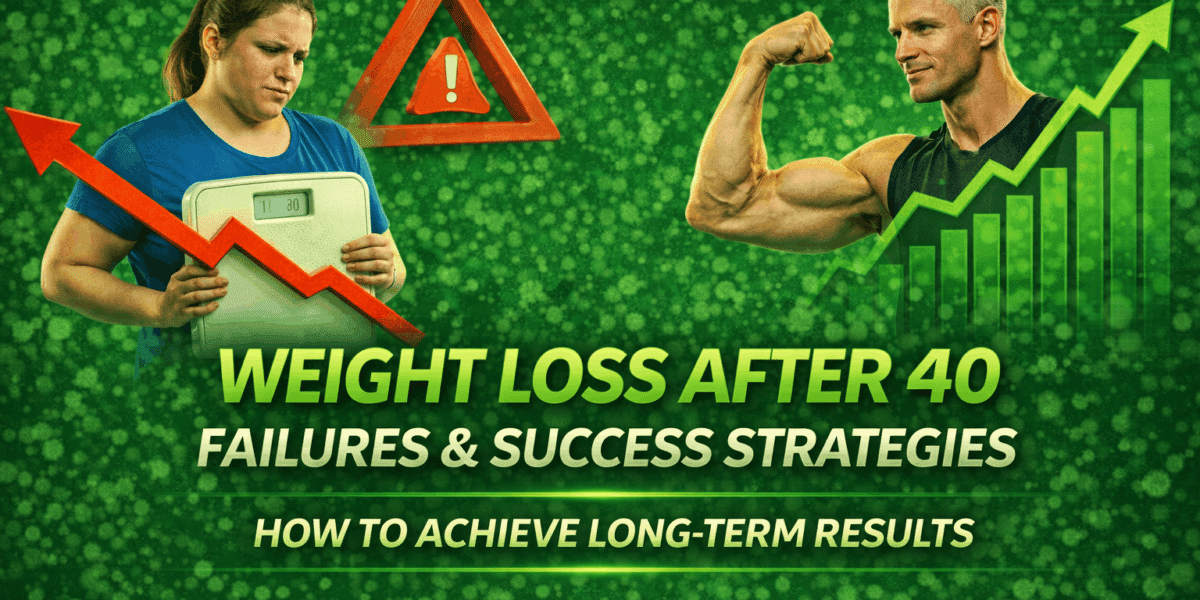
I can usually tell within ten minutes of a first consultation whether a new client over 40 has been through the cycle. The cycle looks like this: restrictive diet, aggressive cardio, fast initial weight loss, plateau, frustration, quit, regain everything plus a few extra pounds.
Most of them have done it three times. Some five. A few have been through it so many times they’ve lost count.
And every single one of them says the same thing: “It used to work. Now nothing works.”
Here’s what I want to say to everyone stuck in that cycle. The programs didn’t fail because you lacked willpower. They failed because they were designed for a 25-year-old body. Your body at 42 or 48 or 55 does not respond to the same inputs the same way. The hormonal environment is different. The recovery capacity is different. The muscle mass you’re working with is different. And if the program doesn’t account for those realities, it will fail. Not might. Will.
I’ve spent over 15 years training clients over 40 in New York City. The ones who succeed look nothing like the diet commercials. They’re not starving themselves. They’re not running on treadmills for hours. They’re lifting weights, eating enough protein, sleeping like it matters, and playing the long game. Boring? Maybe. Effective? Without question.
This article breaks down exactly why weight loss after 40 is different, what the most common programs get wrong, and the specific strategies that separate the people who transform their bodies from the people who keep cycling through failure.
Over 40 and tired of programs that don’t work? Start with a free consultation.
Why Is It So Much Harder to Lose Weight After Turning 40?
The frustration is valid. The difficulty is real. But the explanation is more specific than “your metabolism crashed.”
Several physiological changes converge in your 40s that collectively make fat loss harder. None of them alone is catastrophic. Together, they create a meaningfully different metabolic landscape.
Muscle Mass Declines and Takes Your Metabolism With It
Adults who don’t resistance train lose approximately 3 to 8 percent of muscle mass per decade after 30. By your mid-40s, you may have lost 10 to 15 percent of the muscle you had at your peak. Since muscle is metabolically active tissue (burning roughly 6 to 7 calories per pound per day at rest), that loss directly reduces your resting metabolic rate.
For a person who has lost 8 pounds of muscle over two decades, that’s roughly 50 fewer calories burned daily at rest. Over a year, that’s 18,000 calories, enough to account for about 5 pounds of fat gain without eating a single extra bite.
Hormones Shift in Both Men and Women
Women entering perimenopause and menopause experience declining estrogen, which shifts fat storage toward the abdomen, reduces insulin sensitivity, and disrupts sleep quality. Men face a gradual testosterone decline of roughly 1 percent per year after 30, which impairs muscle maintenance, lowers energy, and reduces the anabolic response to training.
These hormonal shifts don’t make fat loss impossible. They make the margin for error smaller and the strategy more important.
Insulin Sensitivity Decreases
Age-related reductions in insulin sensitivity mean your body is less efficient at processing carbohydrates and more inclined to store excess energy as fat. The same meal your body handled efficiently at 30 produces a stronger fat-storage signal at 45.
Life Gets in the Way
The 40s are typically the decade of peak professional responsibility, family obligations, financial stress, and compressed personal time. Sleep suffers. Stress stays chronically elevated. Daily movement drops. These lifestyle factors compound the biological ones.
The National Institute on Aging confirms that maintaining a healthy weight remains achievable with age-appropriate strategies, even as physiological changes occur.
Key Takeaway: Weight loss after 40 is harder due to the convergence of muscle loss, hormonal shifts, declining insulin sensitivity, and lifestyle factors. None of these are insurmountable, but all of them require a strategy different from what worked at 25.
Why Do Most Traditional Diets and Weight Loss Programs Fail for People Over 40?
The programs aren’t fundamentally evil. They’re fundamentally incomplete. Here are the specific reasons they fail for the over-40 population.
Mistake 1: Aggressive Calorie Restriction
Most commercial weight loss programs default to severe calorie cuts. 1,200-calorie plans. 1,000-calorie “detoxes.” Meal replacements that provide barely enough energy to function.
For someone over 40 who is already losing muscle to age-related sarcopenia, aggressive calorie restriction accelerates that loss. You lose weight on the scale, but a significant portion is muscle, not fat. Your metabolic rate drops further. And when you inevitably return to normal eating, you regain the weight with a slower metabolism than before.
This is the diet cycle. It’s not a willpower problem. It’s a physiology problem created by the program itself.
Mistake 2: Cardio-Dominant Exercise Programs
Many weight loss programs prescribe hours of cardio as the primary exercise modality. Running. Cycling. Elliptical. Group cardio classes. While these activities burn calories, they do almost nothing to preserve or build muscle.
For someone over 40, cardio without resistance training is a recipe for accelerated muscle loss during a calorie deficit. You end up lighter on the scale but with worse body composition: less muscle, a slower metabolism, and the same proportion of body fat (or worse) at a lower body weight.
Mistake 3: Ignoring Hormonal Reality
Generic programs treat a 45-year-old menopausal woman and a 25-year-old man as if they have the same physiology. They don’t. The hormonal environment after 40 requires specific attention to protein intake, resistance training, sleep, and stress management that most programs never address.
Mistake 4: Short-Term Thinking
Twelve-week challenges. 30-day transformations. “Lose 20 pounds by summer.” These timelines create unsustainable approaches. The speed required to hit those targets demands extreme restriction, which damages muscle mass and metabolic rate.
Sustainable fat loss after 40 operates on a 6 to 12 month timeline, not 30 days. And the maintenance phase, keeping the fat off, requires permanent lifestyle adjustments, not a return to pre-program habits.
Mistake 5: No Attention to Sleep and Stress
Sleep and cortisol management are rarely mentioned in standard weight loss programs. Yet research shows that chronic sleep deprivation can increase daily calorie intake by 300 to 400 calories and shift the body toward fat storage and muscle breakdown. Chronic stress elevates cortisol, which promotes visceral fat accumulation and further impairs insulin sensitivity.
Why Weight Loss Programs Fail After 40: The Five Critical Gaps
| Common Program Approach | Why It Fails After 40 | What Should Replace It |
| Severe calorie restriction (under 1,200) | Accelerates muscle loss, tanks metabolism | Moderate deficit (300-500 cal below TDEE) |
| Cardio-dominant exercise | No muscle preservation signal | Resistance training as foundation |
| One-size-fits-all nutrition | Ignores hormonal differences | Protein-prioritized, hormone-aware approach |
| 30-day or 12-week timelines | Too aggressive, unsustainable pace | 6-12 month structured plan |
| No sleep/stress guidance | Cortisol and hunger hormones unchecked | Sleep hygiene and stress management protocols |
Key Takeaway: Most weight loss programs fail after 40 because they rely on aggressive restriction and cardio without addressing muscle preservation, hormonal changes, sleep, or long-term sustainability.
Want a program that actually accounts for your age and physiology? Talk to our coaching team.
What Do People Who Successfully Lose Weight After 40 Do Differently Than Those Who Fail?
After training hundreds of clients over 40, the pattern is unmistakable. The people who succeed share specific habits and approaches that the people who fail consistently lack.
They Prioritize Muscle Above Everything
Successful clients understand that muscle is the foundation of long-term fat loss. They lift weights 3 to 4 times per week with progressive overload. They never sacrifice a strength session for extra cardio. They know that preserving and building muscle is what keeps their metabolism functional and ensures the weight they lose stays off.
They Eat Enough Protein
The single most consistent nutritional difference between clients who transform and clients who spin their wheels is protein intake. Successful clients consume 0.7 to 1 gram of protein per pound of bodyweight daily. Failed dieters typically eat half that or less.
Adequate protein preserves muscle during a deficit, increases satiety, and has the highest thermic effect of any macronutrient (costing 20 to 30 percent of its calories just to digest). It is the most impactful nutritional variable for body composition after 40.
They Use Moderate, Sustainable Deficits
Successful clients create caloric deficits of 300 to 500 calories below maintenance. They lose 0.5 to 1 percent of bodyweight per week. Slow by diet-culture standards. Permanent by any standard that matters.
They Sleep Like It’s Part of the Program
The clients who get the best results consistently sleep 7 to 9 hours per night. They treat sleep as a metabolic intervention, not a luxury. They know that poor sleep elevates cortisol, disrupts appetite hormones, reduces insulin sensitivity, and impairs muscle recovery.
They Play the Long Game
No one who has successfully lost fat and kept it off after 40 did it in 30 days. The minimum timeline for meaningful, sustainable body composition change is 6 months. The clients who accept this upfront are the ones who succeed. The ones looking for fast results are the ones who cycle.
What Is the Most Effective Weight Loss Plan for Women Over 40 Who Want Sustainable Results?
Women over 40 face specific challenges that generic programs ignore. Perimenopause and menopause introduce hormonal variables that directly affect fat storage, muscle retention, and metabolic function.
Estrogen Decline Changes the Rules
As estrogen drops, fat distribution shifts toward the midsection. Insulin sensitivity decreases. Bone density begins to decline. Sleep quality often deteriorates due to falling progesterone levels.
These are not minor inconveniences. They are fundamental changes in how the body manages energy and stores fat. Any effective weight loss program for women over 40 must address them directly.
The Evidence-Based Approach for Women Over 40
Resistance training 3 to 4 times per week. This is non-negotiable. Strength training preserves muscle mass that estrogen decline is actively eroding. It supports bone density against osteoporosis risk. It improves insulin sensitivity. And it maintains the metabolic rate that keeps fat loss achievable.
Protein intake of 0.8 to 1 gram per pound of bodyweight. Women over 40 face anabolic resistance, meaning the muscle-building response to protein is blunted compared to younger women. Higher protein intake compensates for this blunted response.
Moderate caloric deficit of 300 to 400 calories. Women’s metabolic rates are typically lower than men’s, so the deficit needs to be calibrated accordingly. Extreme restriction is especially counterproductive for women in perimenopause and menopause, as it further disrupts hormonal balance.
Sleep prioritization. Address sleep quality proactively. Cool bedroom, consistent schedule, limited blue light exposure, and medical evaluation for sleep disruption if needed.
Stress management. Cortisol sensitivity increases during menopause. Chronic stress has a more pronounced fat-storage effect than it did at 30. Daily stress management practices (walking, breathing exercises, reduced schedule density) become metabolic tools, not lifestyle extras.
The Office on Women’s Health provides reliable information on menopause-related health changes and evidence-based management strategies.
How Can Men Over 40 Lose Belly Fat While Keeping or Gaining Muscle Mass?
Men over 40 face a different but equally specific set of challenges. Declining testosterone, increased visceral fat tendency, and often years of neglected training create a starting point that generic programs fail to address.
The Testosterone Factor
Testosterone decline reduces the body’s anabolic signaling. Building and maintaining muscle becomes harder. Recovery takes longer. The ease with which younger men add muscle is no longer available. This does not mean muscle building is impossible. It means the approach must be more precise.
The Practical Framework for Men Over 40
Lift heavy with compound movements. Squats, deadlifts, bench presses, rows, and overhead presses. Progressive overload with adequate volume (12 to 16 sets per muscle group per week). This provides the strongest possible muscle-preservation signal while in a caloric deficit.
Maintain protein at 0.7 to 1 gram per pound of bodyweight. Spread across 3 to 4 meals. This supports muscle protein synthesis and counteracts the reduced anabolic signaling that comes with lower testosterone.
Use a moderate deficit. 400 to 500 calories below maintenance. Men can typically tolerate a slightly larger deficit than women without as severe hormonal disruption, but aggressive restriction still causes unnecessary muscle loss.
Address visceral fat through the fundamentals. Visceral fat responds to the same interventions as overall fat loss: caloric deficit, resistance training, adequate sleep, and stress management. There are no special tricks for belly fat specifically. The midsection is typically the last place men lose fat and the first place they gain it. Patience is required.
Get bloodwork. Men over 40 should have total and free testosterone, metabolic panel, thyroid function, and fasting insulin checked annually. If testosterone is clinically low (below 300 ng/dL), a conversation with a physician about TRT or other interventions is warranted.
Can I Still Build Muscle and Lose Fat at the Same Time After 40?
Yes but skip the idea of a recomp. Building muscle while cutting amounts to spinning your wheels. But there are certain scenarios when you might gain muscle faster.
Returning to training after a break. If you trained previously and have taken time off, muscle memory (myonuclear domain theory) allows faster muscle regain even during a caloric deficit.
Being new to resistance training. Beginners experience rapid neuromuscular adaptation and muscle growth that can occur alongside fat loss for the first 6 to 12 months of structured training.
Carrying significant body fat. Higher body fat percentages provide more stored energy available for mobilization, allowing the body to fuel muscle growth even in a mild deficit.
The key variables: adequate protein (0.7 to 1g per pound of bodyweight), structured resistance training with progressive overload, moderate caloric deficit (250 to 400 calories), and quality sleep.
Body recomposition is slower than pure weight loss on a scale. But the outcome is superior: a leaner, more muscular physique with a maintained or improved metabolic rate, rather than a smaller version of the same body composition.
Highlight: Body Recomposition is never a thing unless you are using a lot of drugs
You cannot effectively lose fat and build muscle simultaneously. Cut first, then build
It requires patience (6 to 12 months for visible transformation) but produces superior long-term body composition compared to aggressive weight loss approaches.
Explore training programs designed for body recomposition after 40.
What Is a Realistic Calorie Target and Macro Split for Fat Loss for Someone Over 40?
Let me give you specific numbers.
Estimating Your Calorie Target
Multiply your bodyweight in pounds by 13 to 15 for estimated Total Daily Energy Expenditure (TDEE) at moderate activity. Subtract 300 to 500 for a fat loss deficit.
Calorie and Macro Targets for Fat Loss After 40
| Body Weight | Estimated TDEE | Fat Loss Target | Daily Protein | Daily Carbs | Daily Fat |
| 140 lbs | 1,820-2,100 | 1,420-1,700 | 100-140g | 100-150g | 45-60g |
| 160 lbs | 2,080-2,400 | 1,680-2,000 | 115-160g | 120-180g | 50-70g |
| 180 lbs | 2,340-2,700 | 1,940-2,300 | 130-180g | 150-210g | 55-80g |
| 200 lbs | 2,600-3,000 | 2,200-2,600 | 140-200g | 170-240g | 60-90g |
Macro priority order: Protein first (set at 0.7-1g/lb), then fat (minimum 0.3g/lb for hormonal health), then fill remaining calories with carbohydrates.
These are starting points. Monitor your weight, measurements, and energy levels for 2 to 3 weeks and adjust. If you’re losing faster than 1 percent of bodyweight per week, increase calories by 100 to 200. If nothing is moving, decrease by 100 to 200.
The Dietary Guidelines for Americans provides population-level nutrition recommendations that serve as a baseline reference.
Can Intermittent Fasting or Calorie Restriction Backfire for Weight Loss After 40?
Yes, both can backfire when applied without nuance.
Intermittent Fasting After 40
Intermittent fasting (IF) can work for fat loss after 40. The mechanism is simple: a restricted eating window often reduces total calorie intake. If that creates a moderate deficit with adequate protein, fat loss occurs.
The problems emerge when IF is combined with inadequate protein or excessive restriction. Compressing all your food into a 6 or 8 hour window makes it harder to hit protein targets. If a 180-pound person needs 140 grams of protein and is eating in a 6-hour window, that’s nearly 50 grams per meal across three meals. Many people find this difficult, and protein shortfalls during IF are common.
For women in perimenopause and menopause, some research suggests that extended fasting may worsen cortisol dysregulation and sleep disruption. The hormonal environment is already unstable. Adding a significant fasting stressor can push it further out of balance.
Extreme Calorie Restriction
Any approach that drops calories below basal metabolic rate (approximately 1,200 to 1,400 for women, 1,500 to 1,800 for men) will accelerate muscle loss, trigger aggressive metabolic adaptation, and create a hormonal environment that promotes fat regain. This is true at any age. After 40, the consequences are amplified because the body’s ability to recover from metabolic stress is reduced.
Key Takeaway: Intermittent fasting can support fat loss after 40 if protein intake is adequate and the total deficit is moderate. Extreme calorie restriction backfires at any age but is especially destructive after 40 due to accelerated muscle loss and hormonal disruption.
What Role Do Sleep, Stress, and Cortisol Play in Weight Gain After 40?
A larger role than most people realize. And a much larger role than most weight loss programs acknowledge.
Sleep and Metabolism After 40
Sleep quality typically declines with age. Hormonal shifts (progesterone decline in women, testosterone decline in men) disrupt sleep architecture. Less deep sleep means less growth hormone release. Fragmented sleep means elevated cortisol. And the downstream metabolic effects are significant.
One week of sleeping 5.5 hours versus 8.5 hours shifts weight loss composition dramatically: more muscle loss, less fat loss, increased hunger, reduced insulin sensitivity. The caloric deficit stays the same. The quality of weight loss deteriorates.
Cortisol: The Hidden Fat Storage Driver
Cortisol at normal levels is essential and healthy. Chronically elevated cortisol, driven by ongoing stress, poor sleep, and excessive training, promotes visceral fat storage, muscle breakdown, and insulin resistance.
The 40s are often the peak stress decade. Career pressure. Parenting. Aging parents. Financial responsibilities. Without deliberate stress management, cortisol stays elevated throughout the day, and the metabolic consequences accumulate quietly until they become visible around the midsection.
The Centers for Disease Control and Prevention recommends 7 or more hours of sleep per night for adults and documents the health risks associated with chronic sleep insufficiency.
What Lab Tests or Health Checks Should I Consider Before Starting a Weight Loss Plan After 40?
Before starting any structured fat loss program after 40, a baseline health panel provides critical information that prevents wasted effort and identifies potential obstacles.
Recommended bloodwork before starting:
- Complete metabolic panel (fasting glucose, fasting insulin, HbA1c) to assess insulin sensitivity and diabetes risk
- Thyroid panel (TSH, free T3, free T4) to rule out hypothyroidism
- Testosterone (total and free, for men) to identify clinical hypogonadism
- Estradiol and progesterone (for women in perimenopause) to understand hormonal status
- Lipid panel to assess cardiovascular risk
- Vitamin D to check for deficiency (common and impacts muscle function)
- Complete blood count for baseline health markers
If any of these markers are significantly out of range, they should be addressed medically before or alongside a fat loss program. No amount of training and dieting will fully compensate for undiagnosed hypothyroidism or clinically low testosterone.
The National Institutes of Health provides evidence-based resources on age-related health screening recommendations.
Meet our trainers who build evidence-based programs for clients over 40.
Expert Viewpoint: The People Who Succeed After 40 All Do the Same Things
Fifteen years. Hundreds of clients over 40. And the success stories share a remarkably consistent pattern.
They stopped looking for the fastest program and started building the most sustainable one. They lifted weights 3 to 4 times per week and didn’t skip sessions when life got busy. They ate enough protein even when they weren’t hungry. They slept 7 to 9 hours and treated it as part of their program, not an afterthought. They accepted a rate of 0.5 to 1 percent bodyweight loss per week and didn’t panic when the scale stalled for a week or two.
And they stopped blaming their age.
Your body at 40, 45, 50, or beyond is absolutely capable of significant transformation. The rules are different. The timeline is longer. The approach must be smarter. But the outcome, a leaner, stronger, more functional body, is available to anyone willing to follow the fundamentals consistently.
The programs that fail after 40 fail because they ignore biology. The people who succeed after 40 succeed because they respect it.
Stop cycling through restriction and regain. Build the foundation: resistance training, adequate protein, moderate deficit, quality sleep, managed stress. Give it 6 months. Then look back and realize you’ve made more progress than the last five crash diets combined.
That’s the path. It works. And it’s waiting for you.
Ready to start a program built for your body after 40? Learn more about our approach.
Frequently Asked Questions
Why Is It So Much Harder to Lose Weight After 40?
Muscle loss, hormonal shifts, declining insulin sensitivity, and reduced daily movement converge after 40 to create a smaller margin for error in fat loss.
How Does Metabolism Change After 40, and Does It Really Slow Down Significantly?
Metabolism declines roughly 0.7 percent per year, driven primarily by muscle loss rather than aging itself, making the slowdown largely preventable with resistance training.
What Are the Biggest Mistakes People Over 40 Make When Trying to Lose Weight?
Extreme calorie restriction, excessive cardio without strength training, ignoring protein needs, and expecting results in 30 days are the most common and costly mistakes.
Do Hormonal Changes Like Menopause and Low Testosterone Make Weight Loss Harder After 40?
Yes, hormonal shifts affect fat storage, muscle retention, and insulin sensitivity, but these changes make strategy more important rather than making fat loss impossible.
Is Strength Training More Important Than Cardio for Weight Loss After 40?
Yes, resistance training preserves muscle and metabolic rate during a caloric deficit, which prevents the metabolic decline that makes cardio-only approaches fail long-term.
How Much Protein Should Someone Over 40 Eat Daily to Lose Fat and Preserve Muscle?
Aim for 0.7 to 1 gram of protein per pound of bodyweight daily, spread across 3 to 4 meals, to support muscle protein synthesis and satiety.
Can Intermittent Fasting Backfire for Weight Loss After 40?
Intermittent fasting can backfire if it leads to inadequate protein intake or worsens cortisol dysregulation, particularly in women during perimenopause and menopause.
What Role Do Sleep, Stress, and Cortisol Play in Weight Gain After 40?
Chronic sleep deprivation and elevated cortisol directly promote visceral fat storage, increase hunger hormones, and impair insulin sensitivity, making them critical factors in midlife weight gain.
What Lab Tests Should I Get Before Starting a Weight Loss Plan After 40?
A complete metabolic panel, thyroid function, testosterone (men), estradiol (women), vitamin D, and lipid panel provide the baseline data needed to identify potential obstacles.
What Do People Who Successfully Lose Weight After 40 Do Differently?
Successful individuals prioritize resistance training, eat adequate protein, use moderate caloric deficits, sleep 7 to 9 hours nightly, and commit to a 6 to 12 month timeline.
Maik Wiedenbach is a New York City-based personal trainer, fitness author, and founder of Maik Wiedenbach Fitness. He has spent over 15 years helping clients over 40 break free from failed diet cycles and achieve lasting body composition results through evidence-based training and nutrition.

Maik Wiedenbach is a Hall of Fame swimmer turned bodybuilding champion and fitness model featured in Muscle & Fitness and Men’s Journal. An NYU adjunct professor and award-winning coach, he founded New York’s most sought-after personal training gym.