
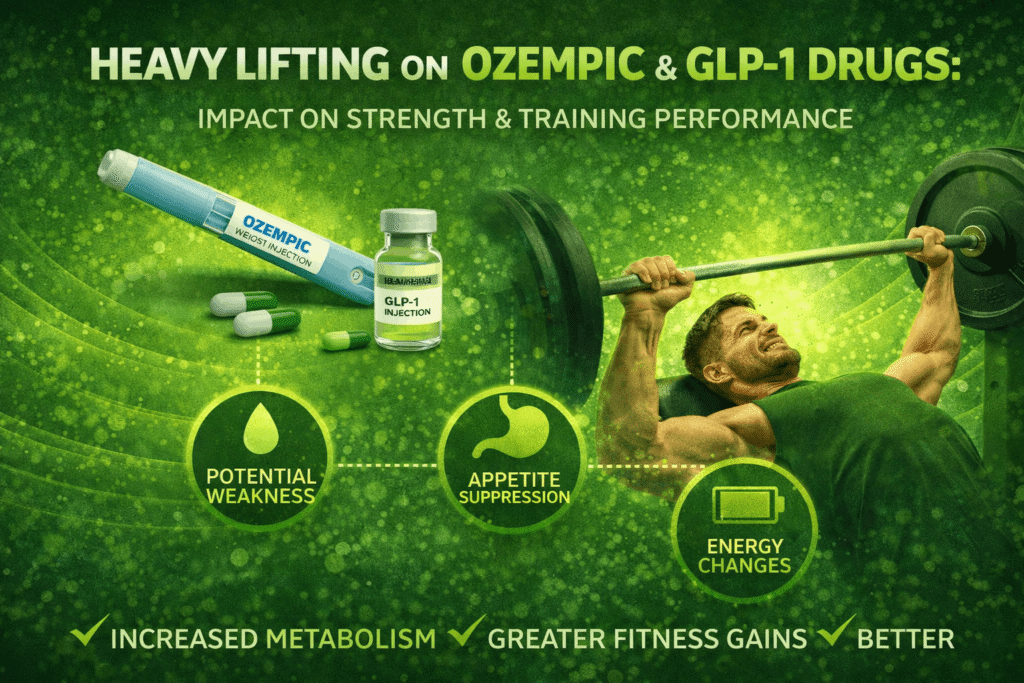
I watch it happen every week in my gym. A new client walks in, 30 pounds lighter than they were six months ago, thrilled about the number on the scale. Then I ask them for a dexa and it turns out mostly fat was lost.
GLP-1 receptor agonists like Ozempic and semaglutide have changed the weight loss conversation. No question about that. But here’s what most prescribing doctors won’t tell you, and what most fitness influencers get completely wrong: the drug doesn’t decide what kind of weight you lose. Your habits do.
I’ve spent over 20 years as a personal trainer in New York City, working with clients on every medication imaginable. The pattern with GLP-1 drugs is consistent and predictable. Rapid weight loss without a structured resistance training program and adequate protein intake strips muscle right alongside fat. That’s not a side effect of the medication. That’s a side effect of poor planning.
This article breaks down exactly why semaglutide muscle loss happens, how much lean mass you can expect to lose without intervention, and the precise strategies that actually work to preserve muscle while on Ozempic. No fluff. No fear-mongering. Just what works.
Does Ozempic Cause Muscle Loss? What the Research Actually Shows
Short answer: yes, but context matters enormously.
Clinical trial data from the STEP 1 trial published in the New England Journal of Medicine revealed that participants on semaglutide lost approximately 15% of their body weight over 68 weeks. Of that total weight lost, roughly 40% came from lean body mass rather than fat alone. That’s a significant number, and it mirrors what the National Institute of Diabetes and Digestive and Kidney Diseases has documented about calorie-restricted weight loss in general.
But here’s the critical distinction most articles miss. Muscle loss on GLP-1 weight loss drugs isn’t unique to the medication itself. Any aggressive calorie deficit produces the same result. Semaglutide works primarily through appetite suppression, which drives calorie intake down dramatically. When your body receives substantially fewer calories and protein than it needs, it pulls energy from both fat stores and muscle tissue. The drug creates the condition. Your nutrition and training determine the outcome.
Research shows that up to 40% of weight lost on semaglutide can come from lean mass. This ratio improves significantly with resistance training and higher protein intake.
How Much Muscle Do You Lose on Ozempic Compared to Fat?
This is the question I hear most often, and the answer depends almost entirely on what you’re doing alongside the medication.
Without intervention, studies suggest the following breakdown:
| Weight Loss Component | Without Exercise/Protein Strategy | With Resistance Training + Protein |
| Fat mass lost | ~60% of total weight loss | ~80-85% of total weight loss |
| Lean mass lost | ~35-40% of total weight loss | ~15-20% of total weight loss |
| Metabolic rate impact | Significant decline | Minimal to moderate decline |
| Long-term weight regain risk | Higher | Lower |
The difference is stark. A person losing 40 pounds on Ozempic without a muscle preservation strategy might lose 14 to 16 pounds of lean mass. That same person, with proper resistance training and protein targets, could cut that number in half or better.
The percentage of weight lost on Ozempic that is lean muscle mass matters more than most people realize. Lean mass is metabolically active tissue. Every pound of muscle you lose reduces your basal metabolic rate, which means your body burns fewer calories at rest. This creates a vicious cycle where continued weight management becomes harder over time.
Why Does Rapid Weight Loss Reduce Muscle Mass?
The mechanism is straightforward. Your body doesn’t differentiate between a famine and a medication-induced calorie deficit. Both trigger the same survival response.
When calorie intake drops rapidly, your body enters a catabolic state. Muscle protein synthesis slows down. Cortisol levels increase. And your body starts breaking down muscle tissue for amino acids it can convert to glucose. This process accelerates when protein intake is low, which happens naturally on GLP-1 drugs because appetite suppression makes eating adequate amounts of anything genuinely difficult.
Three factors compound the problem:
Calorie deficit severity. The more aggressive the deficit, the greater the proportion of muscle lost. Semaglutide can reduce daily calorie intake by 500 to 1,000 calories without the user even noticing, creating deficits that are too steep for muscle preservation.
Protein-deficient nutrition. When you’re eating less overall, you’re almost certainly eating less protein, especially considering that protein is a hunger retardant . Most GLP-1 users report consuming well below the 0.7 to 1 gram per pound of body weight that the Centers for Disease Control and Prevention and sports nutrition researchers recommend for muscle maintenance during weight loss.
Absence of mechanical stimulus. Muscle needs a reason to stay. Without resistance training sending a clear signal that muscle tissue is essential, your body treats it as expensive tissue to maintain and breaks it down.
GLP-1 drugs don’t directly cause muscle breakdown. They create the calorie deficit that triggers it. Your training and nutrition determine whether your body preserves or sacrifices lean mass.
What Are the Signs of Losing Muscle Instead of Fat on a GLP-1 Weight Loss Drug and How Do I Fix It?
Most people don’t realize they’re losing muscle until the damage is already significant. The warning signs of muscle wasting on GLP-1 medications are subtle at first.
Watch for these indicators:
Strength decline. If weights that felt manageable three months ago now feel heavy, you’re likely losing muscle. This is the earliest and most reliable signal.
Loose, saggy skin disproportionate to weight lost. Some skin laxity is normal with weight loss. But when skin appears significantly deflated, especially around the arms and inner thighs, that often indicates muscle loss underneath rather than just fat reduction.
Fatigue that doesn’t match your sleep quality. Lean mass supports energy metabolism. When it drops, chronic tiredness follows, even with adequate rest.
Weight loss that feels “soft.” You’re getting smaller, but you don’t look more defined. The body gets softer rather than more toned because you’re losing the structural tissue underneath.
Slowed metabolism. If your weight loss stalls earlier than expected, reduced lean mass may have lowered your basal metabolic rate enough to close the calorie gap the medication created.
The fix isn’t complicated. It requires intentional action on three fronts: resistance training, protein intake, and weight loss pacing. Every one of these is within your control.
If you’re seeing these signs and need expert guidance, our team of certified trainers specializes in body composition management for clients on GLP-1 medications.
How to Preserve Muscle While on Ozempic: The Complete Strategy
Muscle preservation on semaglutide comes down to three non-negotiable pillars. Miss one, and the other two can’t fully compensate.
How Much Protein Per Day Should I Eat to Keep Muscle When My Appetite Is Low From a GLP-1?
This is where most GLP-1 users fail. Appetite suppression makes eating feel like a chore. And when eating feels difficult, protein, the most satiating macronutrient, is usually the first thing that drops.
The target is clear: aim for 0.7 to 1.0 grams of protein per pound of your goal body weight, every single day. For a person targeting 160 pounds, that means 112 to 160 grams of protein daily.
When appetite is genuinely suppressed, strategic approaches help:
Prioritize protein at every meal. If you can only eat 1,200 calories, at least 500 of those calories should come from protein sources. Chicken, fish, Greek yogurt, eggs, and whey protein shakes are your best tools here.
Front-load protein earlier in the day. Appetite tends to be slightly higher in the morning and early afternoon for most GLP-1 users. Use that window.
Liquid protein counts. A protein shake with 30 to 40 grams of whey protein is far easier to consume than a chicken breast when your appetite is flat.
Space protein across 3 to 4 meals. Muscle protein synthesis responds best to 25 to 40 gram doses of protein spaced throughout the day, not consumed in one sitting. The minimum effective protein dose for muscle preservation during GLP-1-assisted weight loss is 0.7g per pound of goal body weight. Below that threshold, lean mass losses accelerate regardless of training.
What Strength Training and Protein Targets Help Protect Muscle During Rapid Weight Loss on a GLP-1?
Resistance training is the single most powerful tool for preventing Ozempic muscle loss. Nothing else comes close.
The President’s Council on Sports, Fitness & Nutrition recommends strength training at least twice per week for general health. For someone actively losing weight on a GLP-1 drug, I recommend three to four sessions per week as the minimum.
Here’s what an effective muscle-preserving program looks like:
Focus on compound movements. Squats, deadlifts, bench press, rows, overhead press, and pull-ups. These exercises recruit the most muscle tissue per movement, creating the strongest signal for your body to preserve lean mass.
Train with progressive overload. The weight on the bar needs to stay the same or increase over time, even as your body weight drops. If you’re consistently getting weaker, your program needs adjustment.
Keep volume moderate. Three to four sets of 6 to 12 reps per exercise, three to four exercises per session. You’re in a calorie deficit. Recovery capacity is limited. More isn’t better here.
Prioritize recovery. Sleep 7 to 9 hours per night. Manage stress. Recovery is where muscle preservation actually happens.
| Training Variable | Recommended Range | Why It Matters |
| Frequency | 3-4x per week | Maintains consistent anabolic signaling |
| Rep range | 6-12 reps | Optimal for hypertrophy and strength retention |
| Exercise selection | Compound lifts | Maximum muscle recruitment per session |
| Progressive overload | Maintain or increase loads | Strongest signal for muscle preservation |
| Session duration | 45-60 minutes | Prevents excessive cortisol elevation |
If you’re unsure how to structure a program that accounts for the unique demands of training on a GLP-1 medication, explore our personalized training programs built specifically for this situation.
Can Creatine or Supplements Help Prevent Muscle Loss on Ozempic?
Creatine monohydrate is the one supplement with robust evidence supporting muscle preservation during calorie restriction. Research consistently shows that 3 to 5 grams daily improves strength retention, supports muscle hydration, and may enhance muscle protein synthesis in a deficit.
Beyond creatine, practical supplementation includes:
Vitamin D. Deficiency is common in people losing weight rapidly and is associated with greater muscle loss. Get your levels tested. Supplement if below 30 ng/mL.
Omega-3 fatty acids. Emerging research suggests anti-inflammatory benefits that may support muscle protein synthesis during calorie restriction.
Leucine-rich protein sources. Leucine is the amino acid that triggers muscle protein synthesis most effectively. Whey protein, dairy, and eggs are the best dietary sources.
What doesn’t work: BCAAs alone (without sufficient total protein), fat burners, or any supplement marketed as a “muscle saver” without peer-reviewed evidence.
For quality supplements that support body composition goals, visit our shop for curated recommendations.
Can a High Protein Diet and Lifting Weights Stop Muscle Wasting on a GLP-1 Injection?
Yes. Emphatically yes. And the data backs this up.
A 2023 study examining exercise interventions during GLP-1 receptor agonist therapy found that participants who combined resistance training with high protein intake retained significantly more lean mass than those who relied on the medication alone. The group that trained preserved roughly 80 to 85% of their weight loss as fat, compared to only 60% in the sedentary group.
This isn’t theoretical. I see it in practice every month. Clients who commit to three to four strength sessions per week and hit their protein targets look and feel entirely different from those who treat Ozempic as a standalone solution. Same medication. Same dose. Dramatically different body composition outcomes.
The combination of mechanical loading through resistance training and amino acid availability through adequate protein creates a powerful anabolic environment that directly counteracts the catabolic effects of a calorie deficit. Neither factor alone is sufficient. Together, they change the entire trajectory.
Are Women More Likely to Lose Muscle on GLP-1 Weight Loss Drugs, and How Should They Train Differently?
Women do face some additional challenges. Lower baseline muscle mass, hormonal differences that affect protein metabolism, and a cultural tendency to avoid heavy strength training all contribute.
Postmenopausal women on GLP-1 drugs face the highest risk. Declining estrogen levels already accelerate muscle loss, and the National Institute on Aging has identified sarcopenia as a growing concern for this population. Adding aggressive calorie restriction on top of hormonal changes creates a compounding effect.
The training prescription doesn’t change dramatically, but emphasis shifts:
Women on GLP-1 drugs should prioritize compound lower body movements. Squats, hip thrusts, deadlifts, and lunges. Lower body muscle mass is typically the first to decline and the most metabolically significant to preserve.
Protein targets should be at the higher end of the range: 0.8 to 1.0 grams per pound of goal body weight. Women tend to underconsume protein relative to their needs, especially during appetite suppression.
Heavy weights matter. Lifting light weights for high reps does not create sufficient mechanical tension to preserve muscle during a significant calorie deficit. If you can do more than 12 reps comfortably, the weight is too light for muscle preservation purposes.
Women, especially those over 40, face compounding risks for muscle loss on GLP-1 drugs due to hormonal factors. Heavier resistance training and higher protein targets are essential, not optional.
Is Muscle Loss on Semaglutide Preventable?
Completely preventable? Not completely . Significantly reducible? Absolutely.
Some degree of lean mass loss during any weight loss phase is physiologically normal. Even under ideal conditions with perfect training and nutrition, a small percentage of weight lost will come from lean tissue. The goal isn’t zero muscle loss. The goal is minimizing it to a level that doesn’t impact your metabolic health, functional strength, or long-term weight management.
The difference between losing 5% of your lean mass versus 40% is entirely within your control. It comes down to the strategies outlined above: adequate protein, consistent resistance training, and a weight loss pace that doesn’t outstrip your body’s ability to preserve muscle.
How Do I Rebuild Muscle if I Already Lost Lean Mass While Taking a GLP-1?
Good news. Muscle memory is real, and rebuilding lost lean mass is faster than building it from scratch.
If you’ve already experienced significant Ozempic lean muscle mass loss, here’s the path forward:
Increase calories modestly. You don’t need a massive surplus. Eating at maintenance calories or a very slight surplus of 100 to 200 calories provides the energy your body needs to rebuild without regaining significant fat.
Increase protein to the upper range. Target 1.0 gram per pound of body weight during the rebuilding phase. This maximizes muscle protein synthesis.
Train with progressive overload. Start where you are, not where you were. Build back systematically. Add weight or reps each week. Your body will respond faster than you expect due to muscle memory and satellite cell reactivation.
Be patient. Rebuilding takes 8 to 16 weeks of consistent effort. The results will come.
If you’re ready to rebuild and want a structured plan, schedule a consultation with our team to create a personalized approach.
Is Ozempic Muscle Loss Permanent or Reversible After Stopping?
Muscle loss from GLP-1 drugs is not permanent. Skeletal muscle is highly adaptive tissue, which goes for both directions.. Given appropriate stimulus through resistance training and adequate nutrition, previously lost muscle can be rebuilt.
However, the longer muscle loss persists without intervention, the harder recovery becomes. Prolonged sarcopenia, the progressive loss of muscle mass and strength, leads to changes in neuromuscular function, reduced satellite cell activity, and metabolic adaptations that make rebuilding more difficult.
The practical takeaway: don’t wait. Start training and optimizing protein now, whether you’re currently on the medication, tapering off, or have already stopped. Every week of appropriate training is an investment in your metabolic future.
Does Ozempic Cause More Muscle Loss Than Natural Dieting?
The medication itself doesn’t cause more muscle loss than an equivalent calorie deficit achieved through dietary restriction alone. The issue is the speed and depth of the deficit.
GLP-1 drugs create dramatic appetite suppression that often produces larger calorie deficits than most people would achieve through willpower-based dieting. A person naturally dieting might sustain a 500-calorie deficit. Someone on semaglutide might inadvertently sustain a 1,000-calorie deficit without feeling hungry. That doubled deficit accelerates muscle loss proportionally.
The rate of Ozempic body composition changes depends more on the behavior surrounding the medication than the medication itself. Control the deficit depth, maintain protein intake, train with weights, and the outcomes mirror or even improve upon natural dieting results.
What Is the Best Workout Plan for Maintaining Lean Body Mass While on a GLP-1 Shot?
The best plan is one you’ll actually follow. But within that framework, here’s what the evidence supports:
Monday: Lower body compound (Leg press, Romanian deadlifts, lunges) plus core work. 45 to 55 minutes.
Wednesday: Upper body push/pull (Chest presses, rows, overhead press, pull-ups). 45 to 55 minutes.
Friday: Full body with emphasis on weak points. Include unilateral work like single-leg exercises and single-arm rows. 45 to 55 minutes.
Optional Saturday: Light conditioning work. Walking, cycling, or swimming for 20 to 30 minutes. Nothing that creates significant additional calorie burn or recovery demand.
This template provides sufficient frequency and volume to preserve muscle without overwhelming recovery capacity during a calorie deficit. Adjust weights and exercises to your experience level, but keep the structure consistent.
Learn more about our approach to training and how we build programs for clients managing weight loss with GLP-1 medications.
Expert Viewpoint: Protecting Your Lean Mass Is Protecting Your Future
Here’s what I tell every client who walks into my gym on Ozempic, Wegovy, or any GLP-1 drug: the medication handles appetite. You handle everything else.
Muscle isn’t just about aesthetics. It’s your metabolic engine, your injury protection, your functional independence as you age, and your single best predictor of long-term weight maintenance after you stop the medication. Losing it carelessly because you didn’t prioritize training and protein is a mistake with consequences that compound over years.
The research is clear. The practical strategies are proven. The only variable left is execution.
Prioritize protein at every meal. Train with heavy compound movements three to four times per week. Monitor your body composition, not just your scale weight. And if you need help building a plan that accounts for your specific situation, work with a trainer who understands the intersection of pharmacology and exercise science.
Your weight loss journey doesn’t have to come at the expense of your muscle. Protect it now, and everything that follows gets easier.
Frequently Asked Questions
Does Ozempic Directly Cause Muscle Loss?
Ozempic doesn’t directly break down muscle tissue; it creates the calorie deficit through appetite suppression that can lead to muscle loss without proper nutrition and training.
How Much Protein Is Needed to Prevent Muscle Loss on Semaglutide?
Aim for 0.7 to 1.0 grams of protein per pound of your goal body weight daily to support muscle preservation during GLP-1-assisted weight loss.
Can Strength Training Stop Muscle Loss While Taking Semaglutide?
Resistance training three to four times per week is the most effective strategy to signal your body to preserve lean mass during the calorie deficit created by semaglutide.
Do You Lose Muscle or Fat First on Ozempic?
Your body loses both simultaneously, but without resistance training and adequate protein, the proportion of muscle lost increases significantly.
Is Strength Training Necessary on Ozempic?
Strength training is essential, not optional, for anyone on a GLP-1 drug who wants to preserve lean mass and maintain metabolic rate during weight loss.
Can Muscle Loss on GLP-1 Drugs Slow Your Metabolism?
Every pound of lean mass lost reduces your basal metabolic rate by approximately 6 to 7 calories per day, which compounds over significant muscle loss and makes weight management harder.
What Percentage of Weight Lost on Ozempic Is Lean Muscle Mass?
Without exercise intervention, studies show approximately 35 to 40% of total weight lost on semaglutide comes from lean mass rather than fat.
Do Doctors Recommend Exercise to Counteract Ozempic Muscle Loss?
Leading obesity medicine specialists and endocrinologists consistently recommend combining GLP-1 therapy with resistance training and increased protein intake to protect body composition.
What Are the Warning Signs of Muscle Wasting on GLP-1 Medications?
Declining strength, excessive skin laxity, unexplained fatigue, and a “soft” appearance despite weight loss are the primary indicators of lean mass reduction on GLP-1 drugs.
Is Ozempic Muscle Loss Reversible After Stopping the Medication?
Lost muscle can be rebuilt through progressive resistance training and adequate protein intake, though recovery time increases the longer muscle loss goes unaddressed.

Maik Wiedenbach is a Hall of Fame swimmer turned bodybuilding champion and fitness model featured in Muscle & Fitness and Men’s Journal. An NYU adjunct professor and award-winning coach, he founded New York’s most sought-after personal training gym.