
The Strong Survivors, Part 2 of 4. On GLP-1 muscle loss: why the number on the scale can hide what you actually lost, and how to keep the muscle while the weight comes off.
Losing weight isn’t the same as losing fat
A client of mine lost 34 pounds on Zepbound this year. Party on, right? A great result, at least on paper. She came in for her assessment, looked almost apologetic, and asked me a question I have been hearing more often lately.
Why do I look softer than the number says I should?
That is where the universe is generally unfair. As my old coach used to say, we always have less money and muscle than we would like to think. My first show, I was convinced I would compete at 225 pounds. When it was all said and done, I stepped on stage at 207.
The GLP-1s can amplify that problem, and it is one that gets lost in most conversations about these medications. Weight loss is not the same as fat loss. Some of what comes off is body fat. Some is water. Some is muscle. How much of each depends not only on the medication, but on what you were doing before you ever took the first injection.
What the research tells us
- ~40–45% of weight lost on semaglutide can be lean tissue, not fat. Note: this includes water, so you are not losing 40% muscle.
- ~25% for tirzepatide. Lower, but muscle loss is still a meaningful part of the equation.
The more interesting finding comes from newer body composition studies. Researchers followed nearly 8,000 patients over twelve months and found that the strongest predictor of muscle loss was not the medication or the dose. It was how physically capable the person was before they started. The people who lost the most muscle were often the ones who were not resistance training in the first place.
That should not surprise us. Muscle is use it or lose it, whether you are taking drugs or not. In a caloric deficit, the only protection your muscle has is weight training.
If you do not give your body a reason to keep the muscle, it will not.
Maik Wiedenbach
And if you start the medication first and only start training later, you are facing an uphill struggle, because now you have to build new habits while already in a deficit.
Now the good news. GLP-1 medications are not catabolic by themselves. They are simply very effective tools for reducing calorie intake, and in some cases they are genuinely life saving. The outcome depends on how you use them. The research consistently shows that combining these medications with resistance training and adequate protein dramatically improves body composition.
What actually preserves muscle
- 2 to 3 lifting sessions per week. Can reduce lean mass loss to almost zero compared with dieting alone.
- ~1.6g protein / kg per day, adjusted for body fat, spread across the day. Preserves muscle as fat comes down.
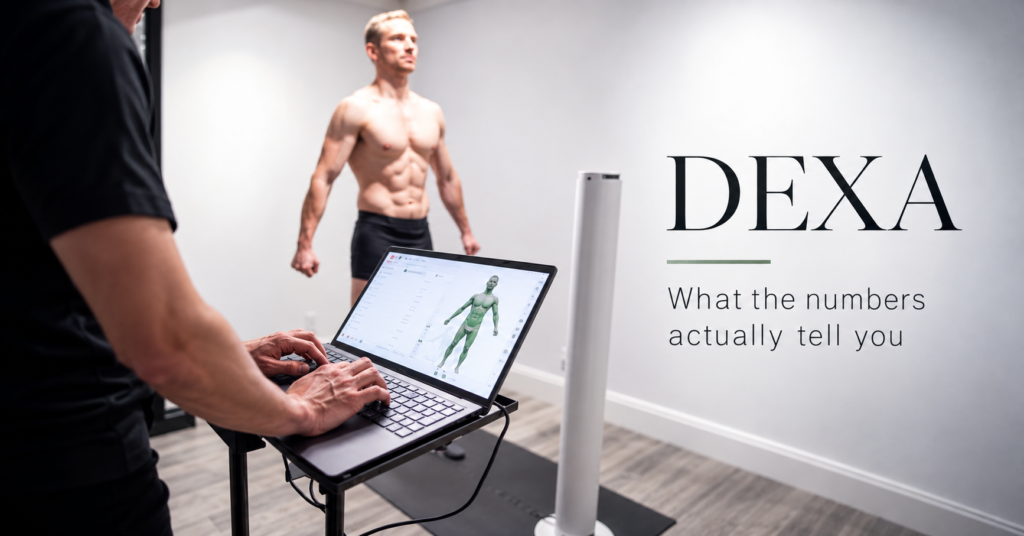
After working with dozens of clients on GLP-1 medications, I keep seeing the same pattern. Most people know exactly how much weight they have lost. Very few know what composition they lost, and frankly, that is hard to establish. Even a DEXA scan does not cleanly separate water loss from muscle loss. But with a body composition test and a real baseline before they start, and again at six months, we would know a great deal more than the scale can ever tell us.
Instead, the scale is lower, and they do not understand why they feel softer, weaker, or more fatigued than expected. That is the problem.
The advice itself is simple, and we all know it. Lift weights. Eat enough protein. Stay active. The difficult part is knowing whether you are doing enough. Is your current training sufficient, and intense enough? Is your protein target actually 110 grams, or should it be 160? Are you preserving muscle, or just assuming you are because the scale keeps moving?
Those questions cannot be answered by an article. They can be answered by a proper assessment. At Wiedenbach Performance, that is where every conversation begins. Not with the scale, but with understanding what your body is actually made of.
Maik Wiedenbach · Two-time Olympic-level swimmer · NYU instructor · Author of 101 Fitness Myths · Coaching executives in New York for 20+ years. Follow on Instagram and YouTube.
Worried about GLP-1 muscle loss?
Start with a real baseline. Come in, and we’ll measure what your body is made of and build the training and protein plan around it. If you’ve already lost a lot of weight, read what happens to your metabolism after massive weight loss.

Maik Wiedenbach is a Hall of Fame swimmer turned bodybuilding champion and fitness model featured in Muscle & Fitness and Men’s Journal. An NYU adjunct professor and award-winning coach, he founded New York’s most sought-after personal training gym.