

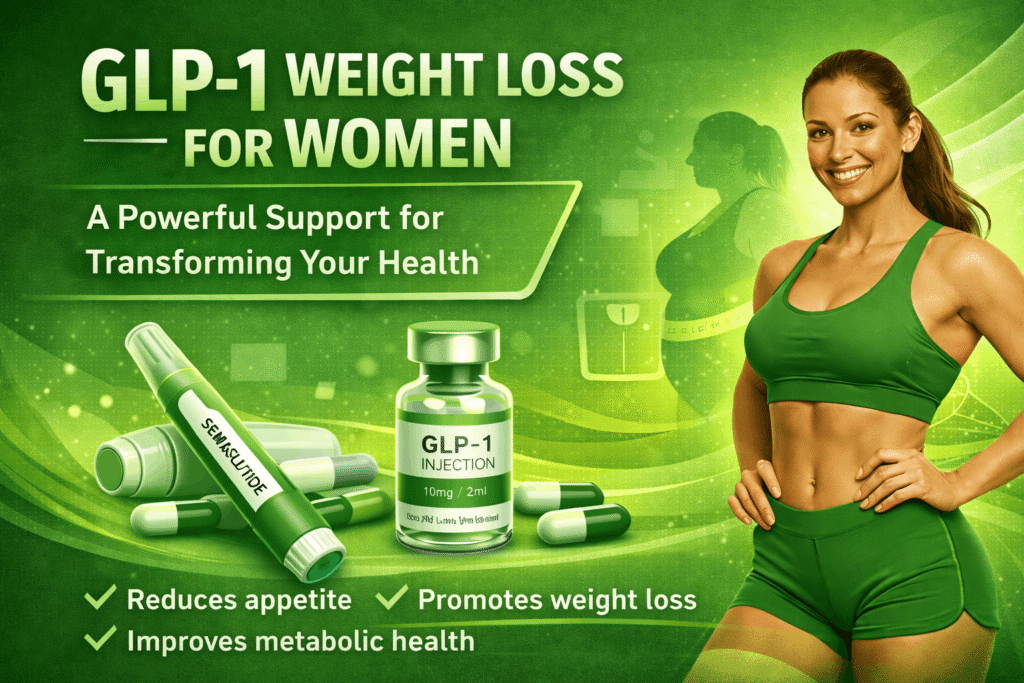
If weight loss feels harder after 40, you’re not imagining it. Hormonal shifts, sleep disruption, , higher stress levels and more social dinners make it legitimately more difficult to lose fat than it was in your 20s and 30s.
GLP-1 medications (semaglutide/Wegovy, tirzepatide/Zepbound) have become incredibly popular for women dealing with midlife weight gain. And here’s the thing: the research shows they work just as well for menopausal and perimenopausal women as they do for younger women.
But let me be direct about something most articles gloss over: these medications work by reducing your appetite so you eat less. That’s it. They’re not fixing your hormones. They’re not replacing the need to train and eat right. They’re making it easier to maintain the calorie deficit required for fat loss by turning down the volume on hunger and cravings.
If you use a GLP-1 without also building muscle through resistance training and eating adequate protein, you’ll lose weight. But you’ll look worse at the end because you’ll have lost muscle along with fat. For women over 40 who are already losing muscle naturally (sarcopenia), this is a disaster.
This guide covers what actually changes hormonally after 40, how GLP-1s help (and what they don’t do), realistic results and timelines, side effects women need to watch for, and the non-negotiable lifestyle factors that determine whether you end up looking lean and strong or just smaller and weaker.
Use this guide to have a smarter conversation with your clinician about whether GLP-1s make sense for you. Get training support built for preserving muscle while losing fat.
Why Weight Loss Is Harder for Women Over 40 (And How GLP-1s Help)
| Change | What Happens | Why It Matters for Fat Loss |
| Estrogen decline | Shift toward abdominal fat storage, reduced insulin sensitivity | Makes belly fat more stubborn |
| Sleep disruption | Higher ghrelin, lower leptin | Increased hunger and cravings |
| Chronic stress | Elevated cortisol | Promotes visceral fat storage if excess calories are ingested |
| Muscle loss (sarcopenia) | 3–8% muscle loss per decade | Lowers metabolism minimally |
| Reduced NEAT | Less daily movement | Fewer calories burned unconsciously |
What changes in perimenopause/menopause
Estrogen decline: Estrogen doesn’t just affect your reproductive system. It influences where you store fat (shifting from hips/thighs to abdomen), how sensitive your cells are to insulin, and how well you build and maintain muscle. As estrogen drops during perimenopause and crashes after menopause, your body composition shifts in ways that make weight management harder.
Sleep disruption: Hot flashes, night sweats, insomnia. Poor sleep tanks your willpower, increases hunger hormones (ghrelin), decreases satiety hormones (leptin), and makes you crave high-calorie foods. Research shows sleep disruption is a major factor in midlife weight gain.
Stress and cortisol: Life stress doesn’t magically decrease at 40. Aging parents, career demands, kids, relationship challenges. Chronic stress elevates cortisol, which promotes fat storage (especially visceral belly fat) and interferes with fat loss even when you’re in a calorie deficit.
Muscle loss (sarcopenia): You lose about 3-8% of muscle mass per decade after 30, accelerating after menopause. Less muscle means a somewhat lower resting metabolic rate, lower daily energy expenditure, and a smaller margin for error with your diet. ( 90 % of the metabolism is the combined expenditure of the heart, lungs, brain, kidneys and liver)
Reduced NEAT (non-exercise activity thermogenesis): You move less throughout the day without realizing it. Fidgeting less, walking less, standing less. These small reductions add up to a hundred of fewer calories burned daily compared to your younger years.
Weight loss can be harder for women over 40 due to hormonal shifts, sleep disruption, and gradual muscle loss. GLP-1 medications can help by reducing appetite and cravings, making it easier to maintain the calorie deficit needed for fat loss.
How GLP-1 medications help
GLP-1 receptor agonists slow gastric emptying (food stays in your stomach longer), increase satiety signals to your brain, and reduce appetite. The practical effect: you feel full faster, stay full longer, and experience less “food noise” (constant thoughts about food, cravings, snacking urges).
For women dealing with hormone-driven appetite changes, disrupted sleep that triggers hunger, and stress that drives emotional eating, GLP-1s can make adherence to a calorie deficit significantly easier.
What they don’t do:
- Fix your hormones (they’re not hormone replacement therapy)
- Build muscle
- Replace the need for protein and training
- Guarantee you’ll keep the weight off after stopping
- Work without lifestyle changes (more on this later)
| GLP-1s DO | GLP-1s DO NOT |
| Reduce appetite and cravings | Fix hormonal imbalances |
| Increase satiety | Build muscle |
| Help maintain a calorie deficit | Replace resistance training |
| Improve adherence | Guarantee long-term maintenance |
| Support metabolic health | Work without lifestyle changes |
Are GLP-1 Medications Safe for Women in Perimenopause or Menopause?
Generally, yes. But safety depends on your individual medical history and whether you have contraindications.
Important cautions:
- Personal or family history of medullary thyroid cancer or Multiple Endocrine Neoplasia syndrome type 2: GLP-1s are contraindicated
- History of pancreatitis: Discuss risks carefully with your doctor
- Gallbladder issues: GLP-1s may increase gallstone risk
- Severe gastrointestinal disease: May worsen symptoms
- Pregnancy plans: Not recommended if you’re trying to conceive
“Can GLP-1 mess with hormones?”
GLP-1s aren’t hormone therapy. They work through appetite and metabolic pathways, not by directly altering estrogen, progesterone, or testosterone levels. However, weight loss itself can affect hormones (PCOS symptoms often improve with fat loss, for example), and individual responses vary.
If you have concerns about how GLP-1s might interact with your specific hormone situation, that’s a conversation for your doctor, not the internet.
What Results Can Women Over 40 Expect? (Realistic Timeline)
Let’s talk numbers based on actual research.
Clinical trial data for women: A 2025 analysis of the SURMOUNT trials specifically looked at whether reproductive stage (premenopausal, perimenopausal, postmenopausal) affected weight loss with tirzepatide. Result: it didn’t. Women lost similar amounts of weight regardless of menopausal status.
- Semaglutide 2.4 mg (Wegovy): ~15% body weight loss at 68 weeks in clinical trials
- Tirzepatide 15 mg (Zepbound): ~21% body weight loss at 72 weeks in clinical trials
Real-world data shows lower results: Cleveland Clinic research from 2025 found average weight loss of 7.7% with semaglutide and 12.4% with tirzepatide at one year in routine clinical practice. Why the difference? Higher discontinuation rates and lower maintenance doses compared to trials.
Realistic timeline:
Weeks 1-4: Appetite changes happen relatively quickly. Some women notice reduced hunger within days of starting. The scale might not move much yet because you’re starting at a very low dose and gradually titrating up.
Months 2-3: As doses increase, weight loss becomes more apparent. Expect gradual, steady progress, not dramatic drops. You’re losing 1-2 lbs per week if things are going well.
Months 6-12: This is where the biggest changes happen for people who tolerate the medication well and reach therapeutic doses. Expect the most meaningful fat loss during this period.
Most women over 40 see the biggest GLP-1 results over months, not days. Expect a gradual trend, especially as doses are increased slowly to improve tolerability.
Why results vary wildly:
- Dose tolerance: If you can’t tolerate higher doses due to side effects, your results will be more modest
- Adherence: Stopping early or inconsistently using the medication significantly reduces results
- Protein intake: Under-eating protein accelerates muscle loss
- Activity level: Sedentary women lose more muscle and less fat
- Stress and sleep: Both affect results independently of the medication
- Starting weight: People with more to lose typically see larger absolute numbers
Side Effects Women Over 40 Should Watch For (And How to Manage Them)
| Side Effect | Why It Happens | What Helps |
| Nausea | Slowed gastric emptying | Smaller meals, ginger |
| Constipation | Reduced intake & motility | Fiber, water, magnesium |
| Reflux | Delayed stomach emptying | Upright posture after meals |
| Fatigue | Under-eating protein/calories | Protein-first meals |
| Hair shedding | Rapid weight loss | Adequate protein & calories |
Gastrointestinal issues (very common):
Nausea, constipation, diarrhea, vomiting, acid reflux. These are the most frequently reported side effects and often improve after the first few weeks at each new dose.
Management strategies:
- Eat smaller, more frequent meals
- Avoid high-fat, greasy, or heavily spiced foods initially
- Stay hydrated
- For constipation (common): increase fiber gradually, drink more water, consider magnesium supplement
- Ginger or peppermint tea for nausea
- Don’t lie down immediately after eating (helps with reflux)
Under-eating risk (serious for women over 40):
The appetite suppression can be so strong that some women struggle to eat enough protein and calories to support muscle maintenance and basic metabolic function. This leads to:
- Excessive muscle loss
- Fatigue and weakness
- Hair thinning or shedding (telogen effluvium)
- Nutrient deficiencies
- Metabolic slowdown
How to prevent this:
- Track protein intake (minimum 0.7g per pound of body weight daily)
- Eat protein first at every meal
- Use protein shakes if whole food feels too filling
- Don’t let the medication be an excuse to skip meals
Dehydration:
Reduced food intake often means reduced fluid intake. Dehydration worsens constipation, causes fatigue, headaches, and can contribute to muscle cramping.
Target: Minimum 2-3 liters of water daily, more if you’re training or it’s hot.
When to call your doctor immediately:
- Severe abdominal pain (could indicate pancreatitis or gallbladder issues)
- Persistent vomiting that prevents you from keeping fluids down
- Signs of allergic reaction (rash, difficulty breathing, swelling)
- Vision changes
- Rapid heart rate or palpitations
- Thoughts of self-harm (rare but documented mood changes)
Can GLP-1 Medications Help With Stubborn Belly Fat?
Yes and no. Let me explain.
GLP-1s don’t “target” belly fat specifically. Fat loss happens systemically throughout your body based on genetics, not because a medication targets one area. You cannot spot-reduce fat through any method, medication or otherwise.
But: GLP-1s help you maintain the calorie deficit required for overall fat loss, which includes visceral abdominal fat (the dangerous kind around your organs) and subcutaneous belly fat (the pinchable kind under your skin).
Research shows semaglutide significantly reduces waist circumference and waist-to-height ratio, indicating meaningful abdominal fat loss. Tirzepatide shows similar effects.
The frustrating reality about belly fat for women over 40:
Abdominal fat is often the last to go. Estrogen decline shifts fat storage to your midsection, and visceral fat is particularly stubborn. You might lose fat from your arms, legs, and face first while your stomach seems unchanged. This is normal and infuriating, but it doesn’t mean the medication isn’t working.
GLP-1 medications don’t target belly fat specifically, but they can support overall fat loss (including visceral fat) by helping appetite control and calorie adherence.
Why strength training matters for your waistline:
Building muscle in your back, shoulders, and glutes creates the illusion of a smaller waist even before your actual waist measurement changes significantly. Plus, more muscle means higher metabolic rate and better glucose disposal (insulin sensitivity), both of which support fat loss.
Do Women Over 40 Still Need Resistance Training on GLP-1?
Yes. Absolutely. Non-negotiable.
Why lifting is non-negotiable in midlife or ever
Preserve muscle during weight loss: When you lose weight, you always lose some muscle along with fat. The ratio of fat to muscle loss depends heavily on whether you’re doing resistance training and eating enough protein. Studies show that without intervention, rapid weight loss can result in 25-30% of the weight lost coming from muscle.
For a woman over 40 who’s already losing muscle due to aging and menopause, losing even more muscle through GLP-1-assisted weight loss is a disaster for long-term metabolism, strength, bone density, and how you look and feel.
Improve insulin sensitivity: Resistance training makes your muscles more sensitive to insulin, which helps with blood sugar control and fat loss even when you’re not training. This effect compounds over months.
Better body composition: Losing 30 lbs of fat while maintaining muscle looks completely different from losing 20 lbs of fat plus 10 lbs of muscle. Same scale weight. Dramatically different appearance. Strength training determines which scenario you get.
Yes. Women over 40 still need resistance training on GLP-1s. It helps preserve muscle during weight loss, supports metabolism, and improves body composition so the weight you lose is more likely to be fat.
Simple training plan (beginner-friendly)
| Benefit | Why It’s Critical After 40 |
| Muscle preservation | Prevents sarcopenia acceleration |
| Higher metabolic rate | More calories burned at rest |
| Better insulin sensitivity | Supports fat loss |
| Body composition | Leaner look at same scale weight |
| Bone density | Reduces fracture risk |
Frequency: 2-4 days per week. Full-body workouts or upper/lower split.
Focus: Progressive overload. Add weight, reps, or sets over time.
Exercise selection (joint-friendly for women 40+):
- Cable squats or leg press (instead of heavy back squats)
- Romanian deadlifts or hip thrusts
- Dumbbell chest press (incline or flat)
- Cable or dumbbell rows
- Lat pulldowns or assisted pull-ups
- Overhead press
- Planks and dead bugs for core
Volume: 10-15 hard sets per muscle group per week. Hard means within 2-3 reps of failure (RPE 7-8).
Intensity: Most sets should feel challenging but not crushing. Save the absolute grinders for your last set.
Cardio guidance
Daily steps: 7,000-10,000 steps for general health, NEAT, and gradual fat loss support.
Zone 2 cardio: 2-3 sessions of 30-45 minutes weekly. Sustainable pace where you can still talk but it’s slightly challenging. Walking on an incline, cycling, elliptical, swimming.
Limit excessive HIIT: If your sleep is already disrupted and you’re dealing with stress, piling on high-intensity interval training can backfire by elevating cortisol further. One HIIT session weekly is plenty for most women over 40.
Nutrition for Women Over 40 on GLP-1 (What to Change)
The appetite suppression from GLP-1s makes it harder to eat enough of what you actually need. Strategic nutrition becomes critical.
| Nutrient | Target |
| Protein | 0.7–1.0g per lb body weight |
| Fiber | 25–35g/day |
| Water | 2–3+ liters/day |
| Calcium | ~1,200 mg/day |
| Vitamin D | 2,000–4,000 IU/day |
Protein-first approach:
Minimum 0.7-1.0g protein per pound of body weight daily. For a 150 lb woman, that’s 105-150g protein daily. This is non-negotiable for preserving muscle.
Distribution matters: Aim for 25-40g protein per meal across 3-4 meals. Your muscles respond better to evenly distributed protein than getting all your protein in one huge meal.
Protein sources: Chicken, fish, lean beef, Greek yogurt, eggs, cottage cheese, protein powder (whey or high-quality plant blend).
Fiber and hydration:
Constipation is common with GLP-1s. Combat it with:
- 25-35g fiber daily (vegetables, fruits, whole grains, legumes)
- 2-3+ liters of water daily
- Magnesium glycinate supplement (200-400mg before bed helps with both constipation and sleep)
Carbs around training:
Don’t eliminate carbs. You need them for training performance and recovery. Focus carb intake around your workouts when your muscles are primed to use them.
Micronutrient basics:
- Calcium and vitamin D: Critical for bone health, especially after menopause. Aim for 1,200 mg calcium and 2,000-4,000 IU vitamin D daily.
- Iron: If you’re still menstruating or have low ferritin, monitor iron levels. Rapid weight loss can reveal underlying deficiencies.
- Omega-3s: Support cardiovascular health and potentially help with inflammation.
Alcohol:
Your tolerance may change dramatically on GLP-1s. Some women find they can barely tolerate any alcohol without feeling terrible. Alcohol also provides empty calories and interferes with fat loss. If you’re serious about results, minimize or eliminate it.
GLP-1 + HRT or Lifestyle Changes: What to Consider
“Should GLP-1 be combined with hormone therapy?”
This is a question for your doctor, not the internet. But here’s what we know from recent research:
A 2025 study presented at ENDO showed that postmenopausal women using tirzepatide plus hormone replacement therapy (HRT) lost significantly more weight (17% total body weight) compared to women using tirzepatide alone (14%). Even more impressive: 45% of HRT users achieved at least 20% weight loss compared to 18% of non-users.
This suggests potential synergy, but it doesn’t mean you should demand both treatments. The decision depends on:
- Your menopause symptoms (hot flashes, mood, sleep, etc.)
- Cardiovascular risk factors
- Personal and family medical history
- Your goals beyond just weight loss
What to ask your doctor:
- Would HRT address symptoms I’m experiencing beyond weight?
- What are my specific risks and benefits for HRT given my medical history?
- How should we monitor if we combine treatments?
- What lifestyle changes should I prioritize regardless of medication?
Lifestyle is still required for long-term success:
Whether you’re on GLP-1s alone, HRT alone, both, or neither, the fundamentals still determine your results:
- Resistance training 2-4x weekly
- High protein intake daily
- Adequate sleep (7-9 hours)
- Stress management
- Sustainable calorie deficit
Medications can make these things easier to achieve, but they don’t replace them.
Which GLP-1 Is Best for Women Over 40? (How to Think About It)
There’s no universally “best” option. The right choice depends on your specific situation.
Decision factors:
| Factor | Semaglutide (Wegovy) | Tirzepatide (Zepbound) |
| Avg weight loss | ~15% | ~21% |
| CV outcomes data | Yes | Emerging |
| GI tolerance | Individual | Individual |
| Sleep apnea benefit | Limited | Shown benefit |
| Cost/coverage | Variable | Variable |
Weight loss goals:
- Want maximum weight loss and can tolerate side effects: Tirzepatide (Zepbound) shows ~4% greater weight loss than semaglutide on average
- Want proven cardiovascular benefits: Semaglutide has demonstrated 20% reduction in major cardiovascular events in the SELECT trial
- Want to try oral option: Oral semaglutide (Rybelsus) for diabetes, though weight loss is less than injectable
Side effect sensitivity: Some people tolerate one better than the other. You won’t know until you try. Both have similar side effect profiles (GI issues primarily), but individual responses vary.
Coverage and cost: Insurance coverage varies wildly. Some plans cover one but not the other. Out-of-pocket costs can be $1,000+ monthly without coverage. GoodRx and manufacturer coupons can help but aren’t permanent solutions.
Comorbidities:
- Type 2 diabetes: Both are FDA-approved for diabetes (tirzepatide as Mounjaro, semaglutide as Ozempic)
- Cardiovascular disease: Semaglutide has the cardiovascular outcomes data
- Sleep apnea: Tirzepatide has shown benefits
Injection frequency: Both are once-weekly. Oral semaglutide is daily if you prefer no injections, though less effective for weight loss than injectable.
Talk to your clinician. They know your medical history and can guide the decision based on your specific situation.
Frequently Asked Questions
Is GLP-1 effective for weight loss in women over 40?
Yes. Research specifically examining menopausal status found no significant difference in weight loss between premenopausal, perimenopausal, and postmenopausal women using tirzepatide. Clinical trials show 15-21% body weight loss depending on the medication and dose.
Does GLP-1 work for perimenopause?
Yes. The 2025 SURMOUNT analysis found perimenopausal women (ages 40-54) lost similar amounts of weight as women in other reproductive stages. Hormonal changes don’t prevent GLP-1s from working.
Are there side effects for women over 40 using semaglutide?
Side effects are similar regardless of age: primarily gastrointestinal (nausea, constipation, diarrhea). Women over 40 should be particularly vigilant about maintaining adequate protein intake to prevent excessive muscle loss and monitoring for signs of under-eating (fatigue, hair loss, weakness).
Can GLP-1 medications help with insulin resistance?
Yes. GLP-1 receptor agonists improve insulin sensitivity and glucose control. This is why they’re approved for type 2 diabetes treatment. For women with insulin resistance related to PCOS or metabolic syndrome, GLP-1s can help alongside weight loss.
What’s the recommended dosage for women in their 40s and 50s?
Dosing is individualized and follows the same titration schedule regardless of age. Start low, increase gradually every 4 weeks based on tolerance. Your doctor determines your target dose. There’s no age-specific dosing adjustment.
How long does it take to see results?
Appetite changes within days to weeks. Visible weight loss typically becomes apparent after 2-3 months as you reach higher doses. Most significant results appear between months 6-12 with consistent use.
Do you stay on GLP-1 forever?
Many people need long-term or indefinite treatment to maintain weight loss. Stopping GLP-1s typically results in weight regain as appetite returns to baseline. Some people successfully transition to lifestyle-only maintenance, but it requires strong habits built during treatment.
Will I gain weight back after GLP-1?
Probably, if you stop the medication without strong lifestyle habits in place. Weight regain after discontinuation is common. The best strategy is using the medication as a tool to build sustainable eating and training habits that can support maintenance even after stopping.
Who is not a good candidate for GLP-1?
Personal or family history of medullary thyroid cancer, Multiple Endocrine Neoplasia syndrome type 2, history of severe pancreatitis, active gallbladder disease, pregnancy or plans to become pregnant, severe gastrointestinal disease. Your doctor determines candidacy based on your full medical history.
Can I take HRT and GLP-1 together?
Generally yes, and recent research suggests the combination may be more effective for weight loss than GLP-1 alone in postmenopausal women. However, this decision requires discussion with your doctor about your specific situation, symptoms, and risk factors.
The Bottom Line: Tools, Not Magic
GLP-1 medications are legitimate, effective tools for weight loss in women over 40. The research is solid. They work regardless of menopausal status. For women struggling with midlife weight gain despite reasonable efforts, they can make a real difference.
But they’re tools, not solutions.
If you use GLP-1s without resistance training, you’ll lose muscle along with fat and end up weaker and metabolically worse off. If you use them without hitting protein targets, you’ll accelerate muscle loss and look worse even at a lower weight. If you use them as permission to not fix your sleep, stress, and basic nutrition, you’re missing the point entirely.
The women who get the best results use GLP-1s to make the fundamentals easier to execute consistently:
- Resistance training 2-4x weekly
- 0.7-1.0g protein per pound of body weight daily
- 7,000+ steps daily
- 7-9 hours of sleep
- Stress management
The medication makes adherence easier by reducing hunger and cravings. But the work is still on you.
On a GLP-1 and want to lose fat without losing strength? A coach can help you build a resistance training plan and hit protein targets.
Don’t let the medication become an excuse to skip the habits that actually build the body you want. Use it as a tool to execute those habits better than you could without it.
Maik Wiedenbach is a Hall of Fame swimmer turned bodybuilding champion and fitness model featured in Muscle & Fitness and Men’s Journal. An NYU adjunct professor and award-winning coach, he founded New York’s most sought-after personal training gym.

Maik Wiedenbach is a Hall of Fame swimmer turned bodybuilding champion and fitness model featured in Muscle & Fitness and Men’s Journal. An NYU adjunct professor and award-winning coach, he founded New York’s most sought-after personal training gym.