
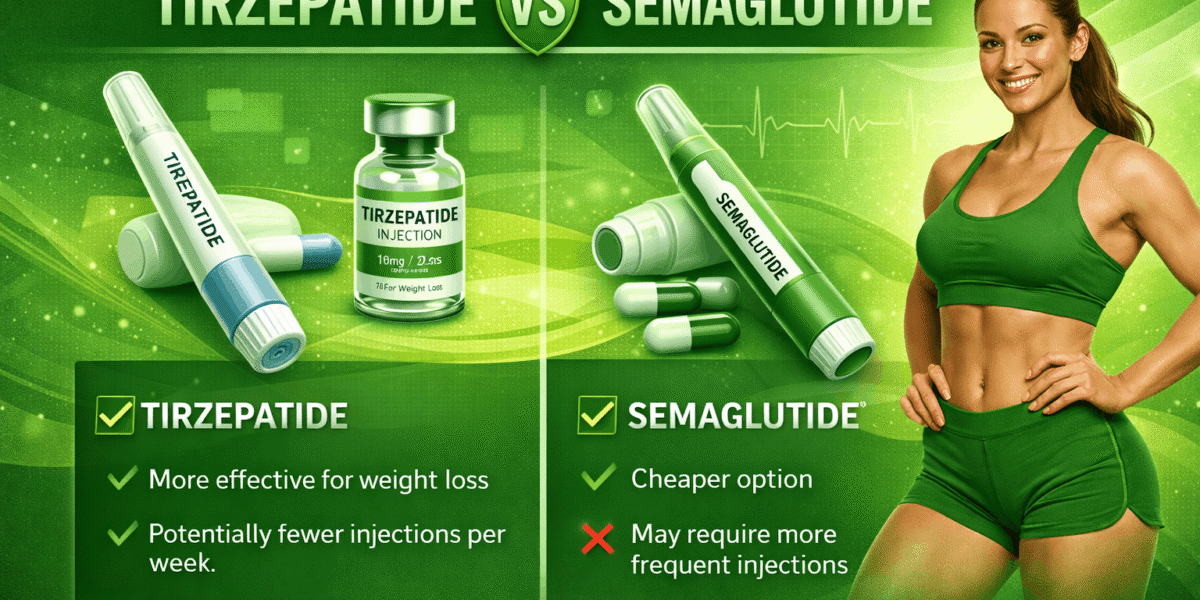
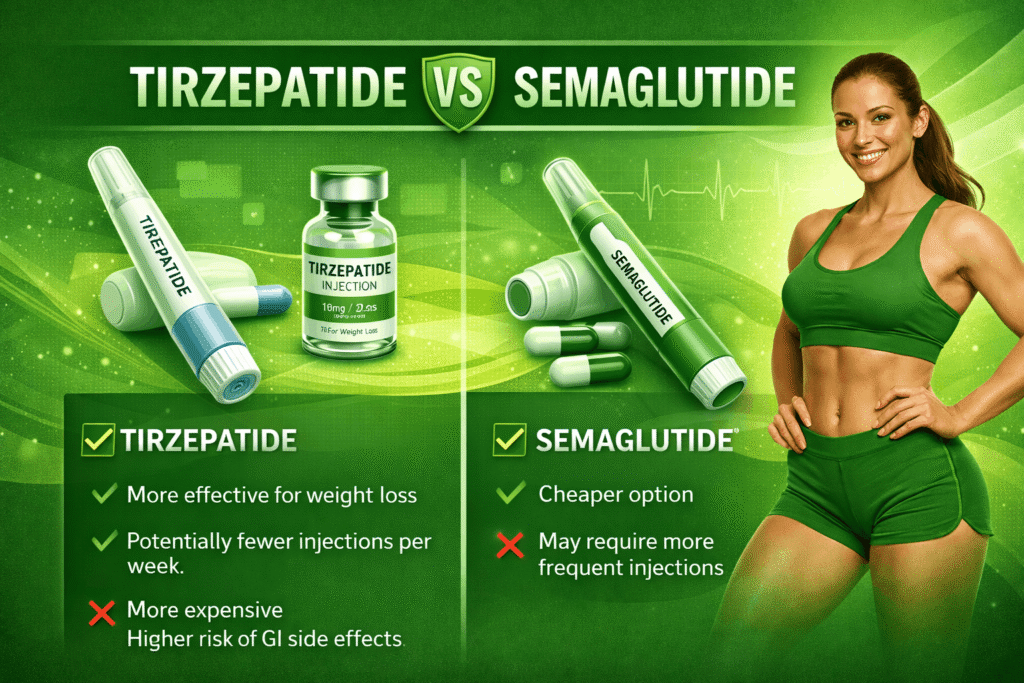
Two injectable medications are getting serious attention for weight loss: semaglutide and tirzepatide. Both work on appetite regulation, both require a prescription, and both are showing up in clinical studies with impressive numbers. But they’re not the same drug, and the difference matters.
If you’re comparing them because you want to lose weight, you need to understand how they work, what the actual data shows, and what it takes to get results that last. This isn’t about hype. It’s about mechanism, evidence, and whether you’re willing to do the work that makes either one effective.
The medication controls appetite. You still control what you eat and whether you train. If you want to lose fat without losing muscle, you need a plan that goes beyond the injection. Work with me to build the training and nutrition strategy that makes these medications actually work.
What Are Tirzepatide and Semaglutide?
Both are injectable medications originally developed for type 2 diabetes that also produce significant weight loss. Here’s the breakdown:
Semaglutide is a GLP-1 receptor agonist. It mimics a gut hormone called glucagon-like peptide-1, which regulates appetite and blood sugar. Brand names include Ozempic (for diabetes) and Wegovy (for weight management). Both contain semaglutide. The difference is the indication and dosing protocol.
Tirzepatide is a dual GIP/GLP-1 receptor agonist. It activates two pathways: GLP-1 (like semaglutide) and GIP (glucose-dependent insulinotropic polypeptide). This dual action is why tirzepatide often shows greater weight loss in head-to-head comparisons. Brand names include Mounjaro (diabetes) and Zepbound (weight management).
Both are administered as weekly subcutaneous injections. Both require a prescription. Neither is a shortcut.
How They Suppress Appetite
The main reason people lose weight on these medications is reduced appetite. They don’t burn fat directly. They make you feel full faster and reduce what researchers call “food noise,” the constant mental chatter about eating.
GLP-1 receptor activation slows gastric emptying, meaning food stays in your stomach longer. It also acts on brain regions that regulate satiety. The result: you eat less because you genuinely feel less hungry.
Tirzepatide’s additional GIP pathway may enhance insulin sensitivity and fat metabolism, though the exact mechanism is still being studied. What we know from trials is that tirzepatide users report similar appetite suppression to semaglutide users, but with slightly different tolerability profiles.
Individual response varies. Some people get dramatic appetite reduction. Others get moderate effects. A small percentage don’t respond well at all.
Weight Loss Results: What the Data Actually Shows
Let’s be specific about what “better” means in clinical trials.
In the SURMOUNT-1 trial, adults without diabetes on tirzepatide lost an average of 15-22% of body weight over 72 weeks, depending on dose. That’s roughly 34-48 pounds for someone starting at 220 pounds.
In the STEP trials for semaglutide (Wegovy), participants lost an average of 15% body weight over 68 weeks. That’s about 33 pounds at the same starting weight.
Tirzepatide shows a statistical edge in most comparisons. But here’s what the studies don’t tell you: averages hide individual variation. Some people on semaglutide lose 25%. Some people on tirzepatide lose 8%. Adherence, dose tolerance, baseline metabolism, and lifestyle all influence outcomes.
The real question isn’t “which drug wins in a study?” It’s “which one can you tolerate, afford, and stay on long enough to hit an effective dose?”
Side Effects: What to Expect
Both medications cause similar side effects because they work on overlapping pathways. The most common are gastrointestinal.
Nausea is the biggest complaint early on. It’s usually worst during dose escalation and tends to improve as your body adapts. Some people get mild queasiness. Others can’t eat without feeling sick for days.
Vomiting, diarrhea, and constipation also occur. Clinical trial data shows discontinuation rates of 4-7% due to GI side effects for semaglutide, and slightly higher (6-9%) for tirzepatide, likely because higher doses are used.
Other reported effects include fatigue, headache, and occasional dizziness. Rare but serious risks include pancreatitis, gallbladder disease, and thyroid tumors (seen in animal studies, not confirmed in humans but flagged by the FDA).
Which is better tolerated? There’s no universal answer. Some people switch from semaglutide to tirzepatide because they plateau or can’t tolerate higher semaglutide doses. Others do the opposite. Titration matters. Starting low and increasing slowly reduces side effects.
If you’re getting persistent vomiting, severe abdominal pain, or signs of dehydration, call your doctor. Don’t push through it.
Your doctor prescribes the medication. But they probably won’t tell you how much protein to eat or why you need to lift weights twice a week. That’s where most people screw this up. Let’s fix that.
Dosing and Titration
Both medications are administered weekly via subcutaneous injection (you do it yourself, usually in the abdomen or thigh). Dosing starts low and increases gradually to minimize side effects.
Semaglutide (Wegovy) typically follows this schedule:
- Weeks 1-4: 0.25 mg
- Weeks 5-8: 0.5 mg
- Weeks 9-12: 1.0 mg
- Weeks 13-16: 1.7 mg
- Week 17+: 2.4 mg (maintenance)
Tirzepatide (Zepbound) uses a similar approach:
- Weeks 1-4: 2.5 mg
- Weeks 5-8: 5 mg
- Weeks 9-12: 7.5 mg
- Weeks 13-16: 10 mg
- Week 17+: 12.5 mg or 15 mg (if tolerated)
Do not self-adjust doses. The titration exists to reduce side effects while your body adapts. Jumping ahead increases the risk of nausea and vomiting. Going slower is fine if needed.
FDA Approval and Indications
Both medications are FDA-approved, but the approval depends on the brand and indication.
- Ozempic (semaglutide): approved for type 2 diabetes
- Wegovy (semaglutide): approved for chronic weight management in adults with obesity (BMI ≥30) or overweight (BMI ≥27) with weight-related comorbidities
- Mounjaro (tirzepatide): approved for type 2 diabetes
- Zepbound (tirzepatide): approved for chronic weight management under the same criteria as Wegovy
If you don’t have diabetes, the weight-management brands (Wegovy, Zepbound) are what your doctor would prescribe, assuming you meet the criteria. These are prescription-only medications. You can’t get them over the counter, and you shouldn’t buy them from unregulated online sources.
Cost and Insurance Coverage
This is where things get complicated.
Neither medication is cheap. Without insurance, Wegovy and Zepbound can cost $1,000-$1,300 per month. Insurance coverage varies wildly. Some plans cover GLP-1 medications for diabetes but not weight loss. Others require prior authorization, step therapy (trying other weight loss methods first), or proof of medical necessity.
Tirzepatide is often more expensive than semaglutide, partly due to market factors and partly because it’s newer. Manufacturer savings programs exist (Novo Nordisk for semaglutide, Eli Lilly for tirzepatide) but eligibility depends on your insurance and income.
If cost is a barrier, talk to your doctor about:
- Generic or compounded versions (where legally available)
- Lower-cost GLP-1 options
- Insurance appeals or coverage options through your plan
- Whether your employer’s health plan offers coverage
Don’t start a medication you can’t afford long-term. Weight regain after stopping is common.
Can You Switch From Semaglutide to Tirzepatide?
Yes, but do it under medical supervision.
People switch for different reasons:
- Weight loss plateau on semaglutide
- Side effects at higher semaglutide doses
- Insurance coverage changes
- Doctor recommendation based on response
There’s no standard protocol for switching. Some clinicians recommend a washout period (stopping one before starting the other). Others overlap slightly to avoid appetite rebound. The safest approach depends on your current dose, side effect history, and how long you’ve been on the first medication.
Questions to ask your doctor if you’re considering a switch:
- Should I stop semaglutide before starting tirzepatide, or overlap?
- What starting dose of tirzepatide makes sense given my current semaglutide dose?
- How should I adjust my eating if my appetite changes suddenly?
- What side effects should I watch for during the transition?
What to Expect in the First Weeks and Months
Week 1: You’ll likely notice appetite changes before you see the scale move. Some people feel full after a few bites. Others just stop thinking about food as much. Nausea is common but usually manageable.
Month 1: Early weight loss varies. Some people drop 5-10 pounds quickly (often water weight). Others lose 2-3 pounds. Don’t panic if progress feels slow. The medication is still ramping up.
Month 3: If you’re tolerating dose increases well, this is when more meaningful trends appear. Expect 1-2 pounds per week on average if adherence is good, though it’s not always linear.
If you’re “only” losing a pound a week, that’s actually normal and sustainable. Faster isn’t always better. Rapid weight loss increases muscle loss, and that’s what we’re trying to avoid.
Losing weight is one thing. Keeping muscle while you do it is another. If you’re on semaglutide or tirzepatide and you’re not training with resistance and eating adequate protein, you’re wasting the opportunity. Get a real plan before you lose the wrong kind of weight.
Diet and Training Still Matter
Here’s what these medications don’t do: they don’t preserve muscle. They don’t improve your body composition. They don’t teach you how to eat when you stop taking them.
You’re still losing weight through a calorie deficit. The medication makes it easier to eat less, but it doesn’t choose what you eat. If you’re eating 1,000 calories of processed junk because that’s all you can stomach, you’ll lose weight, but you’ll also lose muscle, energy, and strength.
Protein matters. Aim for 0.7-1 gram per pound of target body weight daily. Research shows that higher protein intake during weight loss helps preserve lean mass.
Strength training matters more. Two to four sessions per week with progressive resistance prevents muscle loss. You don’t need to lift heavy. You just need consistent stimulus. Bodyweight exercises, resistance bands, dumbbells. All work.
Without training, you’ll lose muscle along with fat. That means a slower metabolism, weaker physique, and worse body composition even if the scale looks good.
As for “belly fat,” you can’t target specific areas. Fat loss is systemic. These medications don’t preferentially burn abdominal fat. They reduce overall body fat if you stay in a deficit.
Which One Should You Choose?
There’s no universal “better” option. The right choice depends on:
Your goal: If maximum weight loss is the priority and you tolerate higher doses well, tirzepatide may have a slight edge based on trial data. If you want a medication with a longer track record and slightly lower cost, semaglutide is proven.
Your side effect history: If you’ve tried semaglutide and had intolerable nausea, tirzepatide might be different (or might be worse). Individual response varies.
Your coverage and cost: If insurance covers one but not the other, or if one is significantly cheaper, that’s a practical factor you can’t ignore.
Your comorbidities: If you have type 2 diabetes, your doctor may prefer one based on blood sugar control. If you have a history of pancreatitis or thyroid issues, both may be contraindicated.
Your lifestyle readiness: If you’re not willing to train and eat protein, you’ll lose muscle regardless of which medication you use. The drug isn’t the whole strategy.
Talk to your doctor. A clinician decides medication. A coach (or your own discipline) makes sure you keep muscle and build habits that last.
Frequently Asked Questions
Which is better for weight loss: tirzepatide or semaglutide?
Tirzepatide shows slightly greater average weight loss in clinical trials (15-22% vs 15% body weight), but individual response varies. The best option is the one you can tolerate, afford, and stay on consistently.
Is Mounjaro more effective than Ozempic?
Mounjaro (tirzepatide) and Ozempic (semaglutide) are both approved for diabetes, not weight loss specifically. For weight management, compare Zepbound (tirzepatide) and Wegovy (semaglutide). Tirzepatide has shown greater efficacy in head-to-head studies.
What are the side effects of tirzepatide vs semaglutide?
Both cause similar GI side effects: nausea, vomiting, diarrhea, constipation. Tirzepatide may have slightly higher discontinuation rates due to side effects at higher doses. Titration and individual tolerance matter more than the drug itself.
Are both FDA-approved for obesity?
Wegovy (semaglutide) and Zepbound (tirzepatide) are FDA-approved for chronic weight management in adults with obesity or overweight with comorbidities. Ozempic and Mounjaro are approved for type 2 diabetes.
Which is more affordable?
Semaglutide is generally less expensive, but cost depends on insurance coverage, manufacturer programs, and whether you qualify for assistance. Both are expensive without coverage.
What is the dosage schedule for each?
Both are weekly injections. Semaglutide starts at 0.25 mg and titrates up to 2.4 mg. Tirzepatide starts at 2.5 mg and can go up to 15 mg. Titration takes 16-20 weeks to reach maintenance dose.
Can I switch from semaglutide to tirzepatide?
Yes, under medical supervision. Your doctor will determine the safest transition protocol based on your current dose and response.
What to expect on tirzepatide week 1?
Appetite reduction is common. Mild nausea may occur. Weight loss in week 1 is usually minimal (1-3 pounds, often water). The medication is still ramping up.
How long does it take to lose 20 lbs on tirzepatide?
Depends on starting weight, dose tolerance, and adherence. At 1-2 pounds per week (a safe, sustainable rate), expect 10-20 weeks. Faster isn’t always better.
Will I gain weight after stopping tirzepatide?
Weight regain is common if you stop without maintaining the habits (calorie control, protein intake, training) that support weight maintenance. The medication isn’t permanent. The lifestyle changes need to be.
Final Take
Tirzepatide and semaglutide are effective tools for weight loss when used correctly. Tirzepatide may produce slightly greater average results based on current data, but semaglutide has a longer track record and may be more accessible.
Neither is magic. Both require consistent use, dose tolerance, and the discipline to train and eat protein while losing weight. Without that, you’ll lose muscle along with fat, and you’ll regain weight when you stop.
If you’re considering either medication, talk to a doctor who understands weight management, not just prescription pads. Make sure you have a plan for what happens after the weight comes off, because that’s where most people fail.
The injection gets you started. The habits keep you there.
The injection reduces appetite. It doesn’t build muscle, fix your metabolism, or teach you how to maintain results when you stop. Ready to do this right? Let’s talk.

Maik Wiedenbach is a Hall of Fame swimmer turned bodybuilding champion and fitness model featured in Muscle & Fitness and Men’s Journal. An NYU adjunct professor and award-winning coach, he founded New York’s most sought-after personal training gym.